The short answer
You likely need a new chimney liner if your flue tiles are cracked, your chimney drafts poorly, or you are converting a boiler from oil to gas. StrongHold Chimney Services inspects the flue with a camera, installs a liner sized to your appliance, and keeps your Brooklyn home clean while we work.
A chimney liner is the inner channel that carries smoke and exhaust gases up and out of your home. In many Brooklyn brownstones, row houses and older frame homes, the original flue is clay tile or bare brick that has cracked, shifted or worn down over the years. When that happens, heat, creosote and acidic exhaust can reach the masonry and the wood framing around it. StrongHold Chimney Services installs new liners for fireplaces, wood stoves, boilers and water heaters, sized to the appliance they serve. Our certified technicians start with an inspection, explain what they find, and recommend a liner only when the flue actually needs one.
Signs you need it
Liner damage happens out of sight, inside the flue. These are the warning signs homeowners usually notice first. Any one of them is a good reason to have the flue inspected before your next fire or before the heating system runs hard for the winter.
- A smoke or creosote smell in the room, especially on humid days or when the fireplace isn't in use
- Poor draft: smoke rolls into the room, fires are hard to start, or the boiler or water heater shows signs of backdrafting
- Pieces of clay tile, mortar or brick flakes collecting in the firebox, on the smoke shelf or at the cleanout door
- White staining on the brick inside or outside the house, a sign that moisture is moving through the masonry
- Water in the firebox or rust on the damper after rain
- A recent or planned conversion from oil to gas, or a new boiler, water heater or stove connected to the chimney
- An inspection that found cracked, missing or misaligned flue tiles
What's included in a liner installation
Every job is planned around the appliance the chimney serves and the condition of the flue. A typical installation includes the following.
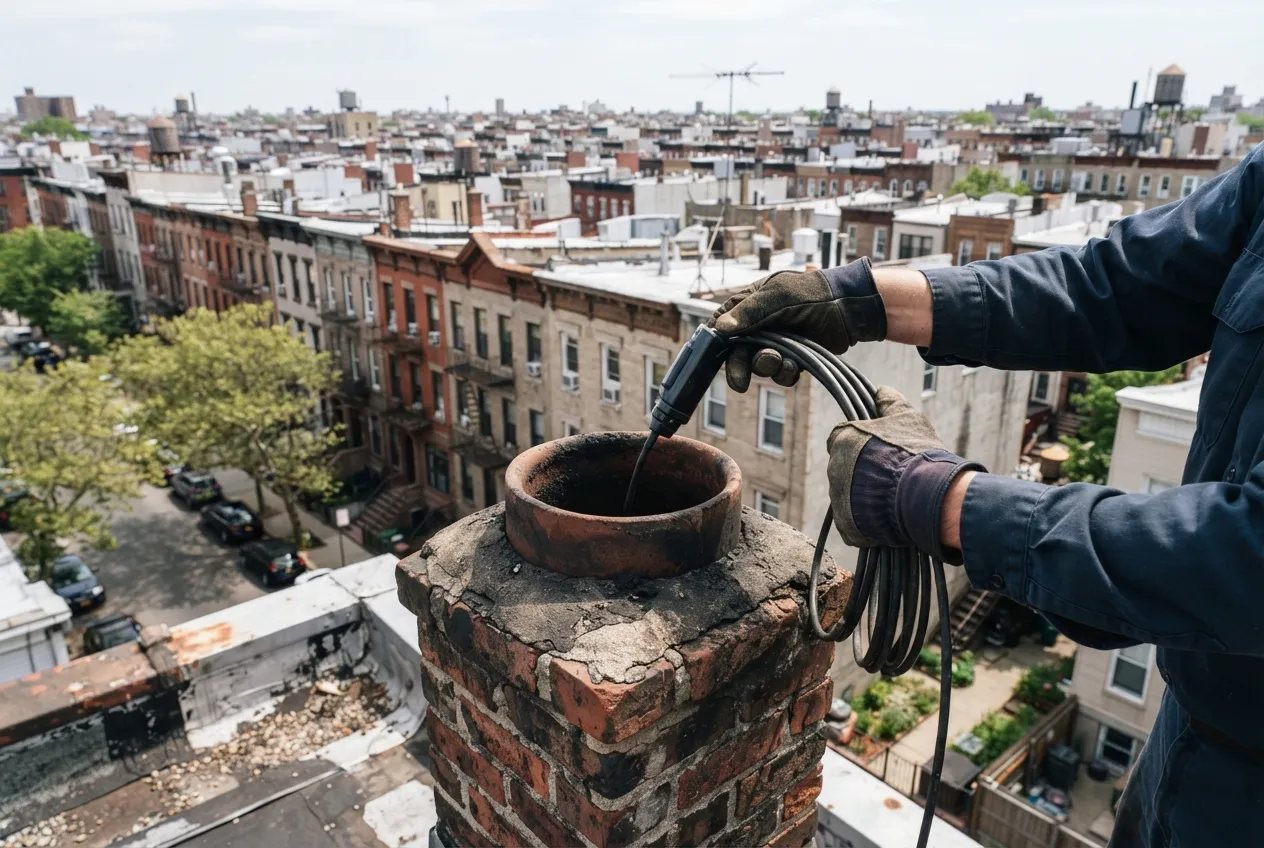
- A camera inspection of the existing flue from top to bottom, with images you can review
- Cleaning the flue to remove creosote, soot and loose debris before the liner goes in
- Measuring the flue and confirming the liner size the appliance needs
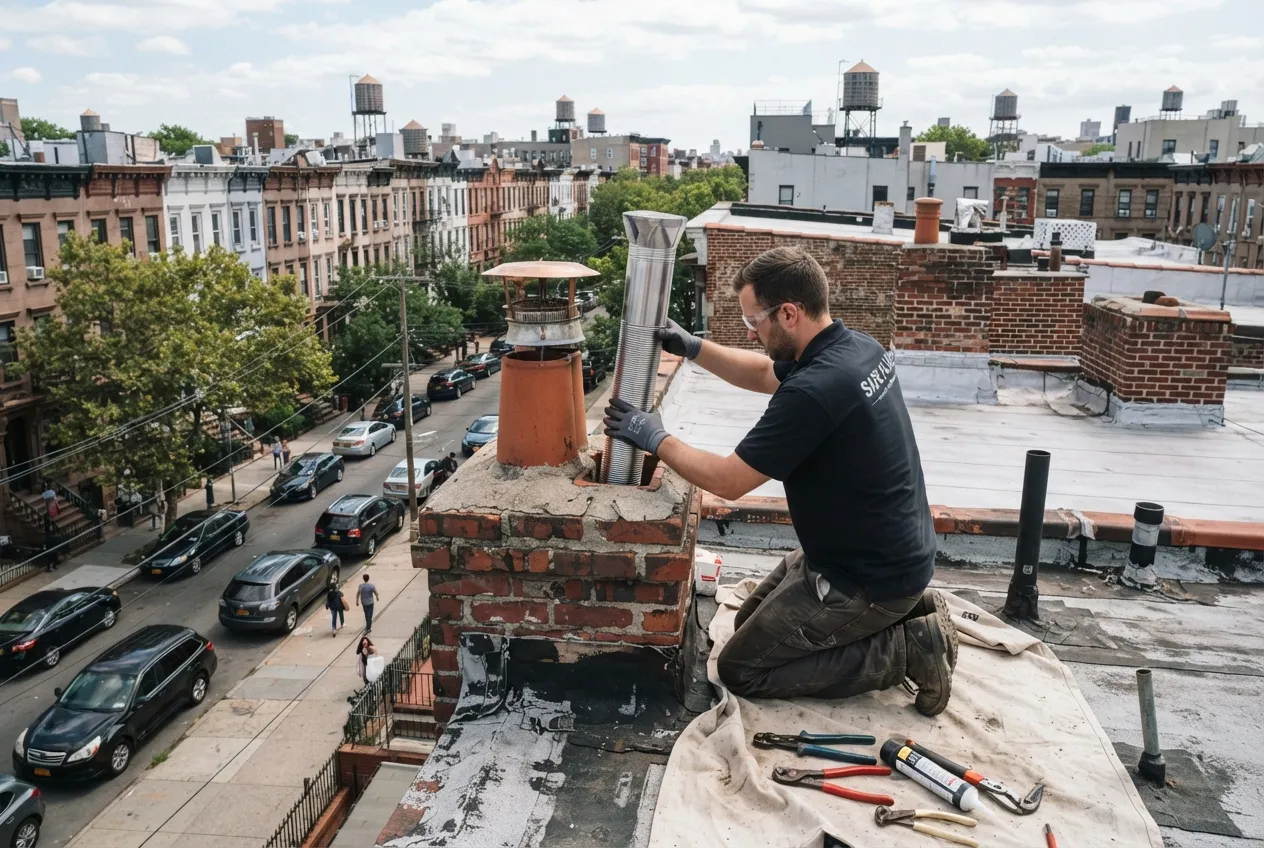
- A new stainless steel liner, or another liner type when the appliance and flue call for it, run the full height of the chimney
- Insulation around the liner where the application calls for it
- Connection at the bottom to the fireplace, stove, boiler or water heater, with the fittings the setup requires
- A top plate and chimney cap to seal the flue and help keep out rain, debris and animals
- A draft and connection check once the appliance is running, plus a written summary of the work
How our crew works inside your home and on the roof
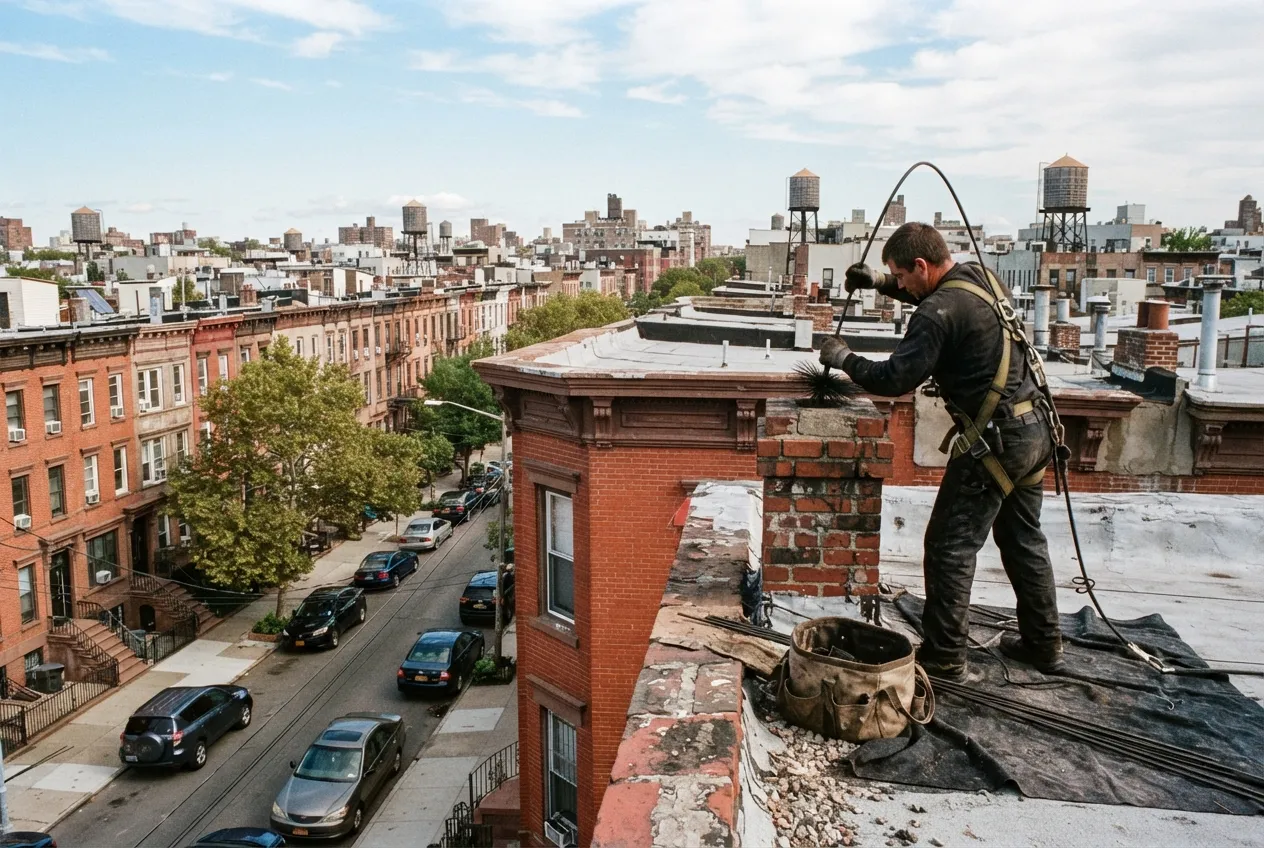
Inside, we lay drop cloths from the entry to the fireplace or boiler room and cover the floor and furniture near the work area. A HEPA vacuum runs while we open the firebox or disconnect the flue pipe, so soot stays contained. Before the liner goes in, rotary brushes clear the old flue, and a camera lets us check the walls and joints so you can see what we see.
On the roof, the crew sets up safe access, protects the roofing around the chimney and removes the old cap. The liner is lowered from the top and guided down to the appliance connection. If broken tiles or other obstructions block the path, we stop and explain your options before going further. When we finish, we clean up inside and out and show you the completed connection and the new cap.
Time for your annual chimney check?
The standards we follow
The NFPA 211 standard calls for chimneys, fireplaces and vents to be inspected once a year. Chimney professionals use three inspection levels. Level 1 applies when nothing about the system has changed. Level 2 applies when the system changes, such as a new appliance or a switch of fuel, or when the home is sold. Level 3 applies when a hidden hazard has to be reached by opening part of the chimney or the building.
Because a liner job often goes along with a new appliance or a fuel change, it usually starts with at least a Level 2 inspection. In New York City, when a building converts its boiler from oil to gas, the chimney has to be evaluated as part of that work. A new liner is often needed, because gas exhaust produces acidic condensate that can corrode a masonry flue.
What affects the price
We quote each job after we see the chimney, because no two Brooklyn flues are alike. The main factors are:
Your written estimate lists each part of the work so you know exactly what you are paying for.
- Chimney height and how easy the roof is to reach, including flat roofs, steep pitches and shared party walls
- The fuel and appliance the liner will serve: wood, gas or oil, and a fireplace, stove, boiler or water heater
- The size and shape of the flue and its current condition
- How much creosote, soot or debris has to be removed before installation
- Whether a camera inspection, tile removal or masonry repair is needed to fit the liner
How a visit works
You contact us and describe what you've noticed and what the chimney serves. We schedule an inspection, and the technician checks the firebox or appliance connection, the roof and the inside of the flue with a camera. You get a plain explanation of what we found, images of the flue, and a written estimate if a liner is needed.
If you decide to go ahead, we schedule the installation. Many standard chimneys are finished in a single visit, and we tell you up front if your job will take longer. New York City's heat season runs from October 1 through May 31, so we suggest booking boiler and water heater liner work before fall to avoid interrupting heat when it's needed. After installation, we test the draft, clean up, and explain how yearly inspections keep the new liner in good shape.
Chimney Liner Installation by city
- Chimney Liner Installation in Williamsburg
- Chimney Liner Installation in South Williamsburg
- Chimney Liner Installation in Lower East Side
- Chimney Liner Installation in East Village
- Chimney Liner Installation in Fort Greene
- Chimney Liner Installation in Chinatown
- Chimney Liner Installation in Two Bridges
- Chimney Liner Installation in Clinton Hill
- Chimney Liner Installation in East Williamsburg
- Chimney Liner Installation in Greenpoint
- Chimney Liner Installation in Downtown Brooklyn
- Chimney Liner Installation in DUMBO