The short answer
A chimney liner protects the masonry and the building from heat, smoke and corrosive exhaust. Fort Greene homes most often need a new liner after an oil-to-gas boiler conversion, a new appliance, or when an inspection finds cracked or missing flue tiles. We inspect first, then size and install a liner that matches the appliance or fireplace it serves.
Many Fort Greene homes were built long before modern furnaces, boilers and water heaters existed. Their chimneys often have old clay tile flues, partial liners or no liner at all. StrongHold Chimney Services installs chimney liners in brownstones, rowhouses and pre-war apartment buildings throughout Fort Greene (ZIP 11205). Our office in Williamsburg is about a mile away, so we can get to you quickly. Our certified technicians inspect the flue first, explain what they find, and recommend a liner only when the chimney needs one.
Why Fort Greene Chimneys Often Need Relining
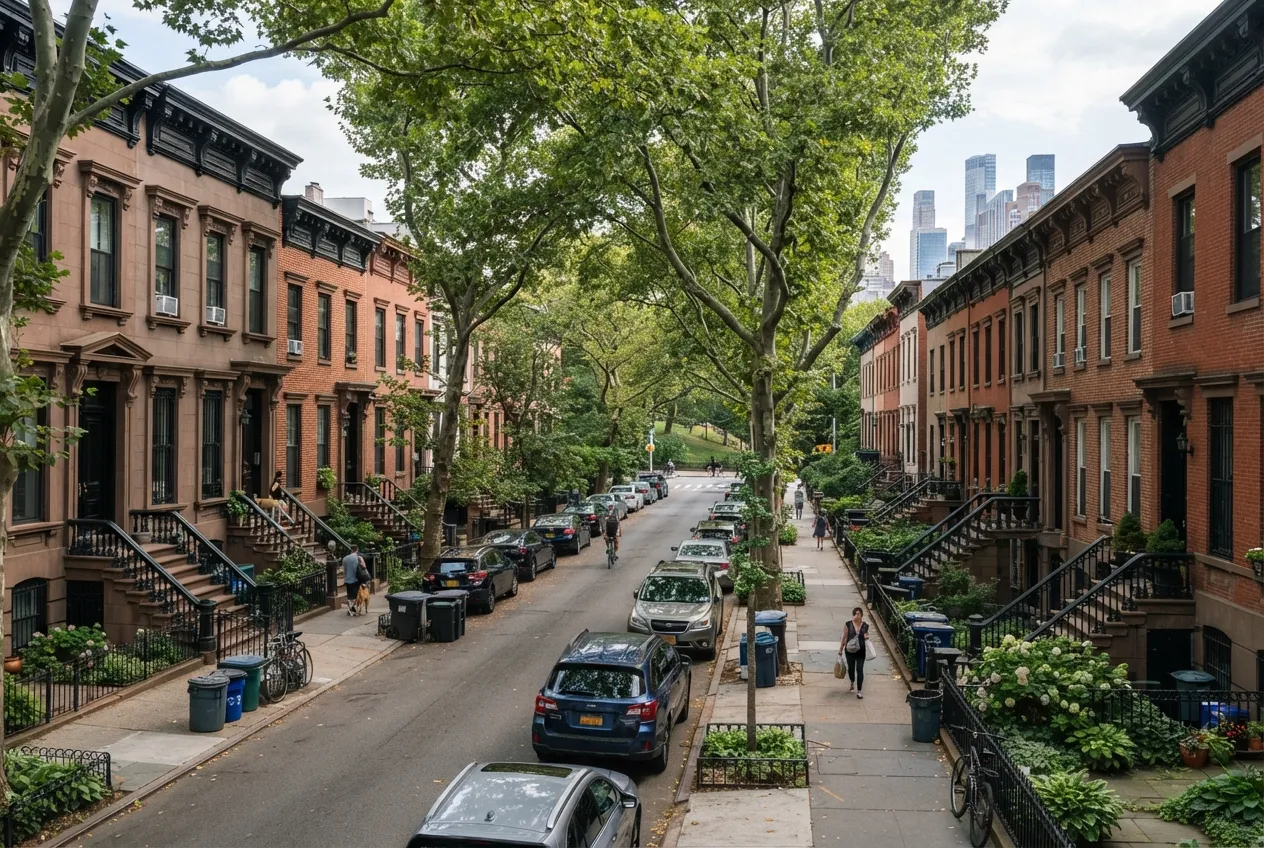
Fort Greene's housing is mostly brownstones, rowhouses and pre-war apartment buildings. Their brick chimneys usually run up through shared or party walls. After decades of heating seasons, the clay tiles inside can crack and the mortar joints can wash out. Some older flues were never lined in the first place. When that happens, heat and exhaust reach the brick directly, and gases can find gaps that lead into living space or a neighbor's wall.
A liner gives exhaust a sealed, correctly sized path out of the building. It also protects the masonry from the moisture and acids that come with burning fuel. In attached homes, where one chimney stack can sit right next to another family's rooms, a sound flue matters even more.
Oil-to-Gas Conversions and New Appliances
When a New York City building converts its boiler from oil to gas, the chimney has to be evaluated as part of the work. A new liner is often needed. Gas exhaust produces acidic condensate, and over time that condensate can corrode a masonry flue that handled oil without trouble.
The same question comes up when you install a new boiler, furnace or water heater, or when you switch fuels. The NFPA 211 standard calls for a Level 2 inspection when the system changes like this, and also when a home is sold. If something hidden has to be reached by opening part of the chimney or the building, that is a Level 3 inspection. We'll tell you which level applies and why before any work starts.
Liner Options We Install
The right liner depends on what the flue serves, the size and shape of the chimney, and how much room is left inside it. We match the liner diameter to the appliance so exhaust draws properly and doesn't cool and condense too early.
- Stainless steel liners, rigid or flexible, for gas and oil boilers, furnaces and water heaters
- Insulated stainless liners for wood-burning fireplaces and stoves where extra heat protection is needed
- Cast-in-place liners that form a new smooth flue inside a damaged masonry chimney
- Clay tile replacement where the chimney can be opened and rebuilt with tile
Time for your annual chimney check?
How Liner Installation Works
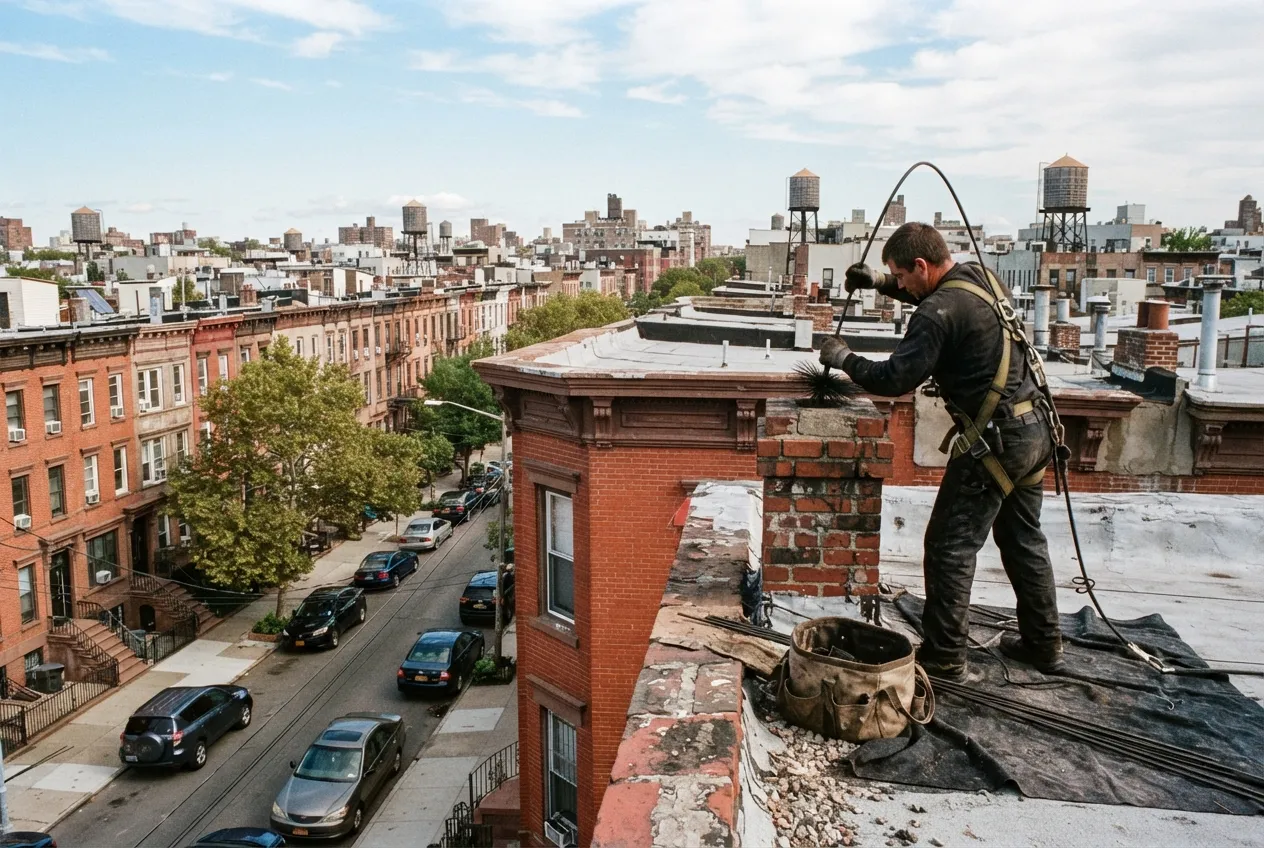
Most jobs follow the same basic steps. We work from the roof, and in Fort Greene's rowhouses that means planning access across flat roofs and around neighboring chimneys.
- Inspect the flue, often with a camera, and check its size, condition and connections
- Clean the chimney so the liner goes into a clear passage
- Remove broken tile or old liner sections if they block the path
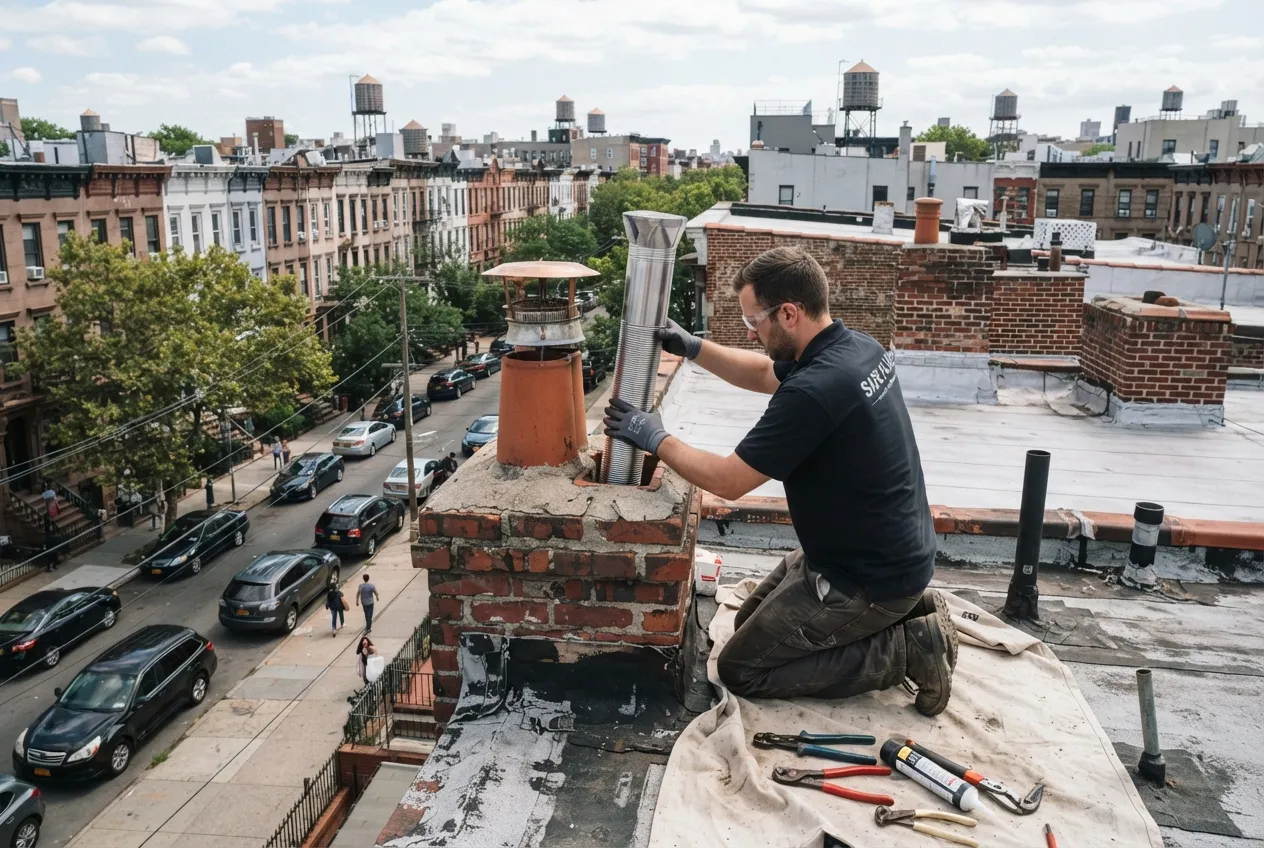
- Lower the new liner into place and connect it to the appliance or fireplace
- Fit a top plate and cap to keep out rain, debris and animals
- Test the draft and walk you through what was done
Timing Around Heat Season
New York City's heat season runs from October 1 through May 31. During those months building owners must keep apartments heated to the city's minimum temperatures. If you own a multi-unit building, try to schedule liner work for a boiler in the late spring or summer, so tenants aren't left without heat while the system is down. If a liner problem turns up mid-winter, we'll plan the work to keep downtime as short as possible.
Besides Fort Greene, we serve homes in nearby Clinton Hill, Downtown Brooklyn, DUMBO and South Williamsburg, as well as Chinatown.
More services in Fort Greene
- Chimney Sweep in Fort Greene
- Chimney Inspection in Fort Greene
- Chimney Repair in Fort Greene
- Air Duct Cleaning in Fort Greene