The short answer
A chimney inspection checks your fireplace, flue, liner, and chimney exterior for blockages, damage, and fire hazards. The NFPA 211 standard calls for one every year, and a deeper inspection is needed when you change appliances or fuel, or when the home is sold.
A chimney can look fine from the street and still have a cracked flue tile, a loose cap, or a creosote layer that turns a normal fire into a dangerous one. A chimney inspection is how you find out what is actually going on inside. StrongHold Chimney Services inspects fireplaces, wood stoves, and boiler and furnace chimneys in Brooklyn brownstones, row houses, and frame homes, plus nearby neighborhoods. Our certified technicians check the system from the firebox to the crown, photograph what they find, and explain it in plain language. You get a clear picture of whether your chimney is safe to use, what needs attention now, and what can wait.
Signs You Need a Chimney Inspection
The NFPA 211 standard calls for a yearly inspection even when nothing seems wrong. Some problems, though, show up between visits. If you notice any of these, call for an inspection before your next fire or before the heating season gets going.
- A smoky or campfire smell in the room, especially on humid days or when the fireplace is not in use
- Poor draft: smoke rolling into the room instead of going up the flue
- Debris, bits of tile, or brick flakes falling into the firebox
- White, chalky staining on the outside brick, a sign that water is moving through the masonry
- Water or damp spots in the firebox after rain
- Scratching, chirping, or other animal noises inside the chimney
- You recently bought the home, or you are switching from oil to gas
What a Chimney Inspection Includes
Every inspection follows the same checklist, so nothing is skipped. The depth depends on the inspection level, which we explain below.
- Firebox, firebrick, and mortar joints checked for cracks and gaps
- Damper tested for a full open and close and a proper seal
- Smoke chamber and smoke shelf checked for creosote and debris
- Flue liner examined for cracks, missing mortar, and buildup
- Clearances to nearby wood framing and trim checked where accessible
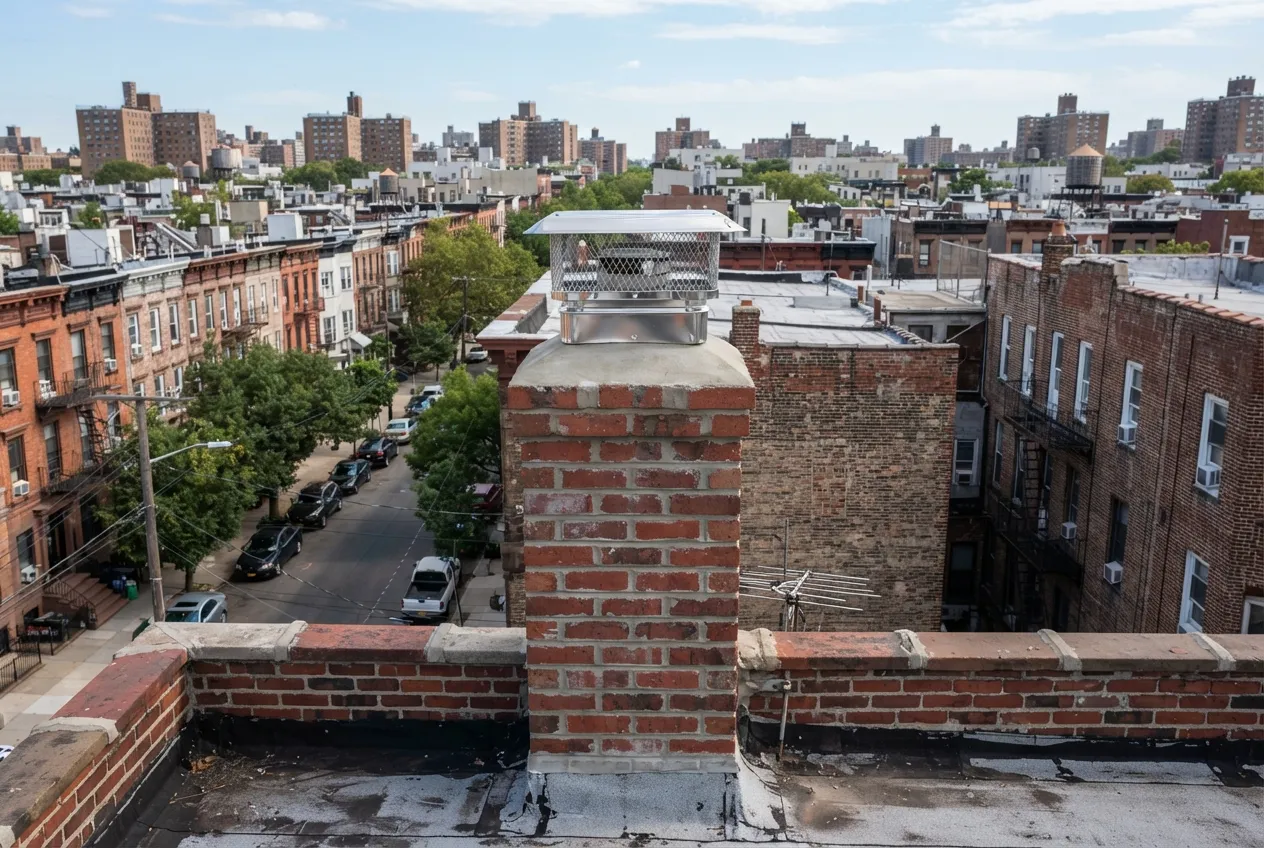
- Chimney crown, cap, and spark screen inspected on the roof
- Flashing where the chimney meets the roof checked for gaps and leaks
- Exterior brick and mortar checked for spalling, staining, and loose units
- Appliance connections for stoves, boilers, and furnaces reviewed
- Video camera scan of the flue when the level of inspection calls for it
- Written findings with photos and clear recommendations
How Our Crew Works in Your Home and on the Roof
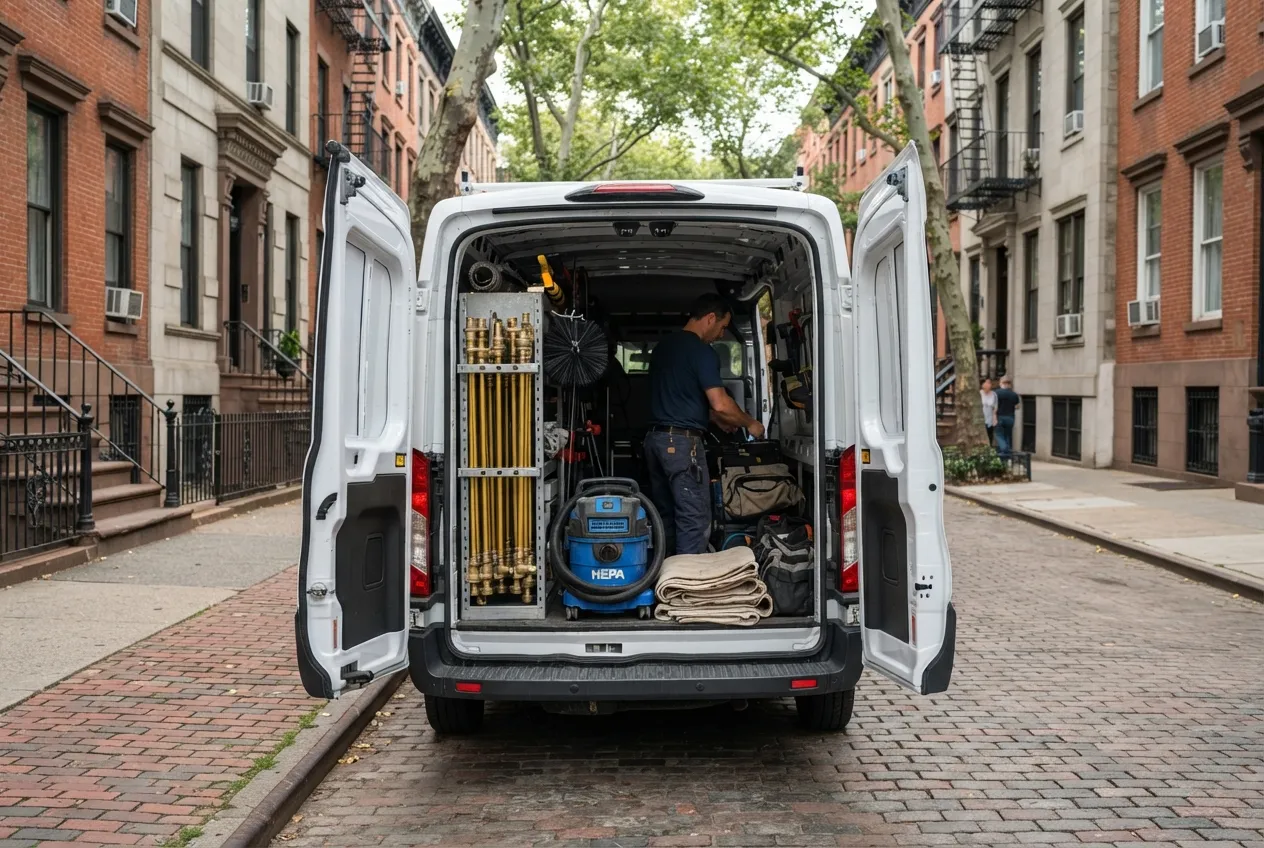
Inside, the technician lays drop cloths from the door to the hearth and sets up a HEPA vacuum at the fireplace opening before touching anything. The vacuum runs while the damper is opened and the smoke chamber is checked, so soot stays in the chimney and out of your living room. We wear shoe covers and keep the work area small.
When a full view of the flue is needed, we run a video camera up the liner and show you the footage on a screen. You see the same cracks, gaps, or buildup we see. If the flue is coated too heavily to judge its condition, we may recommend a sweep with rotary brushes first so the inspection is accurate.
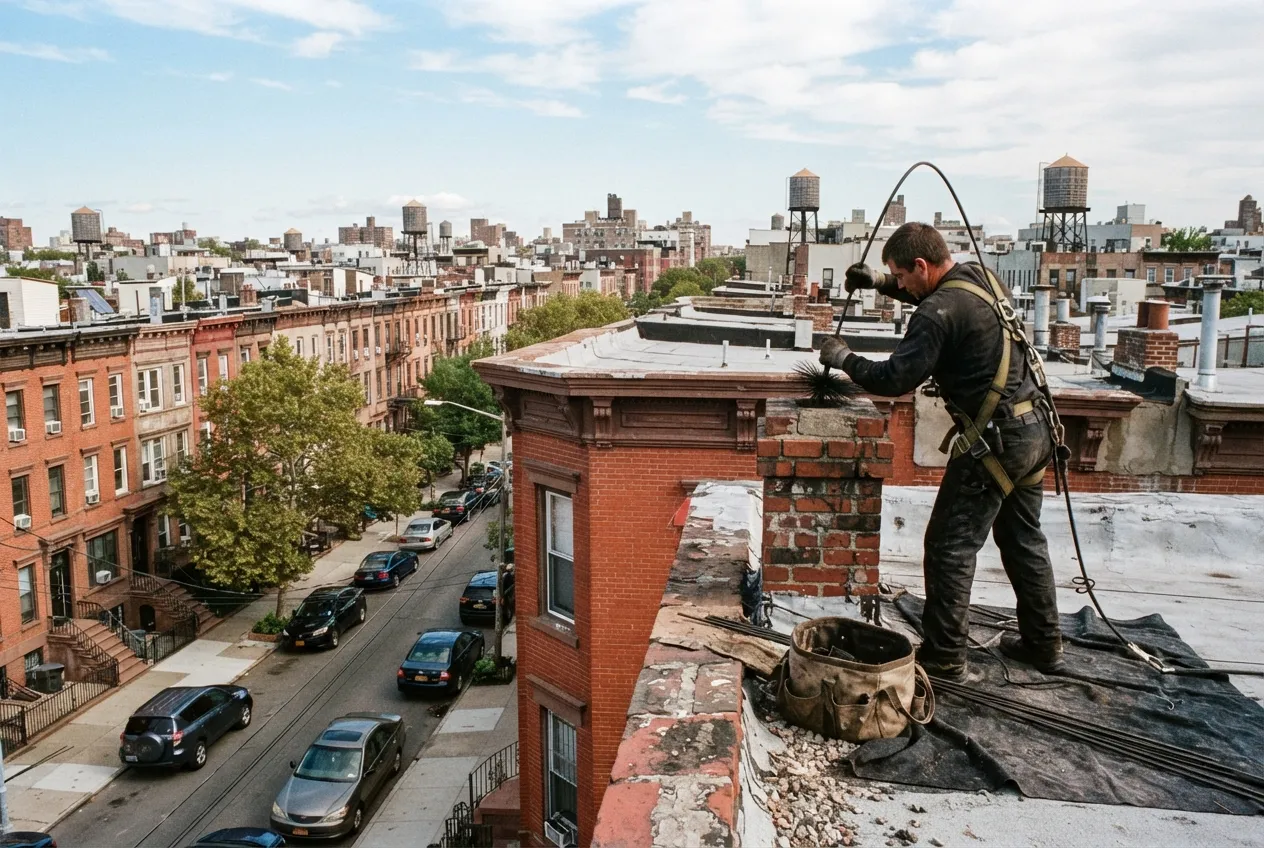
On the roof, the technician checks the crown, cap, flashing, and upper brick, and looks down the flue from the top. Brooklyn roofs vary a lot, from flat brownstone roofs reached through a bulkhead to steep pitched roofs that need ladders and fall protection. We plan access ahead of time so the visit runs smoothly.
Time for your annual chimney check?
The Standard We Follow: NFPA 211 and the Three Inspection Levels
The NFPA 211 standard calls for chimneys, fireplaces, and vents to be inspected once a year. Chimney professionals use three inspection levels, and we tell you which one fits your situation before we start.
Converting a boiler from oil to gas is a common reason for a Level 2 inspection in New York City. The chimney has to be evaluated as part of that work, and a new liner is often needed because gas exhaust produces acidic condensate that can corrode a masonry flue. Since the city's heat season runs from October 1 through May 31, it makes sense to have a heating chimney inspected before October so any repairs are finished before heat is required.
- Level 1: for chimneys in regular use when nothing has changed. Covers the readily accessible parts of the chimney, inside and out.
- Level 2: required when the system changes, such as a new appliance or a switch of fuel, or when the home is sold. Adds a camera scan of the flue and a check of accessible attics, basements, and crawl spaces.
- Level 3: used when a hidden hazard has to be reached by opening part of the chimney or the building, such as removing a section of wall or crown.
What Affects the Price
We give you a quote before any work starts. The main factors are:
- Chimney height and roof access, including whether we need extra ladders or roof protection
- Fuel type: wood, gas, or oil, and whether the chimney serves a fireplace, stove, or boiler
- Flue size and condition, and how many flues the chimney has
- How much creosote or soot buildup is present
- Whether a camera inspection is needed, as with a Level 2
- Whether repairs, a sweep, or a new liner are needed after the findings
How a Visit Works
When you book, we ask about your chimney, what fuel you use, and any problems you have noticed. That helps us pick the right inspection level and bring the right equipment. Please let any fire die out at least a day before the visit so the system is cool.
On the day, the technician protects your floors, inspects inside, then goes up to the roof. Most single-flue inspections are finished in one visit. Before leaving, we walk you through the findings, show photos or camera footage, and explain what is urgent and what can be scheduled later. You decide what, if anything, to do next.
Chimney Inspection by city
- Chimney Inspection in Williamsburg
- Chimney Inspection in South Williamsburg
- Chimney Inspection in Lower East Side
- Chimney Inspection in East Village
- Chimney Inspection in Fort Greene
- Chimney Inspection in Chinatown
- Chimney Inspection in Two Bridges
- Chimney Inspection in Clinton Hill
- Chimney Inspection in East Williamsburg
- Chimney Inspection in Greenpoint
- Chimney Inspection in Downtown Brooklyn
- Chimney Inspection in DUMBO