The short answer
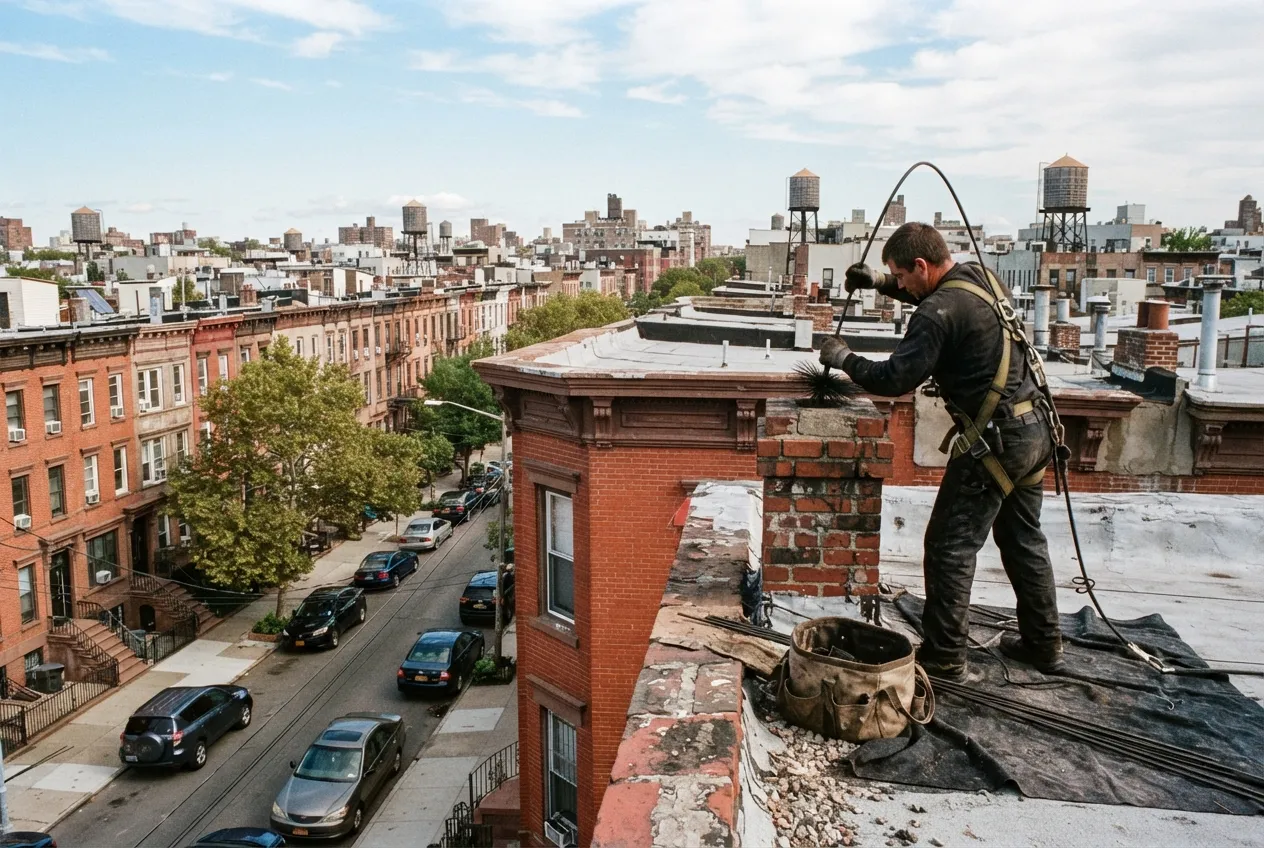
A chimney liner is a sealed channel inside the chimney that carries smoke and exhaust out of the house and protects the masonry from heat and corrosion. In Williamsburg, liners are most often needed when an older flue is damaged, when a new appliance is installed, or when a boiler converts from oil to gas.
Many chimneys in Williamsburg were built long before today's boilers, water heaters and fireplace inserts existed. Rowhouses, brownstones and pre-war apartment buildings often have masonry flues that were never lined, or have clay tile liners that have cracked, shifted or worn away over decades of use. A properly sized liner protects the masonry, carries exhaust safely out of the home and helps your heating equipment draft the way it was designed to. StrongHold Chimney Services installs chimney liners from our office at 82 S 6th St, serving Williamsburg and the surrounding neighborhoods.
Why Older Williamsburg Chimneys Often Need a New Liner
Much of Williamsburg's housing stock has brick chimneys with original clay tile liners or no liner at all. Over time, mortar joints between tiles erode, tiles crack from heat, and moisture works its way into the brick. Once that happens, exhaust can leak into the masonry and, in some cases, into living space or neighboring units in shared-wall buildings.
A new liner gives the exhaust a continuous, sealed path to the top of the chimney. It also allows the flue to be sized to match the appliance connected to it. That matters because an oversized flue can draft poorly and collect condensation, while an undersized one can restrict venting.
- Cracked, missing or offset clay flue tiles
- Crumbling mortar or brick debris falling into the firebox or cleanout
- Staining or dampness on interior walls near the chimney
- A new boiler, furnace, water heater or insert connected to an old flue
- A chimney that was never lined at all
Oil-to-Gas Conversions in New York City
When a New York City building converts its boiler from oil to gas, the chimney has to be evaluated as part of the work. A new liner is often needed because gas exhaust produces acidic condensate that can corrode a masonry flue. Brick and clay that held up for years under oil heat can begin to deteriorate once that moisture starts forming inside the chimney.
If your building is planning a conversion, we can inspect the chimney, explain what the flue needs, and install a liner suited to the new equipment. Coordinating this early helps keep the conversion on schedule.
How We Install a Chimney Liner
Every installation starts with an inspection. The NFPA 211 standard calls for a Level 2 inspection when the system changes, such as a new appliance or a switch of fuel, so we look closely at the flue, the connections and the condition of the masonry before recommending anything.
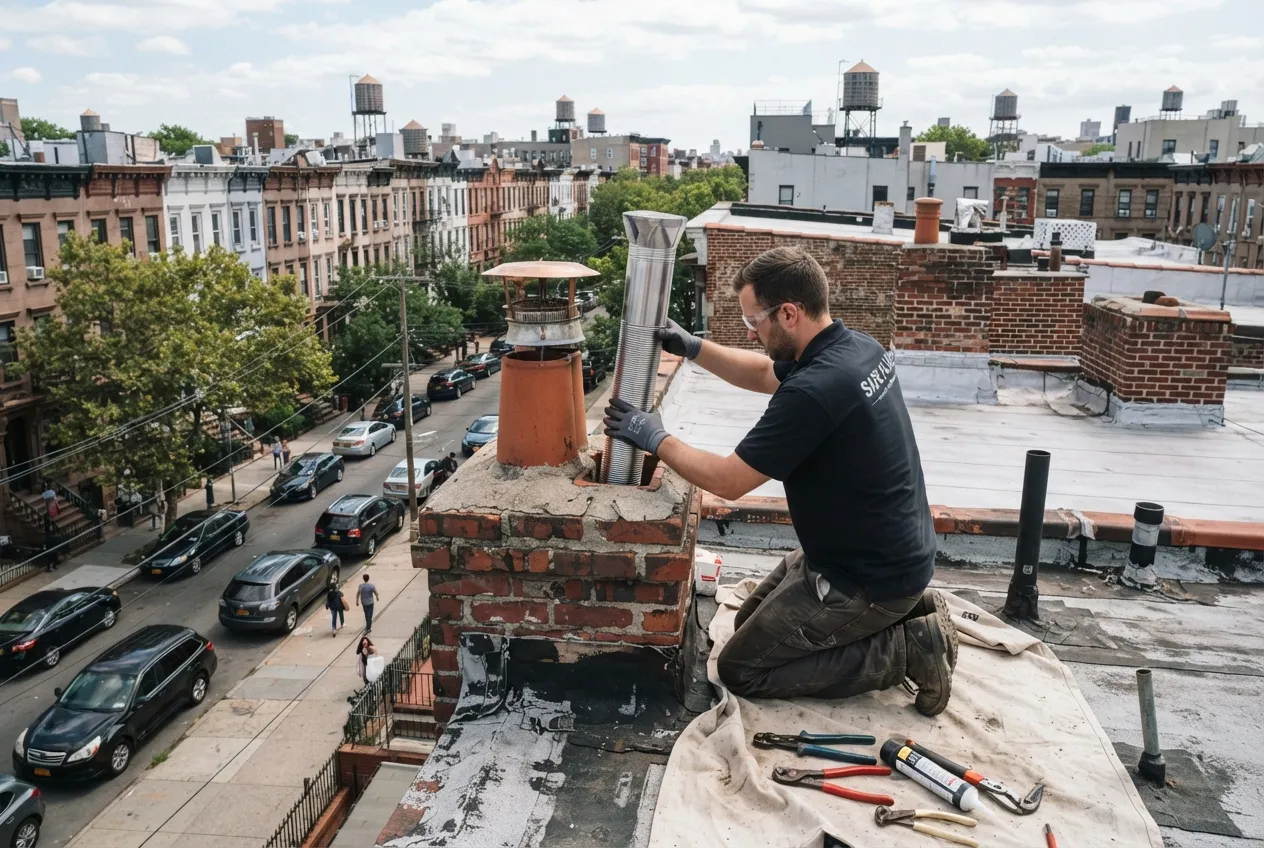
From there, we measure the flue and match the liner to the appliance it will serve. Stainless steel liners are commonly used for gas and oil appliances as well as wood-burning inserts, and they can be routed through chimneys with offsets, which are common in older rowhouses. The liner is connected at the base, sealed at the top, and finished with a cap to keep out rain and debris.
- Inspection of the flue and chimney structure
- Sizing the liner to the connected appliance
- Cleaning the flue before installation
- Installing and connecting the liner
- Fitting a top plate and chimney cap
- Testing draft and walking you through the finished work
Time for your annual chimney check?
Timing Your Liner Work Around Heat Season
New York City's heat season runs from October 1 through May 31, when building owners must keep apartments heated to the city's minimum temperatures. For multi-unit buildings, liner work on a boiler chimney is easiest to schedule before the season starts or during mild stretches, so heat is not interrupted when tenants need it most.
If a problem turns up in the middle of winter, we will talk through your options and plan the work to limit downtime as much as possible.
Serving Williamsburg and Nearby Neighborhoods
Our certified technicians work out of our Williamsburg office and install liners in homes and buildings throughout the area, including South Williamsburg, Greenpoint, East Williamsburg, and across the river in the Lower East Side and East Village. Whether you own a single-family rowhouse, a brownstone or a pre-war apartment building, we'll explain what your chimney needs in plain terms before any work begins.
More services in Williamsburg
- Chimney Sweep in Williamsburg
- Chimney Inspection in Williamsburg
- Chimney Repair in Williamsburg
- Air Duct Cleaning in Williamsburg