
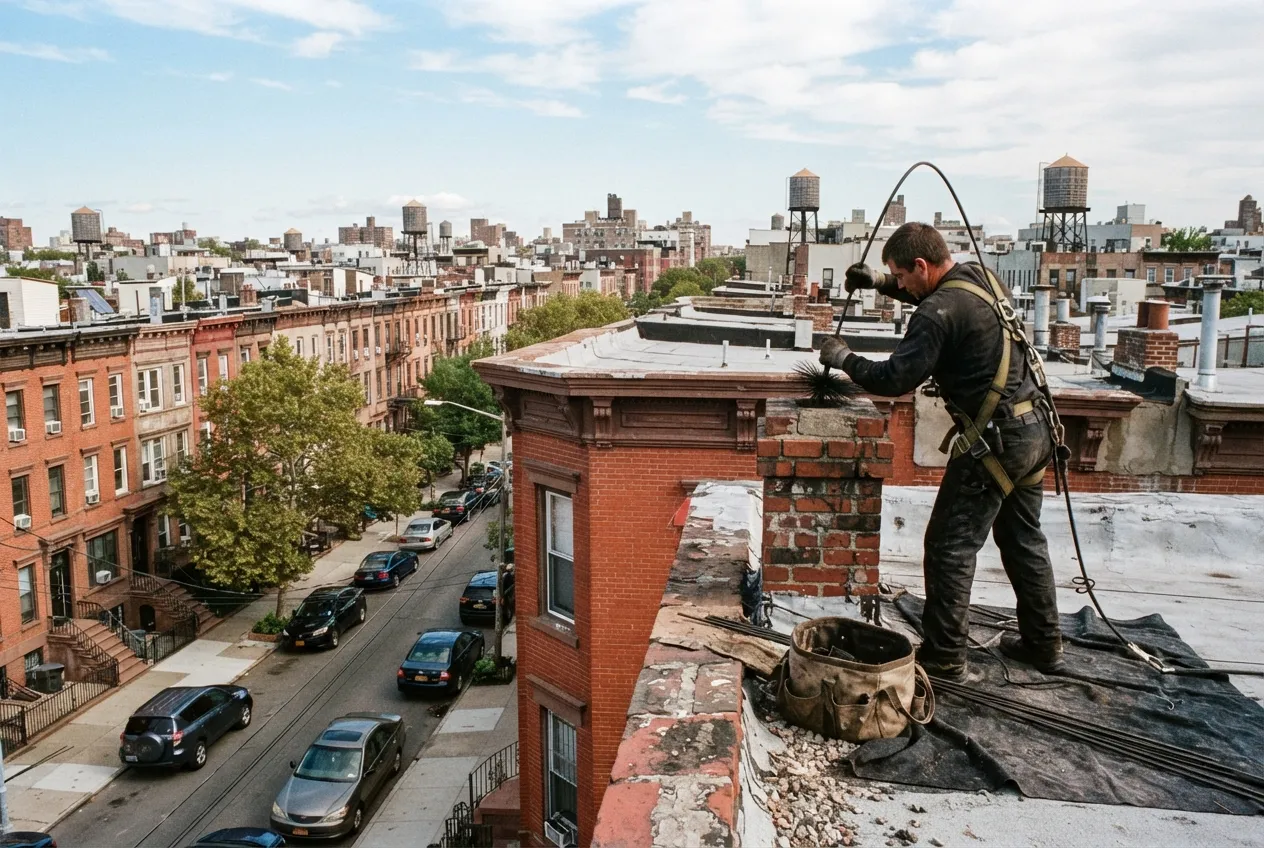
About StrongHold: Chimney, Vent and Duct Care Built Around Brooklyn Homes
Serving Brooklyn and nearby cities.
- Diagnosis before any repair
- Written price up front
- Written price before we start
StrongHold Chimney Services works on the parts of a house that move smoke, exhaust and air: chimneys, fireplaces, boiler and furnace flues, dryer vents and HVAC ductwork. Brooklyn's mix of brownstones, attached rowhouses, frame houses and small multifamily buildings means no two systems are set up quite the same. This page explains how we approach the work, what we check, and how we keep you informed.
Why we treat the whole airflow path, not just one opening
A fireplace flue, a boiler chimney, a dryer exhaust run and a return-air duct are separate systems, but they share a job: getting something out of the house or moving air through it safely. When one is blocked, damaged or poorly connected, the symptoms often show up somewhere else, like a smoky room, a dryer that takes two cycles, or dust that settles faster than it should.
So we start by asking how your home actually uses these systems. Do you burn wood, or is the chimney only venting a gas boiler? Is the dryer on an exterior wall, or does its vent snake through a closet and a ceiling? Those answers shape what we inspect and what tools we bring.
- Wood-burning fireplaces and stoves
- Chimneys serving oil and gas boilers and furnaces
- Clothes dryer exhaust vents
- Residential supply and return air ducts
What guides our recommendations
We lean on established guidance instead of guesswork. The NFPA 211 standard calls for chimneys, fireplaces and vents to be inspected once a year. A basic visual inspection fits when nothing about the system has changed. A more detailed inspection makes sense when you add a new appliance, switch fuels or sell the home, and opening part of the chimney or wall is reserved for cases where a suspected hazard is hidden from view.
Fuel changes matter a lot in New York City. When a building converts its boiler from oil to gas, the chimney has to be evaluated as part of that work, and a new liner is often needed because gas exhaust produces acidic condensate that can wear down a masonry flue. If you are planning a conversion, we can look at the flue before the new equipment goes in.
For dryer vents, the reasoning is simple: the U.S. Fire Administration identifies failure to clean as the leading factor contributing to home clothes dryer fires. For air ducts, we follow the U.S. EPA's view. Cleaning is warranted when there is substantial visible mold, signs of vermin, or excessive dust and debris. The EPA also notes that duct cleaning has not been shown to prevent health problems, so we won't sell it to you that way, and we are cautious about chemical treatments.
How a visit with us usually goes
Our technicians are certified, and they work with drop cloths, containment and vacuums so soot and debris stay out of your living space. Before any cleaning, they look at the condition of the system and point out anything that needs attention beyond a sweep.
Timing helps. New York City's heat season runs from October 1 through May 31, and boilers and fireplaces see their heaviest use in those months. Scheduling an inspection before the cold sets in gives you time to handle repairs without rushing. Afterward, we walk you through what we saw in plain language, so you can decide what to do next. That might be nothing at all.
- Questions about how you use each system before work begins
- A look at condition, not just a cleaning
- Protection for floors and furnishings during the job
- A clear explanation of findings and any options
What to expect
How a visit goes
-
We look before we recommend
Every visit starts with an inspection of the chimney, fireplace or vent so any recommendation is based on what we actually see, not a standard package.
-
We keep your home clean
We lay down drop cloths, seal off the fireplace or vent opening and use vacuum containment so soot and dust stay where they belong.
-
We explain in plain language
You will hear what we found, why it matters and which items are urgent versus which can wait, so you can decide with the full picture.
Schedule a chimney or vent inspection
Tell us what you are noticing, whether it is a smell, a leak or a dryer that runs too long. We will look at the whole system, show you what we find and give you a written price before any work begins.