The short answer
A chimney sweep removes creosote, soot, and debris from your flue and firebox so smoke vents properly and buildup does not become a fire risk. The NFPA 211 standard calls for chimneys to be inspected once a year, and a sweep is usually done along with that inspection or whenever buildup is found.
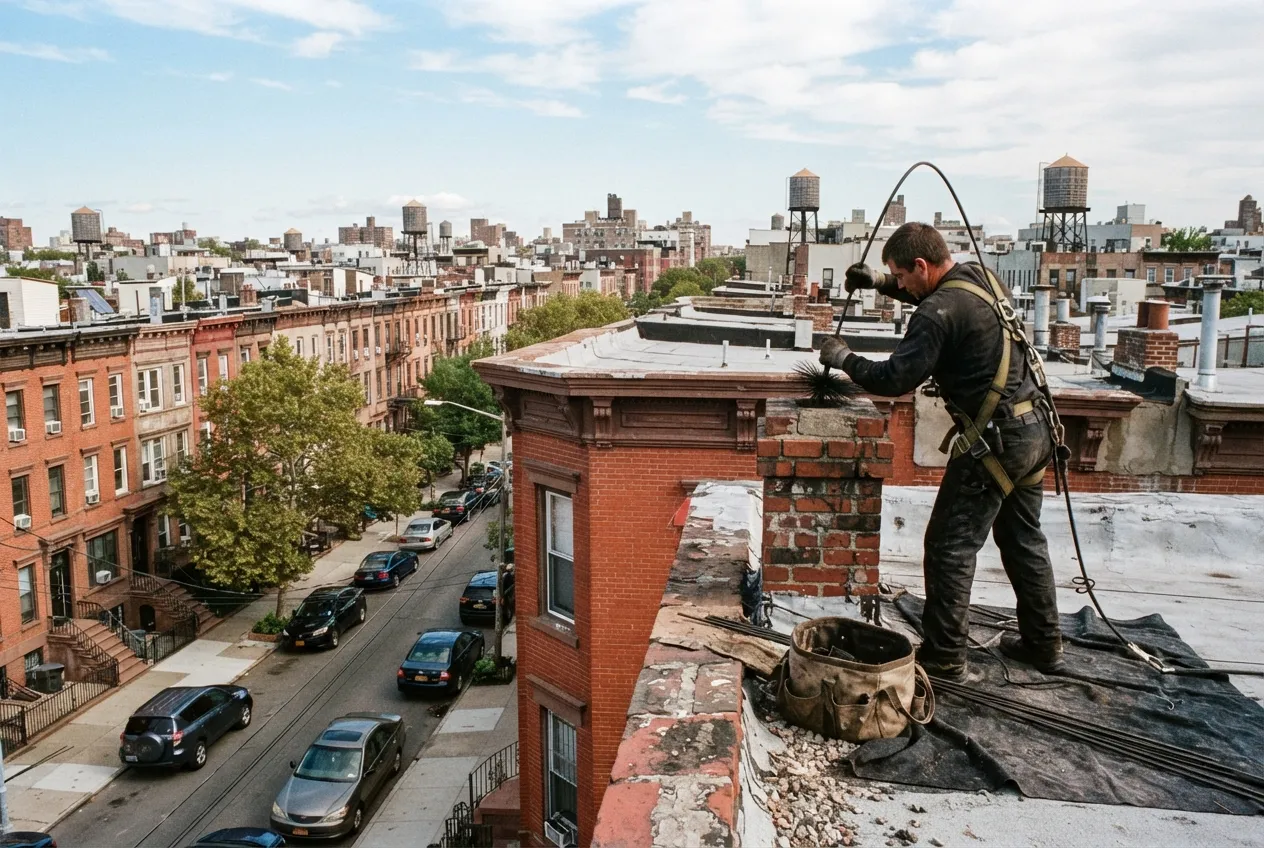
A chimney that has not been swept collects creosote, soot, fallen mortar, and sometimes nesting material from birds or squirrels. All of that narrows the flue, weakens the draft, and in the case of creosote, adds fuel that can ignite inside the chimney. StrongHold Chimney Services sweeps wood-burning fireplaces, wood and pellet stoves, and the flues that serve oil and gas boilers in Brooklyn and nearby neighborhoods. Our certified technicians clean the flue from top to bottom, check what they find along the way, and tell you plainly what condition your chimney is in. This page explains when a sweep makes sense, what we do during the visit, and what affects the cost.
Signs you need it
Many homeowners book a sweep on a yearly schedule, but your chimney often tells you it needs attention before then. If you notice any of the following, it is worth having the flue cleaned and looked at before you light another fire or start the heating season.
- A smoky or campfire-like smell from the fireplace, especially on humid days or when the air conditioning is running
- Smoke rolling back into the room instead of going up the flue, or fires that are hard to start and keep going
- Black, flaky, or tar-like deposits on the damper or the inside of the firebox
- Pieces of brick, mortar, or tile flakes collecting on the firebox floor
- Scratching, chirping, or rustling sounds inside the chimney
- Twigs, leaves, or nesting material falling past the damper
- Water or rust stains in the firebox after rain
What a sweep includes
Every sweep covers the full path smoke travels, not just the part you can see from the hearth. Here is what the visit includes.
- Protecting the floor and furniture around the fireplace before any work begins
- Brushing the flue from the firebox to the chimney top to remove soot and creosote
- Cleaning the smoke chamber and smoke shelf, where heavy buildup often collects
- Cleaning the firebox walls, floor, and damper, and checking that the damper opens and closes fully
- Removing loose debris and any nesting material we can safely reach
- A visual check of the chimney cap, crown, and flashing when the roof is accessible
- A camera look inside the flue where the layout or condition calls for it
- A written summary of what we found, with photos when we have them
How the crew works in your home and on the roof
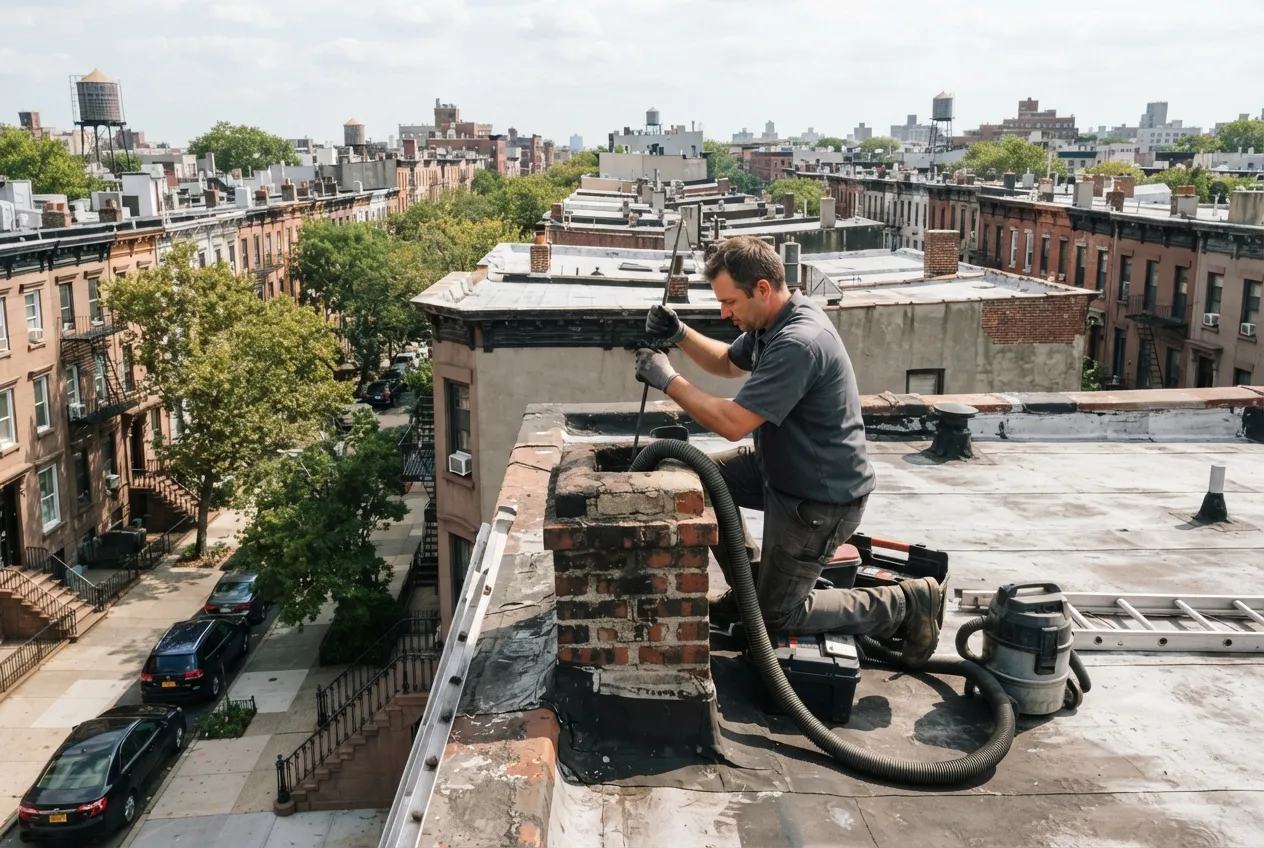
Inside, we lay drop cloths from the entry door to the fireplace and seal the fireplace opening before we start brushing. A HEPA vacuum runs during the cleaning to capture fine soot so it does not drift into the room. We use rotary brushes sized to your flue, which spin against the walls to break up creosote and glaze more effectively than a straight push brush.
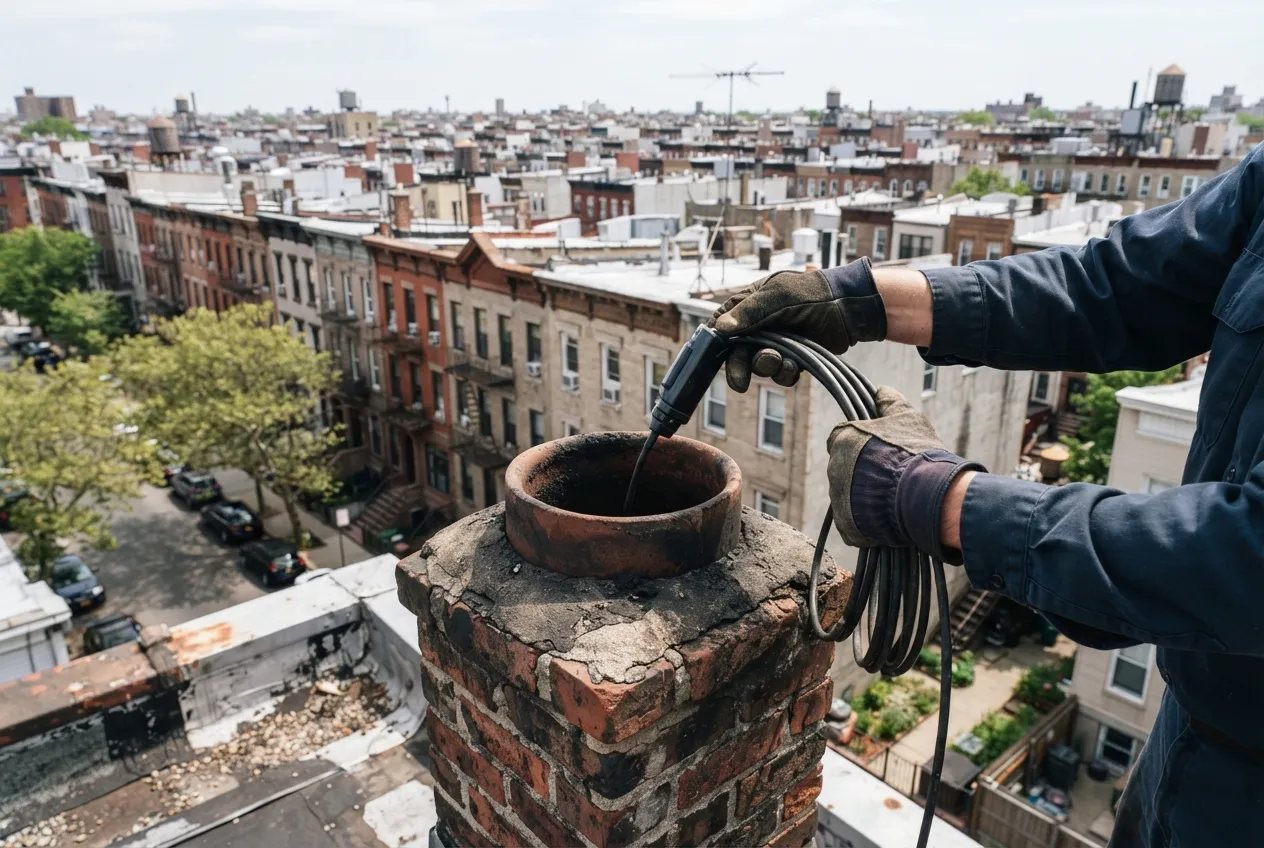
When a flue has bends, offsets, or a liner we need to see along its full length, we run a camera up the chimney. This shows cracks, gaps between tiles, and buildup that cannot be seen from the bottom or the top.
On the roof, we check the cap and screen, the crown, and the flashing where the chimney meets the roof. Many Brooklyn rowhouses and brownstones share chimney stacks and have roof access only through a hatch or bulkhead, so we confirm the access route with you when you book. We do not walk on roofs that are unsafe in wet or icy conditions; in those cases we work from below and schedule a return trip for the roof check if needed.
Time for your annual chimney check?
The standard we follow
We follow the NFPA 211 standard, which calls for chimneys, fireplaces, and vents to be inspected once a year. Chimney professionals use three inspection levels. Level 1 applies when nothing about the system has changed and you are using it as before. Level 2 applies when something changes, such as a new appliance, a switch of fuel, or the sale of the home, and it typically includes a camera inspection. Level 3 is reserved for cases where a hidden hazard has to be reached by opening part of the chimney or the building.
If your home is converting a boiler from oil to gas, the chimney needs to be evaluated as part of that work. A new liner is often needed, because gas exhaust produces acidic condensate that can corrode a masonry flue. Since New York City's heat season runs from October 1 through May 31, we suggest booking boiler flue work and sweeps before fall so your heat is not interrupted.
What affects the price
We give you a quote before the work begins. The main factors are:
- Chimney height and how the crew reaches the roof, such as a hatch, a ladder, or a shared roof
- Fuel type: wood, pellet, oil, or gas flues collect different kinds of buildup
- Flue size, shape, and condition, including whether it has a liner
- How much creosote or debris is present, including hardened glaze that takes extra work to remove
- Whether a camera inspection is needed
- Whether repairs come up, such as a new cap, crown work, or liner replacement, which we quote separately
How a visit works
When you call, we ask what kind of appliance the chimney serves, when it was last cleaned, and how we can reach the roof. Please don't use the fireplace or stove the night before so the firebox is cool when we arrive, and clear a path to the hearth.
On arrival, the technician walks through the plan with you, sets up protection, and does the sweep. Afterward, we show you what came out of the flue, share any photos or camera footage, and explain whether the chimney is ready to use or needs attention first. If we recommend repairs, you get a separate quote and decide when or whether to move forward.
Chimney Sweep by city
- Chimney Sweep in Williamsburg
- Chimney Sweep in South Williamsburg
- Chimney Sweep in Lower East Side
- Chimney Sweep in East Village
- Chimney Sweep in Fort Greene
- Chimney Sweep in Chinatown
- Chimney Sweep in Two Bridges
- Chimney Sweep in Clinton Hill
- Chimney Sweep in East Williamsburg
- Chimney Sweep in Greenpoint
- Chimney Sweep in Downtown Brooklyn
- Chimney Sweep in DUMBO