The short answer
Dryer vent cleaning removes the lint, debris and nesting material that build up in the duct between your dryer and the outside of your home. Lint buildup makes the dryer run hotter and slower, and failure to clean is the leading factor in home dryer fires. We clean the entire run, including roof vents, and check that air moves freely when we're done.
Your clothes dryer pushes hot, damp, lint-filled air through a duct to the outside of your home. In Brooklyn brownstones, rowhouses and multi-family buildings, that duct often runs a long way before it reaches open air. It may pass through a wall cavity, across a basement ceiling or up to the roof. Lint that gets past the dryer's filter settles along the way, especially at bends and joints. Over time it narrows the duct, traps heat and moisture, and makes the dryer work harder. According to the U.S. Fire Administration, failure to clean is the leading factor contributing to clothes dryer fires in homes. Our certified technicians clean the full run, from the back of the dryer to the outside vent, and show you what they found.
Signs you need it
Dryer vent problems usually build up slowly. Most owners notice the dryer first, then the laundry area, and finally the vent outside.
- Loads need two or more cycles to dry, or towels are still damp at the end of a normal cycle
- The top or sides of the dryer feel unusually hot, or the laundry area gets hot and humid while it runs
- A burning or scorched smell when the dryer is on
- Lint collecting around the dryer door, behind the machine or on the floor nearby
- The flap on the outside vent hood barely opens, or very little air comes out while the dryer runs
- Chirping, scratching or rustling near the vent, which can mean birds or rodents are nesting in the duct
- Water dripping from the duct or pooling near the dryer, often from condensation trapped behind a clog or in a sagging section
- The dryer shuts off mid-cycle or shows a vent or airflow warning
What's included
A dryer vent cleaning covers the whole system, not just the short section you can see behind the machine. Here is what every visit includes.
- Pulling the dryer out and disconnecting the transition duct
- Vacuuming the lint trap housing and the floor behind and under the dryer
- Brushing the entire duct run with rotary brushes, from the dryer connection to the outside vent
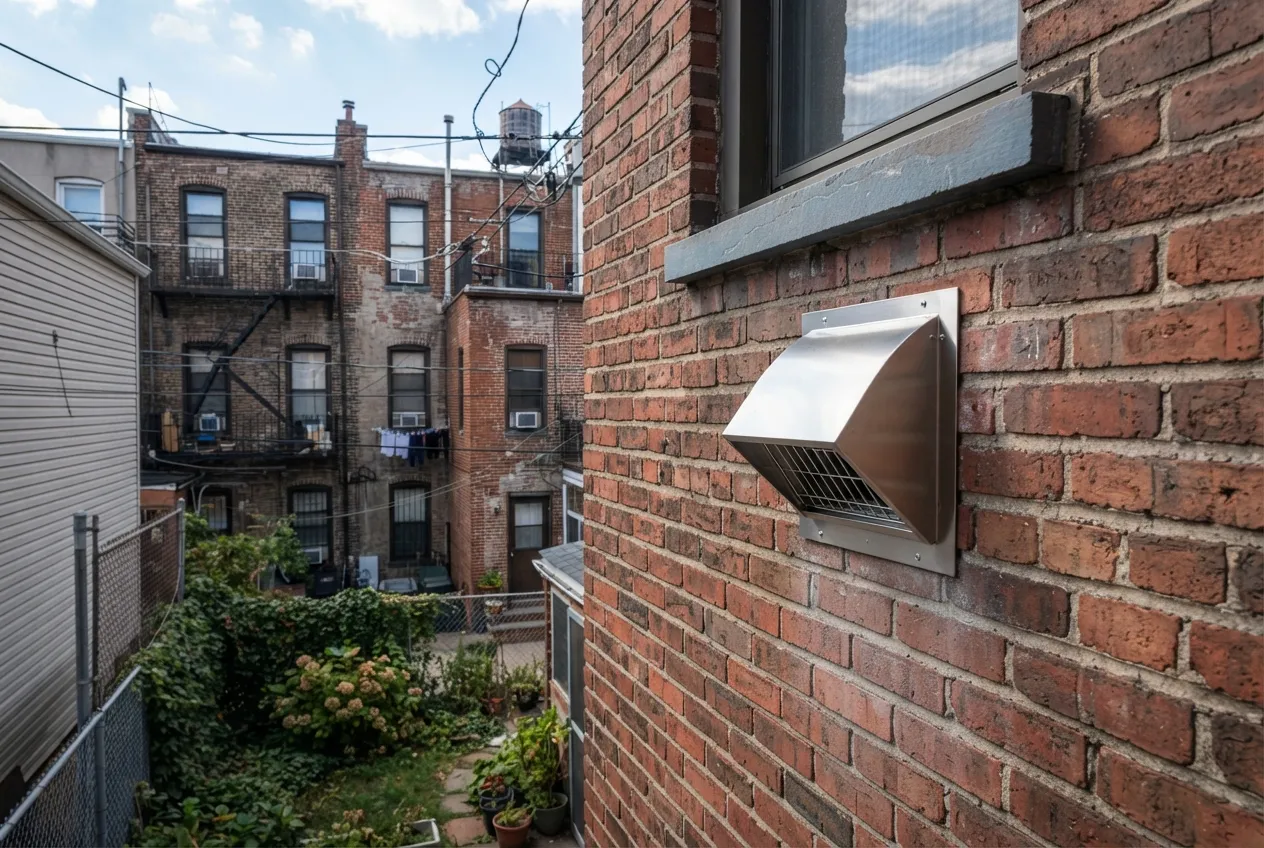
- Clearing lint, nests and debris from the exterior vent hood or roof cap and checking that the damper flap opens and closes
- Checking the transition duct and flagging plastic or thin foil accordion duct, which crushes easily and traps lint
- Looking for crushed sections, loose or separated joints and screws that stick into the duct, wherever the run can be reached
- Checking airflow at the outside vent before and after cleaning
- Reconnecting the dryer, running it, and confirming that air moves freely
- A walkthrough of what we found, with photos or camera footage when a camera was used
How we work inside your home and on the roof
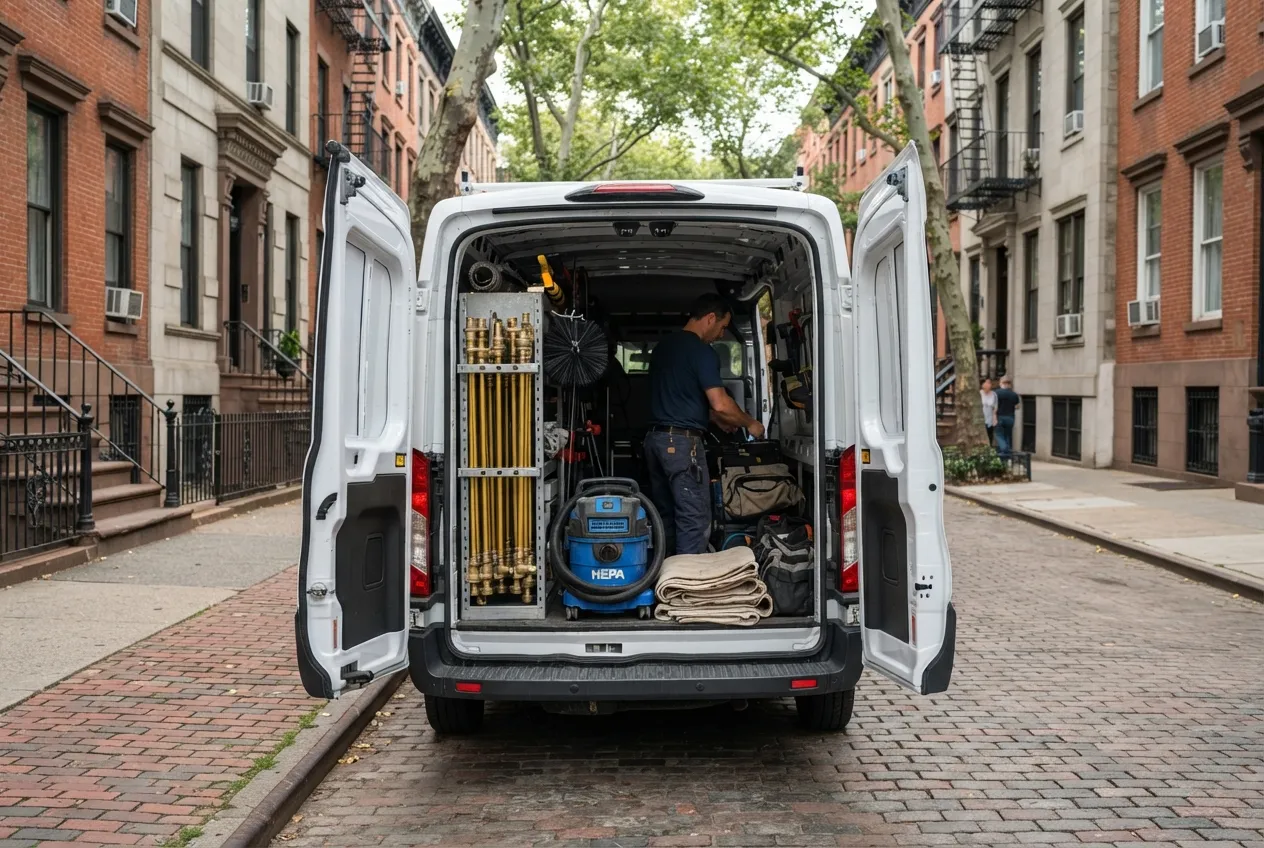
Inside, we lay drop cloths along the path from your door to the laundry area and around the dryer. Lint and debris go straight into HEPA vacuums, so dust doesn't drift into the rest of the house. We clean the duct with rotary brushes on flexible rods that can follow bends in the run. On long runs or ducts hidden in walls and ceilings, we use a camera to see blockages, crushed sections and disconnected joints that we can't otherwise reach.
If you have a gas dryer, we move it slowly and carefully so the gas connector isn't kinked or strained, and we reconnect everything the way we found it. With an electric dryer, we unplug it before any work starts.
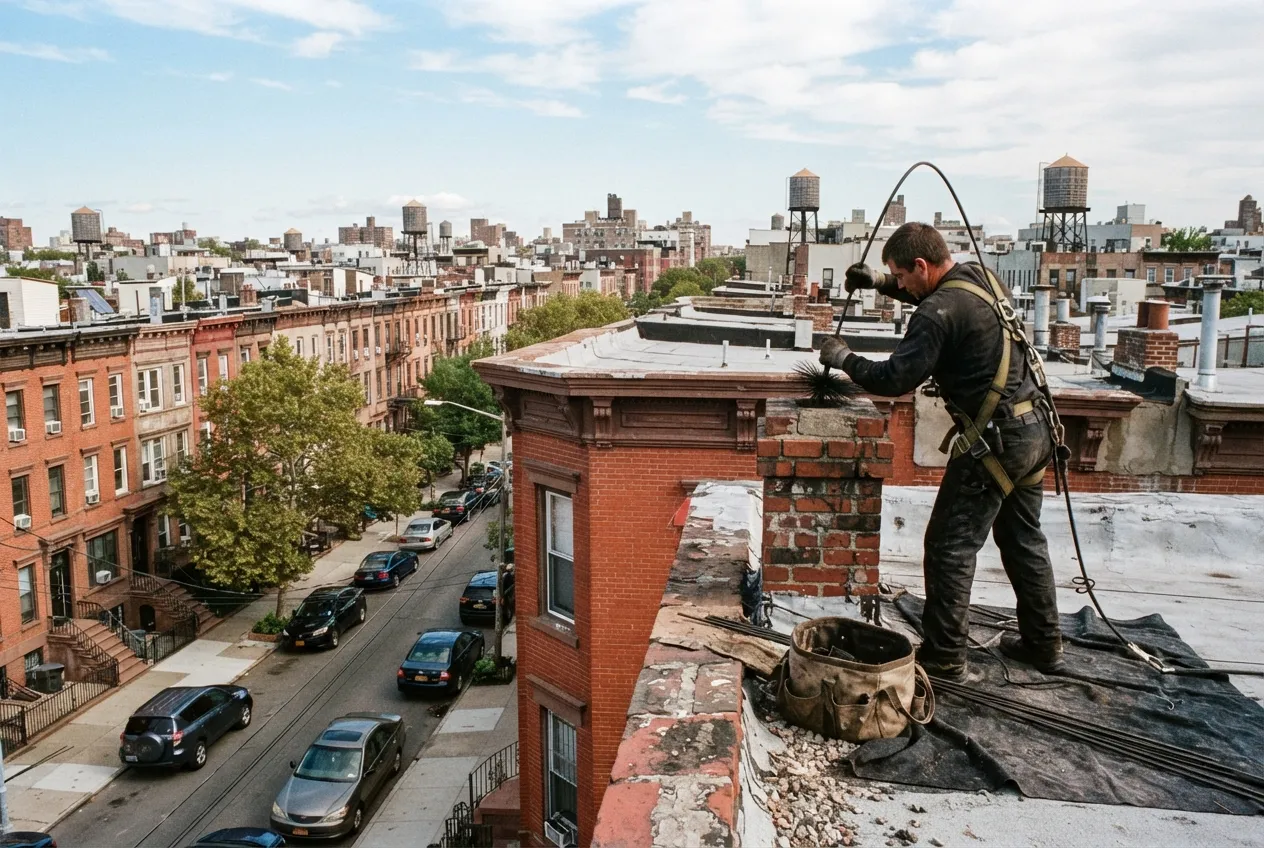
Many Brooklyn rowhouses and small apartment buildings vent dryers straight up to the roof. In those cases a technician goes up through the roof hatch or bulkhead, or by ladder when that is the safe option. The technician clears the roof cap and brushes the run from the top while a second technician works from the dryer end. We also check the cap for damage and for screens. Screens on dryer vents catch lint and clog quickly, so we'll point one out if we see it.
Time for your annual chimney check?
What affects the price
Every home is set up differently, so the cost depends on what it takes to reach and clean your vent. We explain the cost before starting any additional work.
- The length of the duct run and how many bends it has
- Where the vent ends: a side wall at ground level, a higher floor or the roof
- Building height and roof access, such as a hatch, bulkhead or ladder
- Whether the dryer is gas or electric
- The size, material and condition of the duct
- How much lint, debris or nesting material has built up
- Whether a camera inspection is needed to see a hidden section
- Any repairs, such as replacing a crushed transition duct, resealing joints, or replacing a broken vent hood or roof cap
How a visit works
When you book, we ask where your dryer is, whether it's gas or electric, and where you think the vent ends. If you don't know, that's fine. Finding it is part of the job. Please clear a path to the dryer and empty it before we arrive.
The technicians start by checking airflow at the outside vent and looking over the setup. Then they protect the floors, clean the full run, clear the exterior vent, and reconnect and test the dryer. Finally, they walk you through what they found and recommend any repairs. You decide whether to go ahead with them.
Many households do well with a yearly cleaning. Homes with large families, heavy laundry loads or long vent runs may need it more often. We'll suggest a schedule based on how much buildup we found.