The short answer
You likely need a chimney rebuild when bricks are flaking, mortar is washing out, the crown is cracked or water is reaching the firebox. StrongHold Chimney Services takes damaged masonry down to sound brick and rebuilds it with new mortar, crown, flashing and cap, following the NFPA 211 standard.
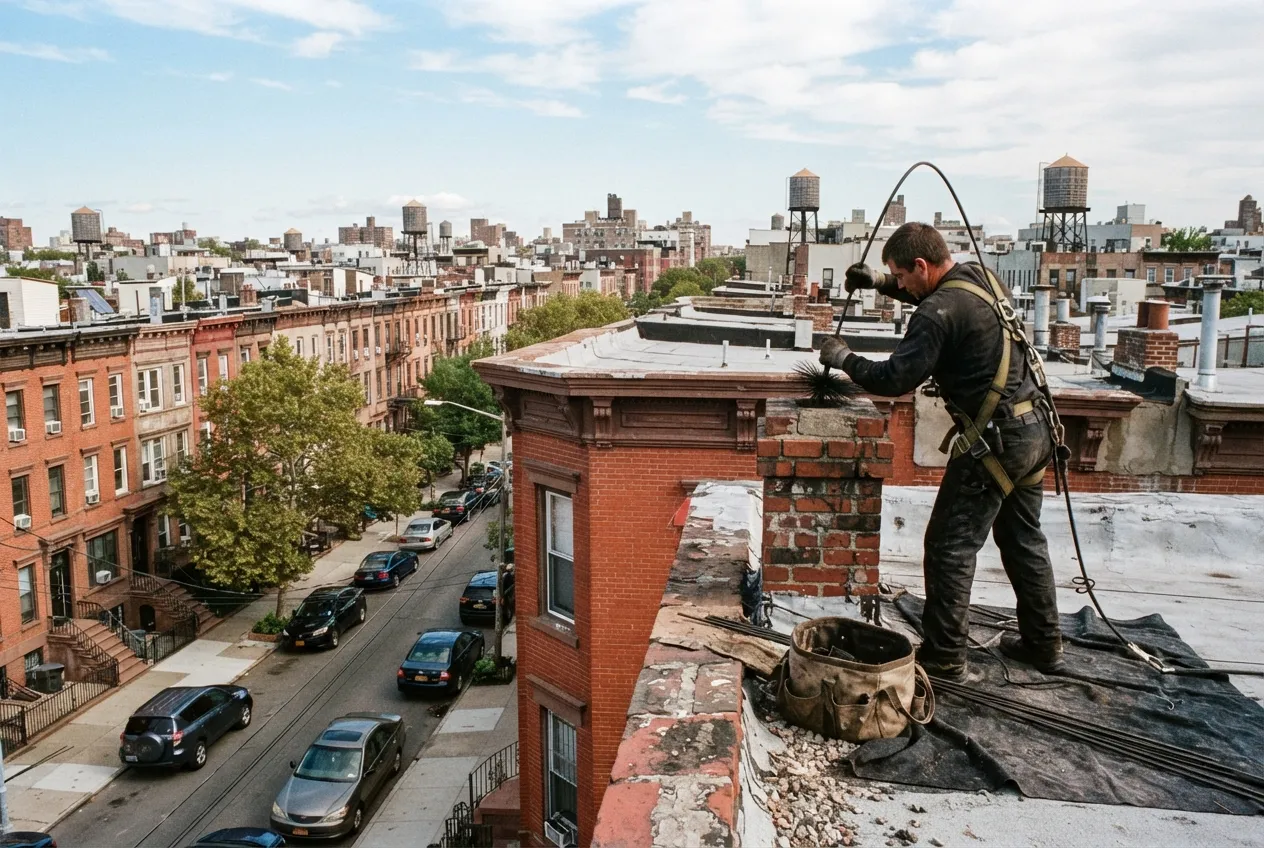
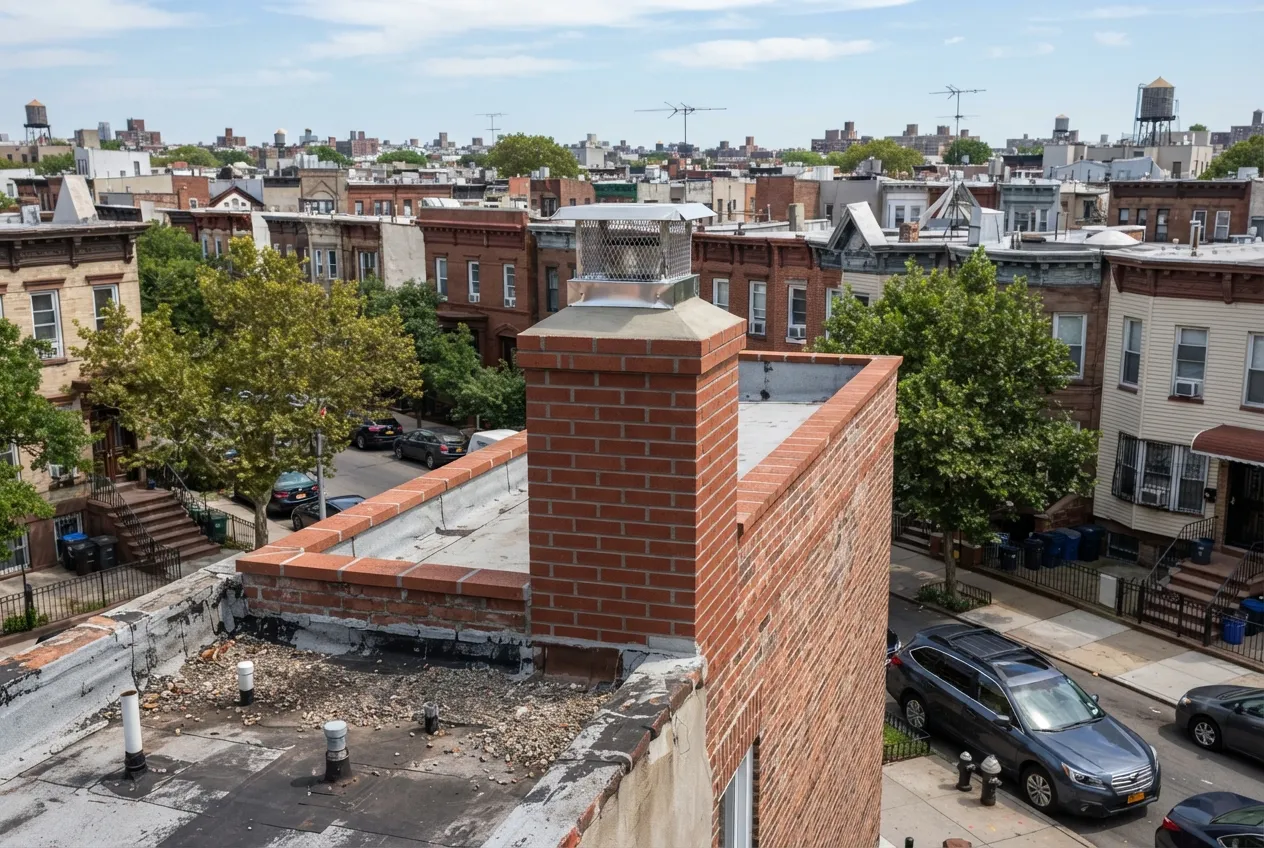
When mortar washes out, bricks crack and flake, and the crown splits, patching only buys time. Chimney rebuilding means taking the damaged section of masonry down to sound brick and laying it back up with new brick, mortar, flashing and a new crown. The rebuilt chimney sheds water and vents safely again. StrongHold Chimney Services rebuilds chimneys on row houses, brownstones, frame homes and small multifamily buildings across Brooklyn and nearby neighborhoods. Most rebuilds involve the part above the roofline, where freeze-thaw cycles and wind-driven rain do the most harm. We also rebuild deteriorated sections lower down when an inspection shows they need it. Our certified technicians first find out how far the damage goes. Then they tell you plainly what needs to be rebuilt and what can simply be repaired.
Signs you need it
Masonry usually gives warning before it fails. Most of these signs develop slowly. Look at your chimney from the street and check the firebox a couple of times a year.
- White staining on the brick, which means water is moving through the masonry and leaving salts behind
- Bricks that are cracked, flaking or losing their faces, and mortar joints soft enough to scrape out with a key
- Brick flakes, mortar sand or other debris collecting in the firebox
- Water in the firebox, or damp stains on the wall or ceiling next to the chimney
- A chimney that leans, or a crown that is cracked or missing pieces
- Poor draft or smoke rolling into the room, which can mean fallen masonry is partly blocking the flue
- A lingering smoke or creosote smell, especially on humid days, which can point to water getting into the flue
- Loose, rusted or pulled-away flashing where the chimney meets the roof
What's included in a chimney rebuild
Every rebuild is scoped to the condition of your chimney. A typical rebuild covers the following:
- A full inspection before work starts, including a camera inspection of the flue
- Roof protection and safe access set up before any masonry comes down
- Removal of damaged brick, course by course, down to sound masonry
- New brick laid back up, matched as closely as practical to the existing color and size
- New mortar joints, tooled to shed water
- A new crown with an overhang and drip edge so water runs off instead of soaking in
- New flashing, with counter-flashing where it suits the roof
- Reset or replacement of flue tiles, or a new liner when the inspection calls for one
- A chimney cap to keep out rain, debris and animals
- Cleanup of the roof and all work areas, plus photos of the finished chimney
How our crew works in your home and on the roof
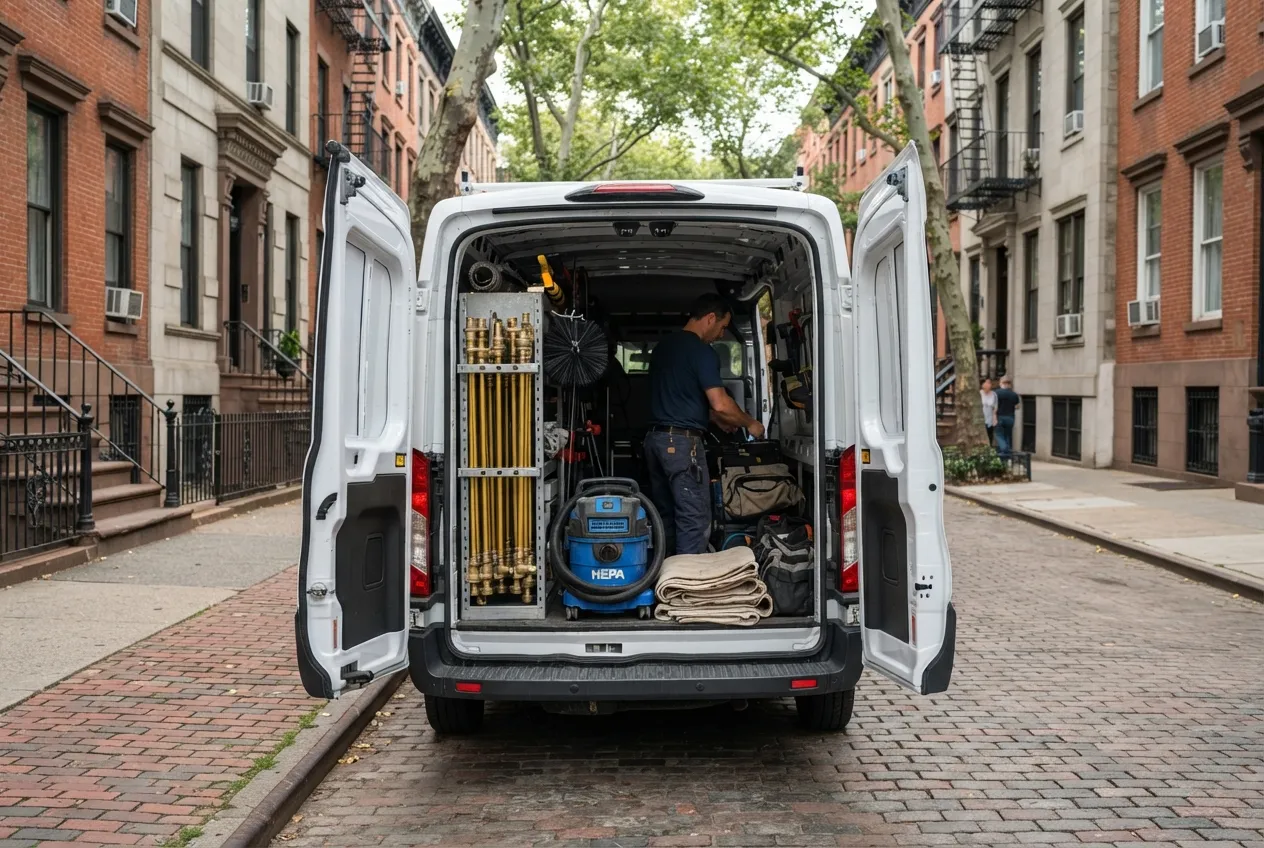
Rebuilding is mostly roof work. We usually still need to come inside to protect the fireplace or appliance connection and keep debris out of your living space. The crew lays drop cloths from the entry to the fireplace or boiler room and seals the fireplace opening. They run HEPA vacuums while they work so dust and soot stay contained. Before and after the masonry work, we sweep the flue with rotary brushes and run a camera down it. That way you can see the condition of the tiles and joints for yourself.
On the roof, we stage materials so they don't damage the roofing. We cover skylights and nearby surfaces, and we lower debris in a controlled way instead of dropping it. On attached houses, we watch out for shared parapets and neighboring roofs. We'll tell you ahead of time if we need access through an adjoining property. Mortar and crowns need dry weather and reasonable temperatures to cure properly, so we schedule around the forecast rather than rushing the job.
Time for your annual chimney check?
The standard we follow
Our work follows NFPA 211, the national standard that calls for chimneys, fireplaces and vents to be inspected once a year. Chimney professionals use three inspection levels. Level 1 fits when nothing about the system has changed. Level 2 applies when the system changes, such as a new appliance or a switch of fuel, or when the home is sold. Level 3 applies when a hidden hazard can only be reached by opening part of the chimney or building.
A rebuild changes the chimney, so we inspect before we start and again when we finish. If your building is converting its boiler from oil to gas, New York City requires the chimney to be evaluated as part of that work. A new liner is often needed, because gas exhaust produces acidic condensate that can corrode a masonry flue. If the top of the chimney is also failing, it can make sense to rebuild it during the same project.
What affects the price
No two chimneys are alike, so we price each rebuild after we inspect it. The main factors are:
Before any work starts, you get a written estimate that explains what each item covers.
- Chimney height and how many courses of brick need to come down
- Roof access, roof pitch, and whether scaffolding or extra protection is needed
- Fuel type and what the flue serves, such as a wood fireplace or a gas or oil boiler
- Flue size and the condition of the existing tiles or liner
- How much creosote or soot buildup has to be cleaned before work begins
- Whether the camera inspection finds repairs needed below the rebuilt section, such as cracked tiles
- Brick matching, crown style, and whether a new liner or cap is added
How a visit works
Most rebuilds take more than one visit. Here is what to expect:
If the flue serves your heating system, we plan the work so you're without heat for as short a time as possible. New York City's heat season runs from October 1 through May 31. During that period, building owners must keep apartments heated to the city's minimum temperatures, so landlords should plan boiler chimney rebuilds with this in mind.
- Inspection: a certified technician checks the chimney from the roof and from inside, runs a camera through the flue and takes photos
- Review: we go over the photos with you, explain what needs rebuilding and what can be repaired, and give you a written estimate
- Scheduling: we book the work for a dry stretch of weather that fits your heating needs
- Rebuild: the crew protects your home, takes the chimney down to sound masonry and rebuilds it
- Final check: we sweep and camera the flue again, show you the finished work and clean up