The short answer
A chimney cap or chase cover keeps rain, animals and debris out of your flue and chase. If you see water in the firebox, rust or white staining, or hear animals in the chimney, have the top checked. StrongHold inspects the chimney, fits the right cap or cover for your flue and fuel, and leaves your home clean.
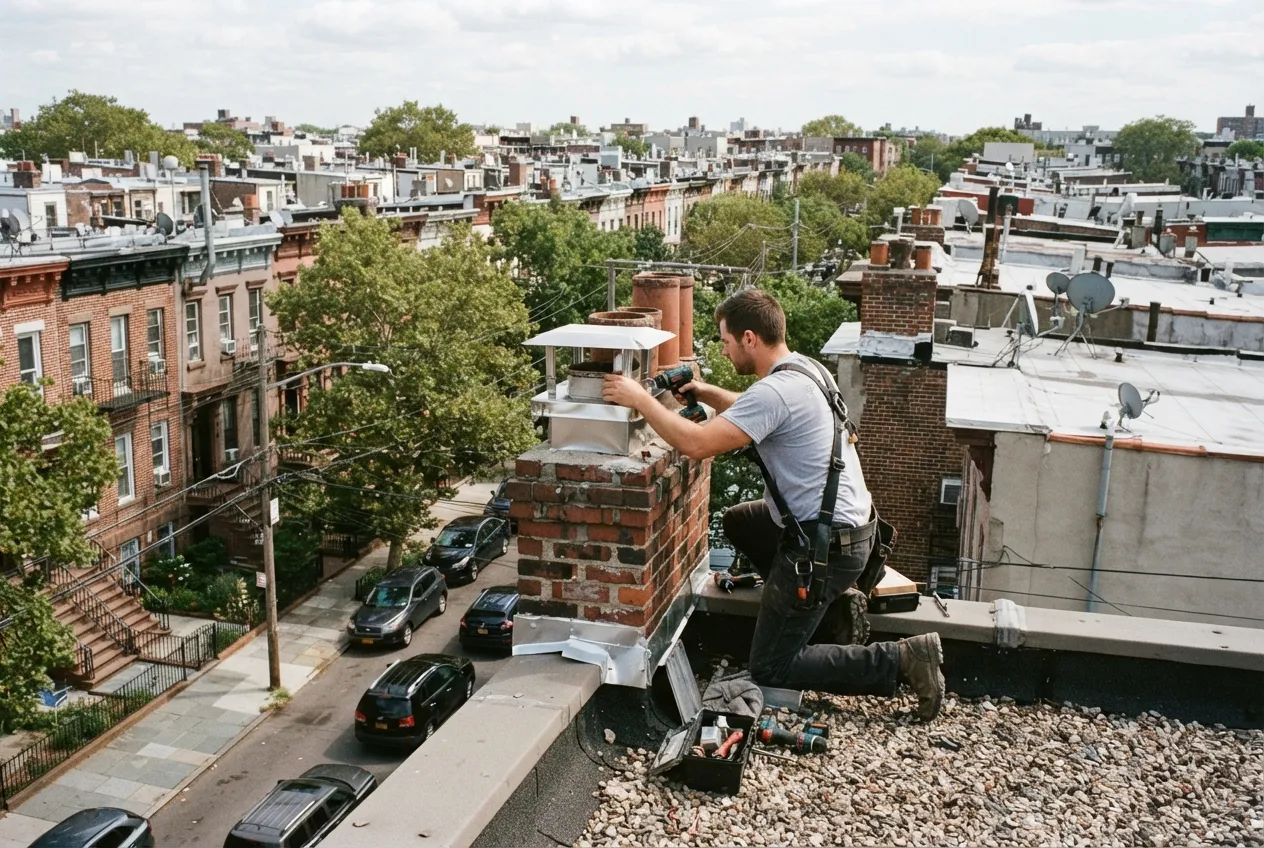
A chimney cap sits on top of the flue. A chase cover is the metal top that seals a framed chimney chase, the boxed-in enclosure common on homes with factory-built fireplaces. Both do the same basic job: they keep rain, snow, animals, leaves and debris out of the chimney while letting smoke and exhaust escape. When a cap is missing or a chase cover rusts through, water and pests have a direct route into the flue, the masonry and sometimes the walls and ceilings below. StrongHold Chimney Services measures, installs and replaces caps and chase covers for homeowners in Brooklyn and nearby neighborhoods. We inspect the chimney at the same visit so the new top goes on a sound system.
Signs you need a new cap or chase cover
Most cap and chase cover problems show up indoors first, usually after a storm or during the first fires of the season. If you notice any of these signs, have the top of the chimney checked.
- Water in the firebox, or drips and puddles after rain
- Rust streaks on the firebox, the damper or the outside of a metal chase
- White staining on the brick, a sign that moisture is moving through the masonry
- Debris or brick flakes in the firebox, including leaves, twigs or nesting material
- Animal noises in the chimney, such as scratching, chirping or fluttering
- A damp, smoky or creosote smell in the house, especially in humid weather
- Poor draft, or smoke rolling back into the room on windy days
- A missing, bent or loose cap you can see from the street
What's included
Every cap and chase cover visit follows the same checklist, whether we are adding a cap to an open flue or replacing a rusted chase cover.
- Level 1 inspection of the chimney, firebox and damper before any work starts
- Roof-level check of the crown, flue tiles, flashing and any existing cap or cover
- Measurement of each flue and the chase top so the new part fits properly
- Removal and disposal of a damaged cap or chase cover
- Removal of nests, leaves and loose debris from the top of the flue
- A cap with a mesh screen sized for your flue and fuel type
- A chase cover with a sloped surface and drip edge so water sheds away from the chase
- Secure fastening and sealing of seams
- Photos of the top of the chimney before and after
- A written summary of what we found and any repairs we recommend
How we work inside your home and on the roof
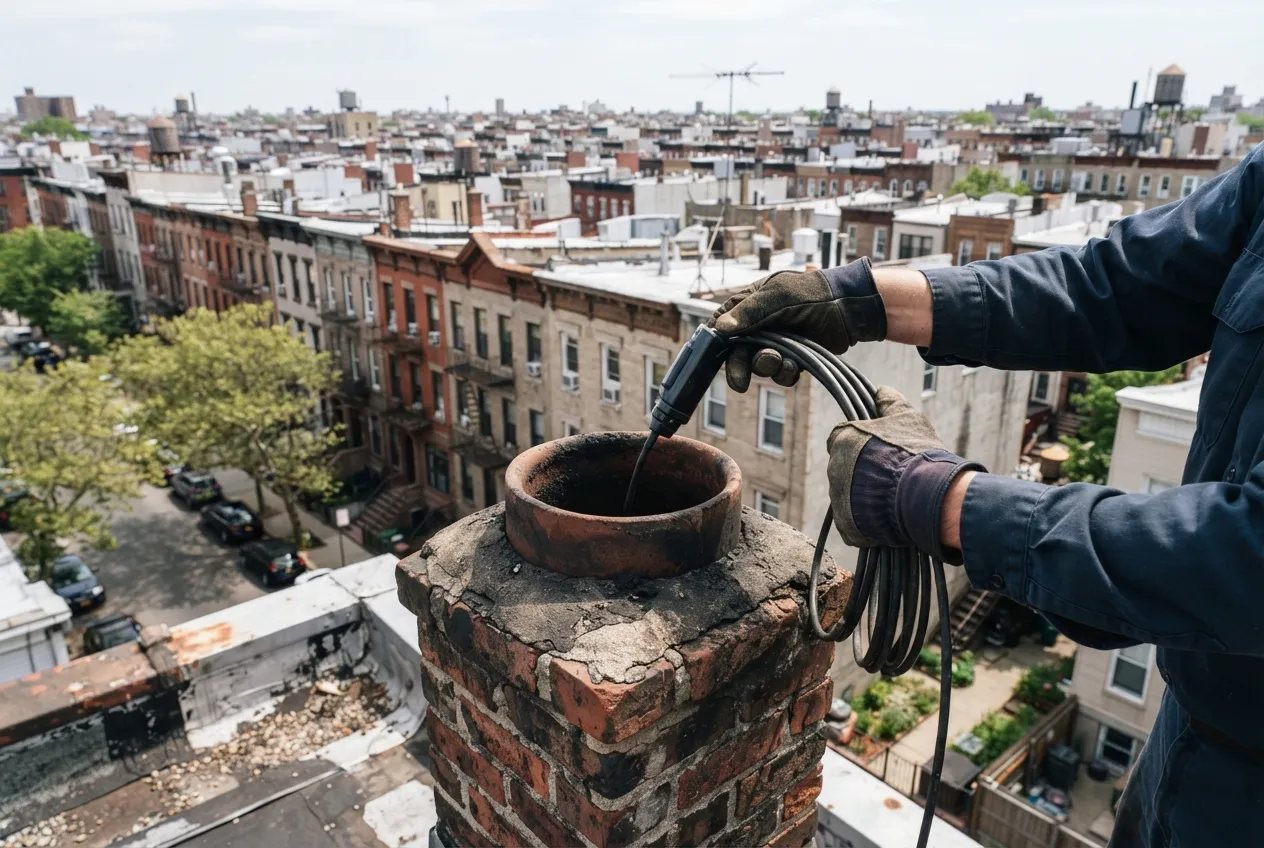
Even when most of the work happens on the roof, we start inside. Our certified technicians lay drop cloths from the door to the fireplace, set up a HEPA vacuum to catch soot and debris, and check the firebox and damper. If nesting material or heavy buildup is in the flue, we sweep it with rotary brushes while the HEPA vacuum keeps dust out of the room. Where the inside of the liner needs a closer look, we run a camera up the flue.
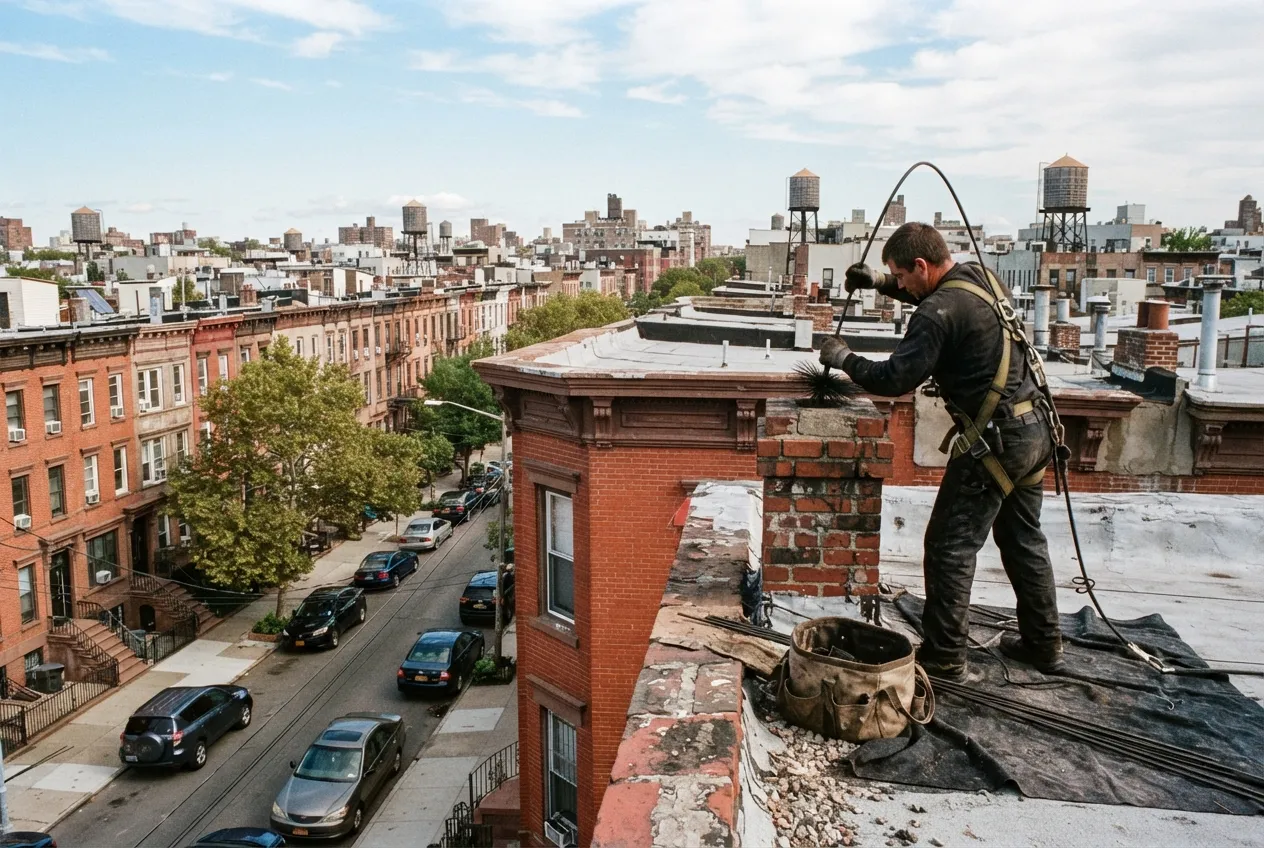
On the roof, the crew uses ladders and fall protection suited to the building and works carefully around shingles, flat roofing and parapets. Many Brooklyn houses have flat roofs with several flues in one chimney, or chimneys shared at the property line, so we confirm which flues serve your appliances before we cover anything. Caps are fastened securely to the flue or crown, and chase covers are fitted over the chase and fastened along the sides rather than through the top, where water collects.
Time for your annual chimney check?
The standard we follow
The NFPA 211 standard calls for chimneys, fireplaces and vents to be inspected once a year. Chimney professionals use three inspection levels. Level 1 applies when nothing about the system has changed. Level 2 applies when the system changes, for example a new appliance or a switch of fuel, or when the home is sold. Level 3 applies when a hidden hazard has to be reached by opening part of the chimney or the building.
A cap or chase cover visit typically includes a Level 1 inspection. If your building recently converted its boiler from oil to gas, keep in mind that in New York City the chimney has to be evaluated as part of that conversion. A new liner is often needed, because gas exhaust produces acidic condensate that can corrode a masonry flue, and the cap should suit the new liner.
New York City's heat season runs from October 1 through May 31. Sealing the top of the chimney before your boiler and fireplace start working hard helps keep water and debris out when you rely on them most.
What affects the price
We quote after seeing the chimney, because every roof and flue is different. The main factors are:
- Chimney height and roof access, including whether the roof is flat or steep
- Fuel type, since wood, gas and oil appliances call for different caps and screens
- Flue size, shape and the number of flues on the chimney
- Condition of the crown, flue tiles and chase framing
- Standard sizes versus a custom-made chase cover or multi-flue cap
- How much debris or creosote buildup has to be cleared first
- Whether a camera inspection or repairs are needed
How a visit works
You contact us and describe what you're seeing. We schedule a visit and confirm the address, roof access and which fireplace or appliance uses the chimney.
On site, we protect the work area, inspect inside and on the roof, and show you photos. If a standard cap fits, we can often install it the same day. Custom chase covers and multi-flue caps are measured first and installed on a return visit.
Before we leave, we clean up, walk you through the photos and give you a written summary. After that, plan to have the chimney inspected once a year, as NFPA 211 calls for.