The short answer
Greenpoint homes usually need a new chimney liner when a boiler switches from oil to gas, when the existing clay flue is cracked or deteriorated, or when a new heating appliance is connected to the chimney. We inspect the flue first, then fit a liner sized to the appliance it serves so exhaust leaves the building safely.
A chimney liner is the protective channel that carries smoke and exhaust from your boiler, furnace, water heater or fireplace up and out of the house. In Greenpoint, many homes and buildings still rely on original masonry flues that were built long before today's gas appliances, and those flues often need a new liner to work safely. StrongHold Chimney Services is based in Williamsburg, about 2 miles from Greenpoint, and our certified technicians install liners for rowhouses, brownstones, pre-war apartment buildings and detached homes across the 11222 ZIP code. This page explains when a liner is needed, what the work involves, and what to expect.
Why Greenpoint Chimneys Often Need Relining
Much of Greenpoint's housing is older masonry construction: attached rowhouses, brownstones, small multifamily buildings and larger pre-war apartment buildings. Their chimneys were typically built with clay tile flues, or sometimes no liner at all, and designed for coal, oil or wood. Decades of heat, moisture and freeze-thaw cycles can crack tiles, wash out mortar joints and leave gaps where exhaust can reach the brick or the inside of the building.
The most common trigger we see is a heating conversion. When a New York City building converts its boiler from oil to gas, the chimney has to be evaluated as part of the work, and a new liner is often needed. Gas exhaust is cooler and wetter than oil exhaust, and it produces acidic condensate that can corrode a masonry flue from the inside.
Signs Your Flue May Need a New Liner
Some liner problems are obvious; many are only visible with a camera. These are the situations that usually lead us to recommend relining:
- You are converting from oil to gas or replacing a boiler, furnace or water heater
- An inspection finds cracked, shifted or missing flue tiles
- Crumbling mortar, flaking brick or white staining on the chimney or nearby walls
- Water or condensate dripping at the base of the chimney or the appliance connection
- Pieces of tile or masonry falling into the cleanout or firebox
- Draft problems, such as exhaust spilling back or a fireplace that smokes into the room
- A sale of the home, which calls for a closer look at the whole venting system
How We Install a Chimney Liner
Every job starts with an inspection. The NFPA 211 standard calls for chimneys, fireplaces and vents to be inspected once a year, and it describes three levels. A change to the system, such as a new appliance or a switch of fuel, calls for a Level 2 inspection, which includes a camera look inside the flue. If a hidden hazard has to be reached by opening part of the chimney or building, that is a Level 3 inspection.
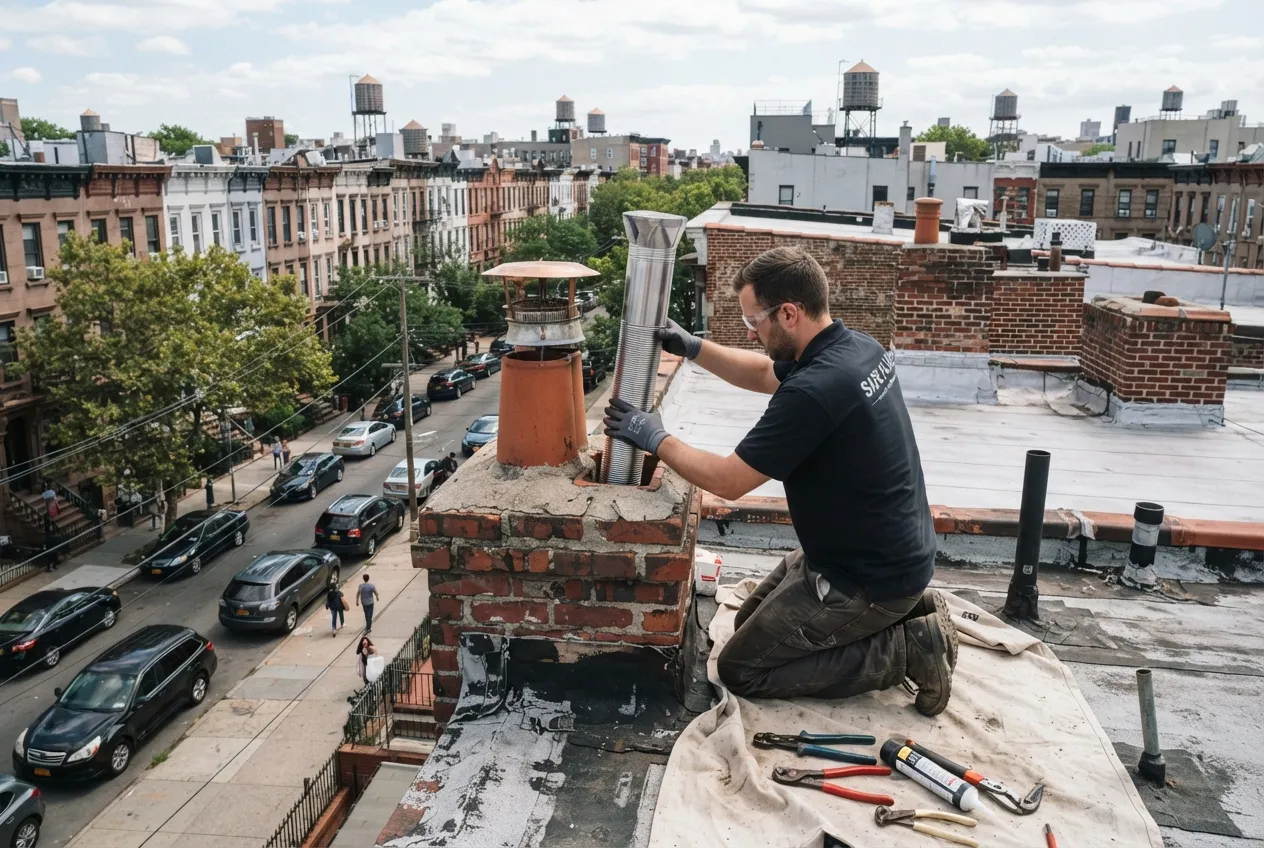
Once we know the condition of the flue, we size the liner to the appliance it will serve. For most gas and oil heating equipment that means a stainless steel liner run from the top of the chimney down to the appliance connection, with a cap at the top and a proper connection and cleanout at the bottom. Wood-burning fireplaces have their own sizing needs, and in some cases a cast-in-place liner or repairs to the existing flue make more sense. We explain the options for your chimney before any work begins.
Time for your annual chimney check?
Planning Around Heat Season
New York City's heat season runs from October 1 through May 31, when building owners must keep apartments heated to the city's minimum temperatures. For multifamily buildings in Greenpoint, that makes timing important. A liner tied to a boiler conversion or replacement is easiest to schedule in late spring or summer, when a short heating shutdown affects tenants less.
If a liner problem turns up in the middle of winter, we work with owners and their heating contractors to keep downtime as short as practical. Getting the inspection done early gives you time to plan instead of reacting to a failed flue in January.
Serving Greenpoint and Nearby Neighborhoods
Our office is in Williamsburg, so Greenpoint is close to home for our crews. Along with Greenpoint, we install chimney liners in Williamsburg, East Williamsburg and South Williamsburg, and across the river in Manhattan's East Village and Lower East Side. Whether you own a single-family house or manage a pre-war walk-up, we can inspect your chimney and recommend the liner that fits your heating system.
More services in Greenpoint
- Chimney Sweep in Greenpoint
- Chimney Inspection in Greenpoint
- Chimney Repair in Greenpoint
- Air Duct Cleaning in Greenpoint