The short answer
You need chimney repair when water, heat or age has damaged the masonry, crown, flashing or liner. Common signs are water in the firebox, white staining on the brick, brick flakes and smoke smells. StrongHold's certified technicians inspect the whole system, give you photos and a written estimate, then make the repair cleanly, following the NFPA 211 standard.
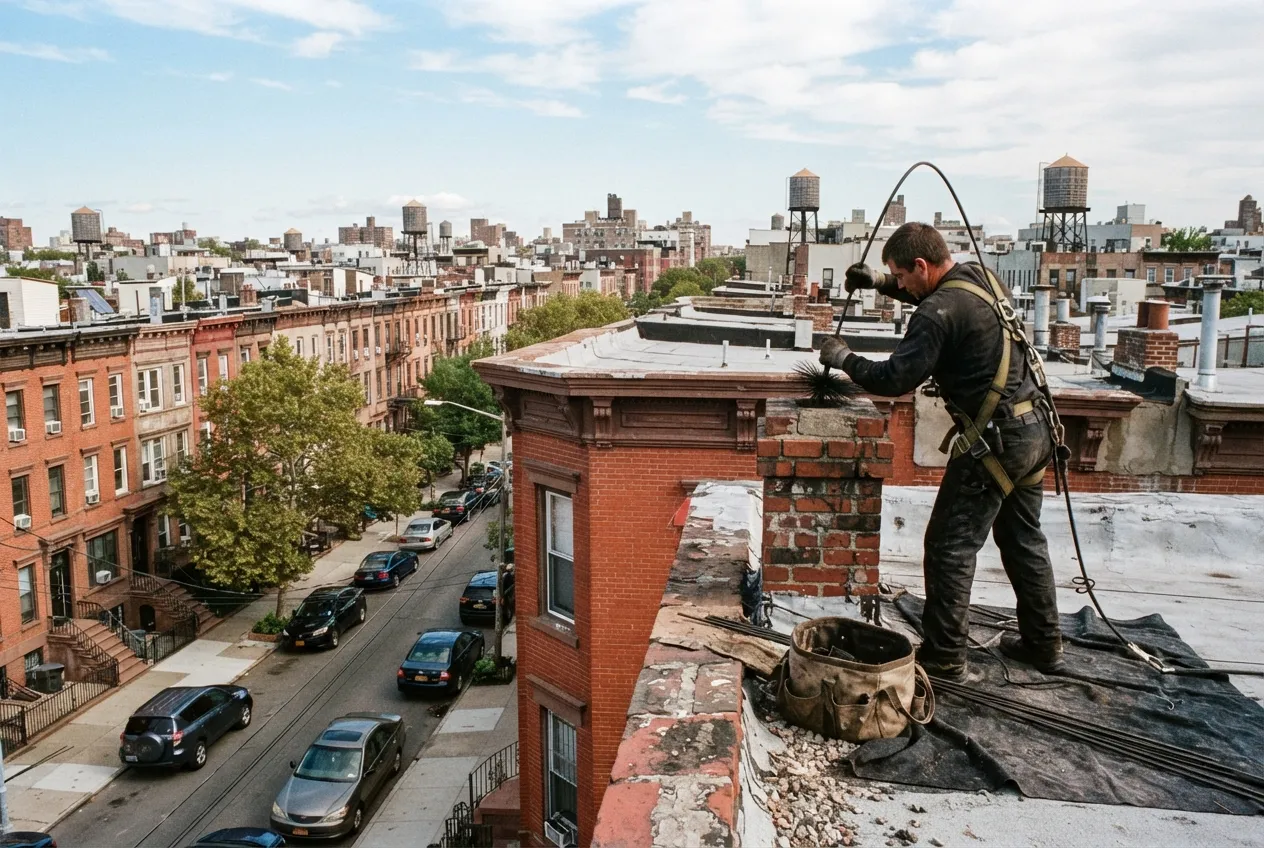
A chimney takes a beating in Brooklyn. Freeze-thaw cycles, wind-driven rain and years of heat wear down mortar, crowns and flashing until small cracks become leaks, loose bricks or a flue that no longer vents safely. StrongHold Chimney Services repairs masonry chimneys and flue systems on row houses, brownstones, frame homes and small multifamily buildings in Brooklyn and nearby neighborhoods. Our certified technicians find the cause of the problem, show you what they found and explain your options before any repair begins. This page covers the warning signs, what the work includes, how we protect your home, and what to expect when we visit.
Signs you need chimney repair
Most chimney damage starts small and out of sight. Water is the usual culprit. It gets in through a cracked crown, failed flashing or open mortar joints, then freezes, expands and pushes the masonry apart. Schedule an inspection if you notice any of these:
One sign on its own does not always mean a major repair. Each one is still worth checking, because the hidden damage behind it tends to grow. If you see water coming in, falling brick or smoke entering the room, stop using the fireplace or appliance until it has been checked.
- Water in the firebox, or damp stains on the ceiling or wall beside the chimney
- White, chalky staining on the brick, a sign that water is moving through the masonry
- Brick flakes, mortar sand or pieces of flue tile collecting in the firebox
- Loose, cracked or crumbling bricks on the outside of the chimney
- A smoke or creosote smell in the house, especially in humid weather
- Poor draft, with smoke rolling into the room instead of going up the flue
- Scratching or chirping in the chimney, which often means a missing or damaged cap
- Rust on the damper or other metal parts of the firebox
What's included in a chimney repair visit
Every repair begins with a look at the whole system, not just the spot you noticed. Depending on what we find, a repair visit can include:
Not every chimney needs all of this. We recommend only the work your chimney needs and explain why each item matters.
- Visual inspection of the firebox, damper, smoke chamber and flue
- Exterior check of the crown, cap, flashing and brickwork from the roof
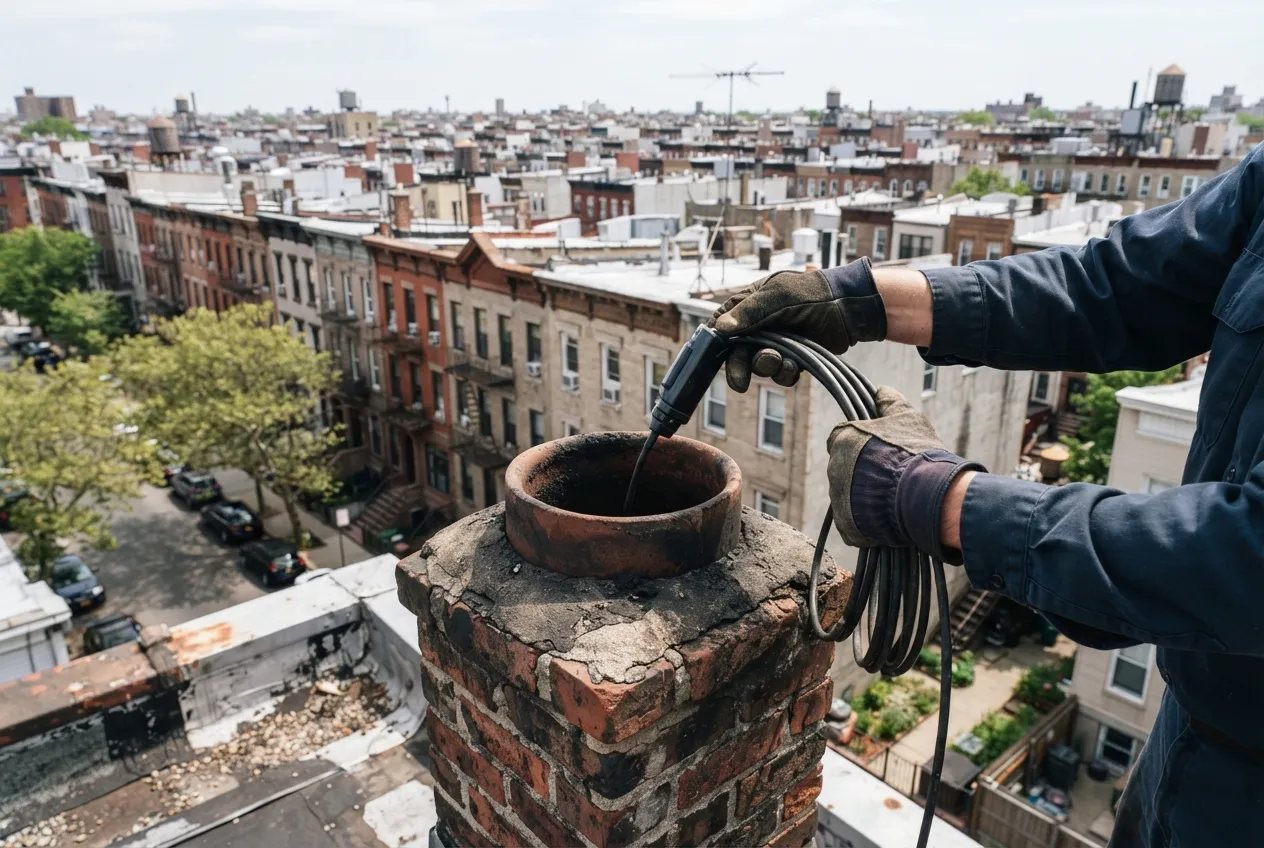
- Camera inspection of the flue liner when cracks, gaps or hidden damage are suspected
- Written findings with photos so you can see what we saw
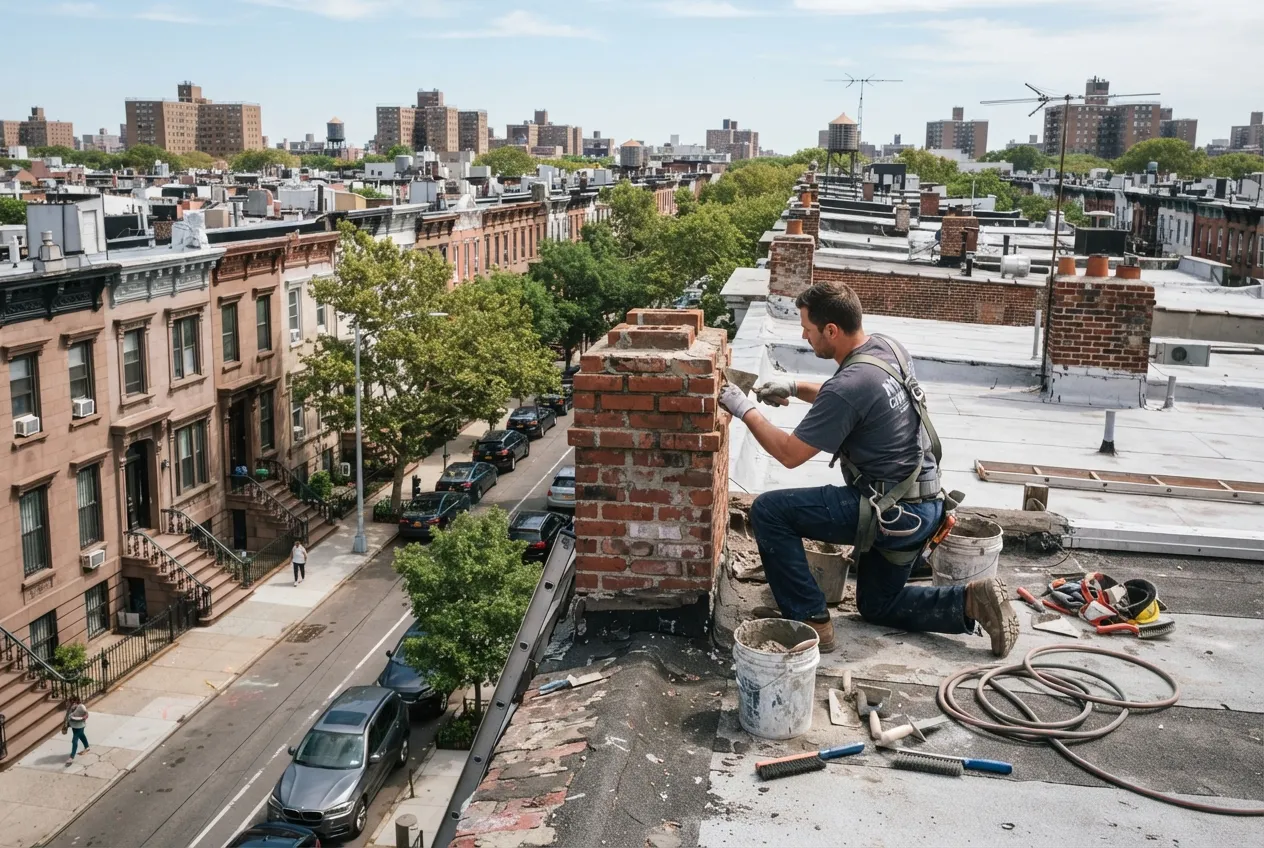
- Tuckpointing: grinding out failed mortar joints and filling them with new mortar
- Rebuilding or resurfacing a cracked chimney crown
- Replacing or resealing flashing where the chimney meets the roof
- Installing or replacing a chimney cap with animal screening
- Repairing firebox brick and refractory mortar, or replacing a damaged damper
- Relining a damaged flue with a stainless steel liner when needed
- Applying a breathable masonry water repellent where it will help
- Full cleanup of the work area inside and out
How we work inside your home and on the roof
Inside, the crew lays drop cloths from your entry to the fireplace and covers the hearth and nearby furniture. Before we open the damper or disturb any soot, we set up a HEPA vacuum at the fireplace opening to keep dust and debris from spreading into the room. If the flue needs cleaning before repair, we use rotary brushes sized to the flue so the liner is clearly visible, then run a camera up the flue to record its condition.
On the roof, technicians set ladders and protect the surface so shingles, membranes and gutters are not damaged. Debris is bagged and lowered instead of dropped, and new brick and mortar are matched as closely as practical to what is already there. On attached homes, we work carefully around shared walls, parapets and neighboring roofs.
When the job is done, we vacuum, remove the drop cloths and walk you through the finished work with before-and-after photos.
Time for your annual chimney check?
The standard we follow
Our work follows NFPA 211, the national standard for chimneys, fireplaces and vents. It calls for these systems to be inspected once a year. Chimney professionals use three inspection levels. Level 1 is for a chimney where nothing has changed. Level 2 applies when the system changes, such as a new appliance or a switch of fuel, or when the home is sold. Level 3 is for a hidden hazard that can only be reached by opening part of the chimney or building.
Most repair visits start with a Level 1 or Level 2 inspection. Level 3 work is uncommon, and we recommend it only when a suspected problem cannot be reached any other way.
If you are converting a boiler from oil to gas, New York City requires the chimney to be evaluated as part of the work. A new liner is often needed, because gas exhaust produces acidic condensate that can corrode a masonry flue.
The city's heat season runs from October 1 through May 31, when building owners must keep apartments heated to minimum temperatures. If you own a multifamily building, schedule repairs to heating flues before fall so the system is ready.
What affects the price
We give you a written estimate after the inspection, before any repair starts. The main factors are:
- Chimney height and how easy it is to reach the roof
- Fuel type (wood, gas or oil), which affects liner and material choices
- Flue size and the condition of the existing liner
- How much soot or creosote buildup has to be removed before repair
- Whether a camera inspection is needed to find hidden damage
- How much repair is needed, from a few mortar joints to a crown rebuild or full relining
How a visit works
We keep the process simple and explain each step before we take it.
- You contact us, describe what you are noticing, and we set a time to visit.
- A certified technician inspects the chimney inside and out, using a camera where it fits.
- We show you photos, explain the cause, and give you a written estimate with your options.
- Once you approve, we schedule the repair. Small repairs can sometimes be done during the same visit.
- The crew completes the work, cleans up, and reviews the results with you.
Chimney Repair by city
- Chimney Repair in Williamsburg
- Chimney Repair in South Williamsburg
- Chimney Repair in Lower East Side
- Chimney Repair in East Village
- Chimney Repair in Fort Greene
- Chimney Repair in Chinatown
- Chimney Repair in Two Bridges
- Chimney Repair in Clinton Hill
- Chimney Repair in East Williamsburg
- Chimney Repair in Greenpoint
- Chimney Repair in Downtown Brooklyn
- Chimney Repair in DUMBO