The short answer
A chimney liner protects the masonry flue from heat and corrosive exhaust. In Chinatown's pre-war apartment buildings and walk-ups, a new liner is often needed when a boiler converts from oil to gas or an inspection finds cracked tile. Our certified technicians evaluate the flue, size the liner to the appliance, and install it from the roof down.
Many buildings in Chinatown were built long before today's boilers and water heaters, and their chimneys were not designed for the exhaust those appliances produce. A liner is the protective tube inside the flue that carries smoke and combustion gases safely out of the building. When the original clay tile is cracked, missing, or the wrong size for the appliance, a new liner restores that protection. StrongHold Chimney Services installs chimney liners in Chinatown from our office in Williamsburg, about 2 miles east across the river, so we can schedule evaluations and installations without long waits.
Why Chinatown Buildings Often Need New Liners
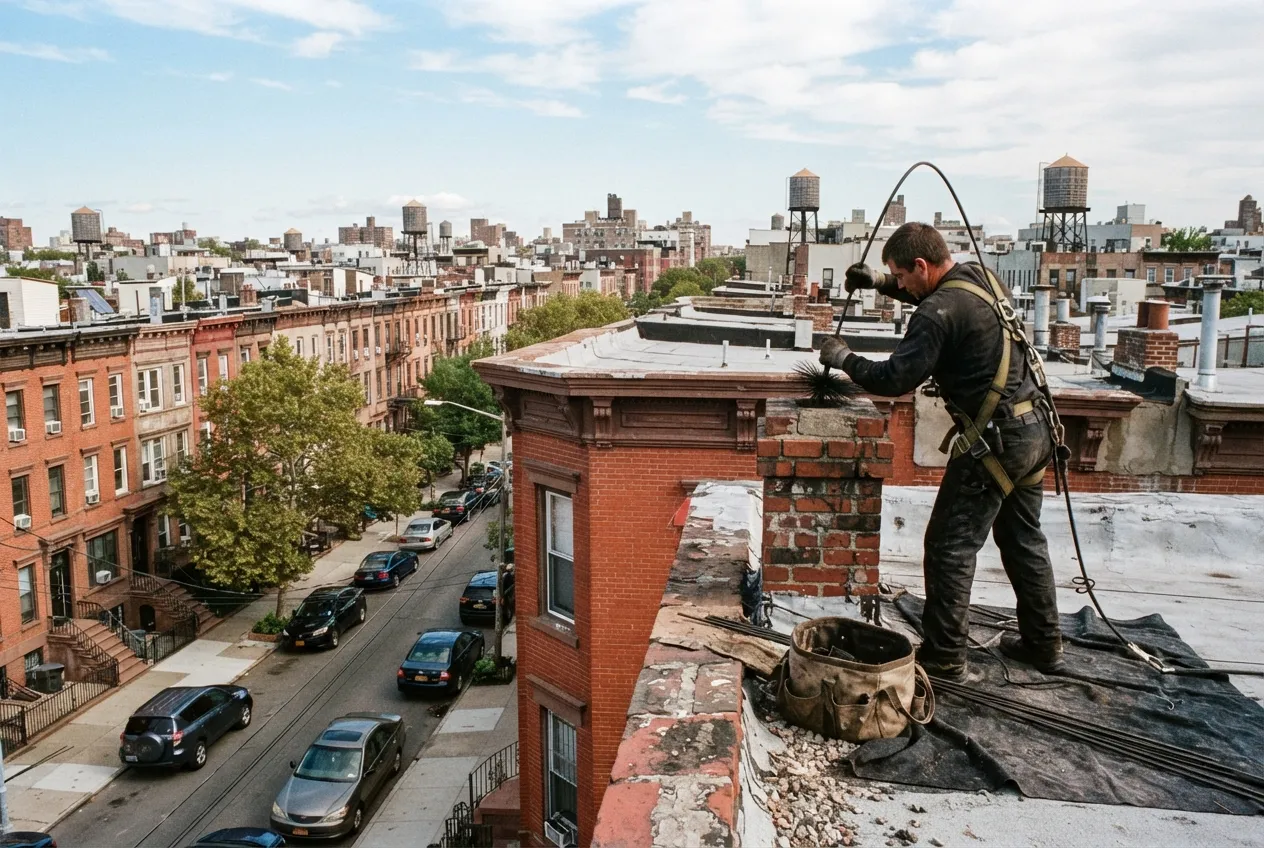
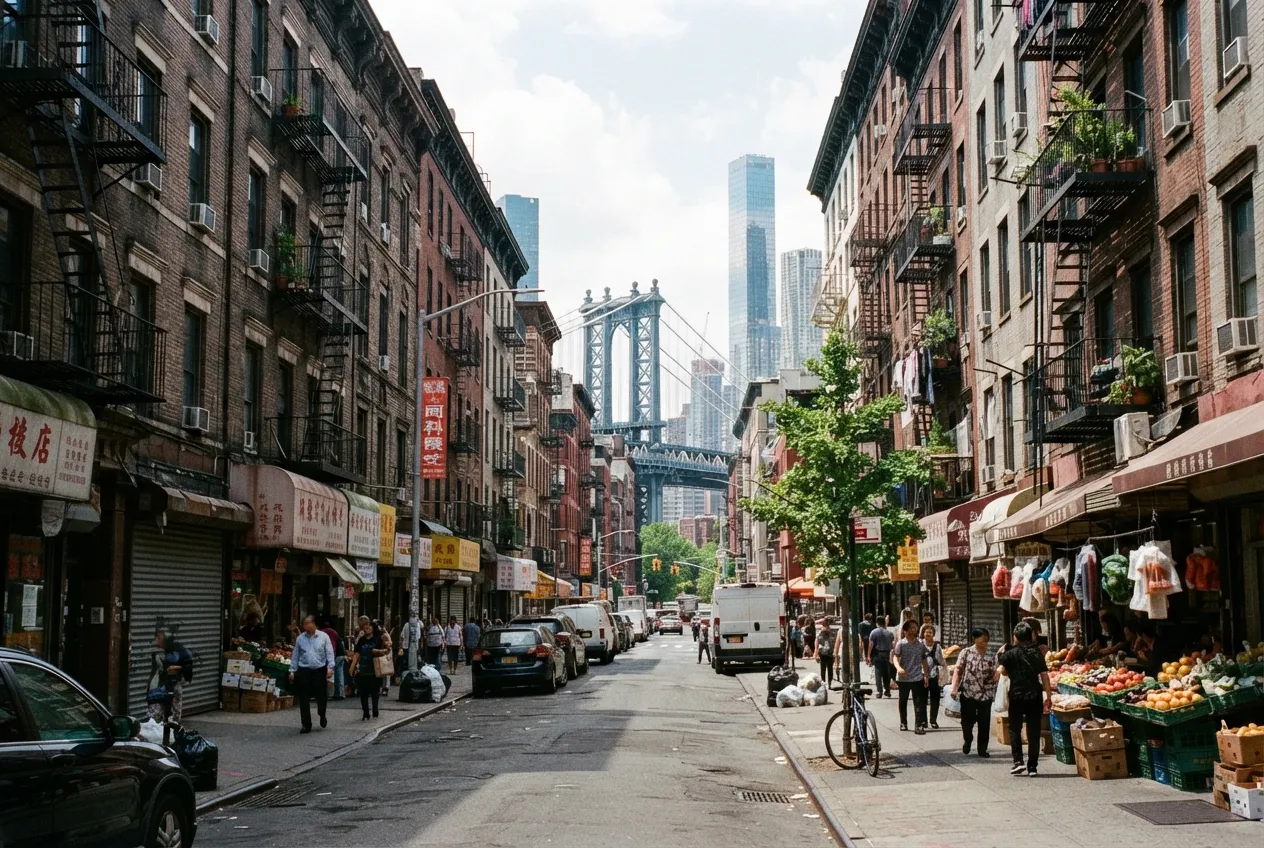
Chinatown's housing is mostly older multi-story construction: pre-war apartment buildings, walk-ups, and mixed-use buildings with shops on the ground floor and apartments above. Many of these chimneys serve a central boiler in the basement and run the full height of the building. Over decades, clay tile liners crack from heat cycling, mortar joints wash out, and some older flues were never lined at all.
Fuel changes are another common reason. When a New York City building converts its boiler from oil to gas, the chimney has to be evaluated as part of the work, and a new liner is often needed. Gas exhaust produces acidic condensate that can corrode a masonry flue, eating away at mortar and tile from the inside where no one can see it.
Signs Your Chimney May Need a Liner
Liner problems are usually hidden inside the walls, so the warning signs tend to show up somewhere else in the building. Watch for:
- Pieces of tile or flaking masonry collecting at the base of the chimney or in the cleanout
- Water stains, damp patches or white mineral deposits on walls near the chimney
- Drafting problems, such as a boiler or water heater that spills exhaust or has trouble venting
- A planned boiler replacement, a switch from oil to gas, or a new appliance tied into the flue
- An inspection report noting cracked, missing or undersized flue tile
How We Evaluate the Flue
The NFPA 211 standard calls for chimneys, fireplaces and vents to be inspected once a year, and it describes three inspection levels. A Level 2 inspection applies when the system changes, such as a new appliance or a switch of fuel, or when the home is sold. That usually includes a camera inspection of the full flue. A Level 3 inspection is used when a hidden hazard has to be reached by opening part of the chimney or building.
For a liner job, we check the condition of the existing flue, measure its height and interior dimensions, and confirm what appliances it serves. The liner has to be sized to the appliance's venting needs. A liner that is too large or too small can cause poor draft and condensation problems.
Time for your annual chimney check?
What Installation Involves
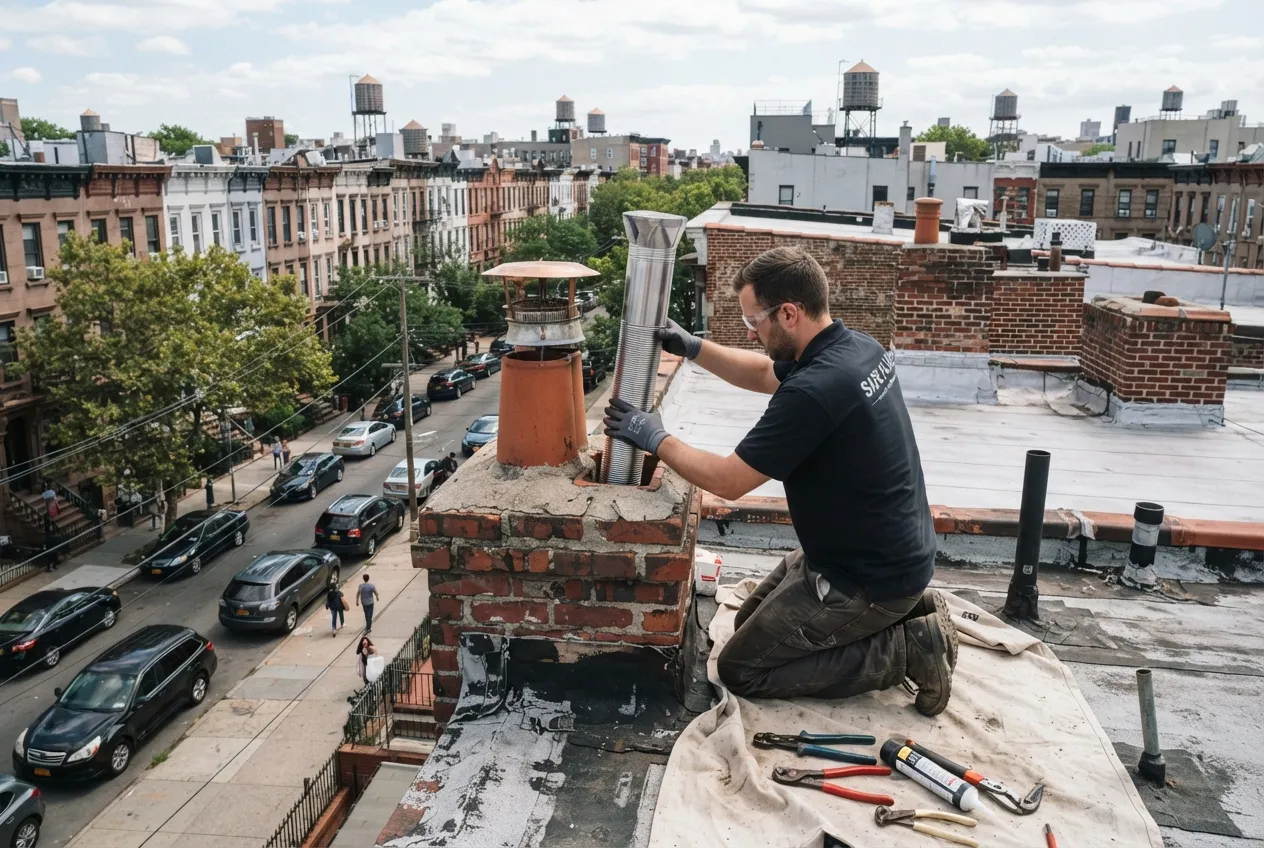
Most liners we install in Chinatown buildings are stainless steel, chosen to suit the fuel and appliance. Stainless liners handle the acidic condensate from gas appliances far better than old clay tile. In tall buildings, the work is usually done from the roof, lowering the liner down the existing flue and connecting it to the appliance at the base.
After installation, we cap the top, seal the connection points, and test the draft. We'll explain what was installed and what to watch for going forward. Because the work involves roof access and sometimes basement mechanical rooms, we coordinate timing with owners, supers and tenants so the building isn't left without heat or hot water longer than necessary.
Timing Around Heat Season
New York City's heat season runs from October 1 through May 31, when building owners must keep apartments heated to the city's minimum temperatures. If your boiler depends on the chimney, the best time to plan liner work is late spring or summer. When a liner problem turns up in the middle of winter, we plan the job to keep the boiler down for as short a time as possible.
We also install liners in nearby neighborhoods, including Two Bridges, the Lower East Side, the East Village, Downtown Brooklyn and DUMBO.
More services in Chinatown
- Chimney Sweep in Chinatown
- Chimney Inspection in Chinatown
- Chimney Repair in Chinatown
- Air Duct Cleaning in Chinatown