The short answer
Chimney waterproofing stops rain from soaking into your chimney's brick, mortar and crown, which prevents leaks, crumbling masonry and rusted dampers. We inspect first, fix the openings where water gets in, then apply a breathable, masonry-specific water repellent to the exposed brick.
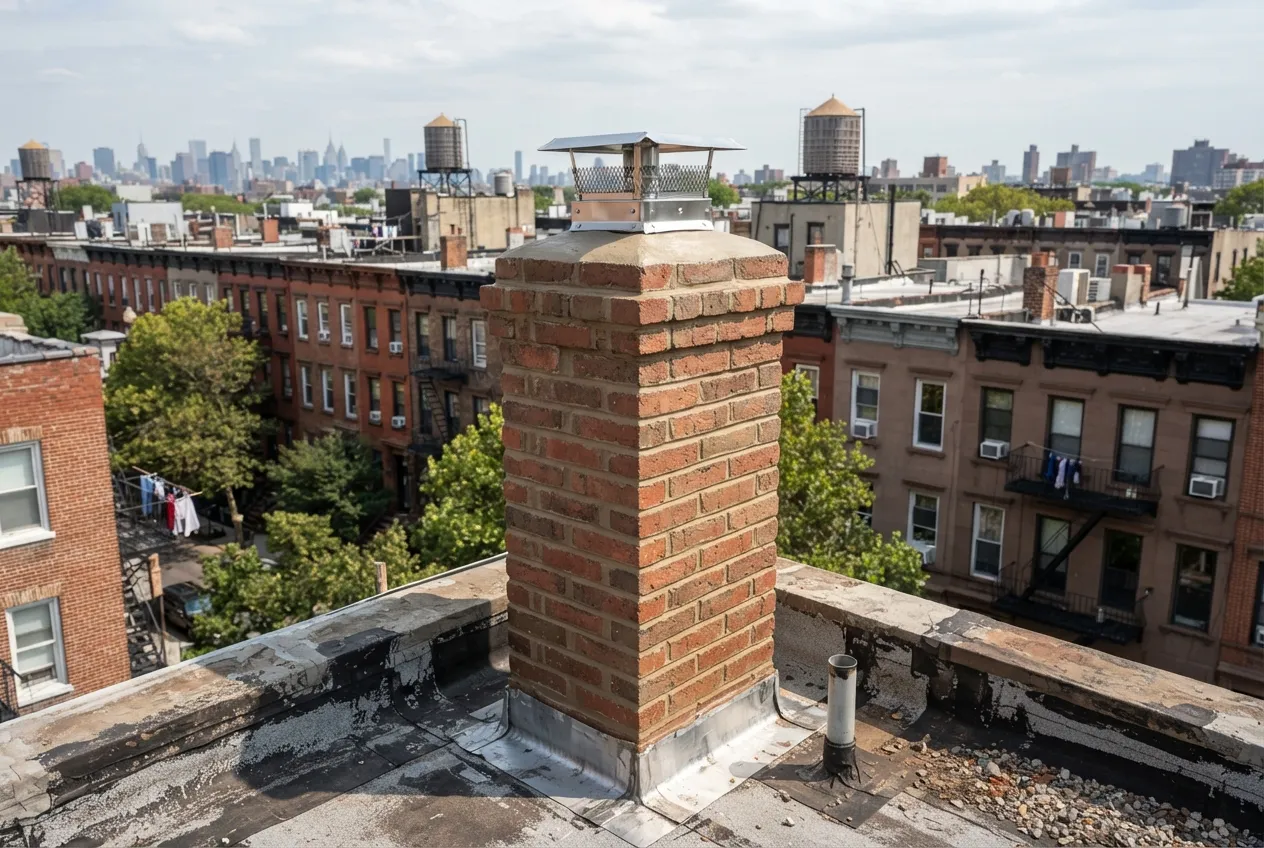
Brick and mortar soak up water. On Brooklyn homes, the chimney stack sits above the roofline and takes the full force of rain, wind and winter freeze-thaw cycles, so it often wears out faster than the rest of the house. Chimney waterproofing means finding where water gets in, closing those openings, and applying a vapor-permeable water repellent to the masonry. The chimney then sheds rain while still letting moisture inside the brick escape. StrongHold Chimney Services handles waterproofing for homes in Brooklyn and nearby neighborhoods. Every job starts with an inspection, so the treatment matches what your chimney actually needs instead of covering up a problem that will keep leaking.
Signs you need it
Water damage in a chimney usually builds slowly. Most owners first notice it inside the house, often after a heavy rain or when the heat comes back on in the fall.
Any one of these signs is a reason to have the chimney checked. A water repellent alone will not fix a cracked crown or failed flashing, so we find the cause before we treat anything.
- Water, damp ash or puddles in the firebox after rain
- White, chalky staining on the brick, inside or outside, where water carried salts to the surface
- Brick flakes, crumbling mortar or grit collecting in the firebox
- A musty smoke or creosote smell that gets stronger in humid or rainy weather
- Rust on the damper, firebox doors or chimney cap
- Water stains on the ceiling or wall next to the chimney
- Brick faces popping off or cracking on the outside of the stack
What's included
A waterproofing visit covers the whole path water can take into the chimney, not just the brick surface.
Larger repairs, such as rebuilding a crown, repointing mortar joints, replacing flashing or relining a flue, are quoted separately after the inspection. You decide on them before any work starts.
- Exterior inspection of the brick, mortar joints, crown, flashing and cap
- Interior check of the firebox, damper and flue, with a camera where we need to see the liner
- Cleaning loose debris, moss and dirt off the masonry so the repellent can soak in
- Marking cracks, open joints and damaged brick that need repair before sealing
- Sealing hairline cracks in the crown
- Checking the flashing and sealing small gaps where the chimney meets the roof
- Applying a vapor-permeable, masonry-specific water repellent to the exposed brick and mortar
- Checking the cap, or recommending one if the flue is open to rain
- Photos and a written summary of what we found and what we did
How the crew works inside your home and on the roof
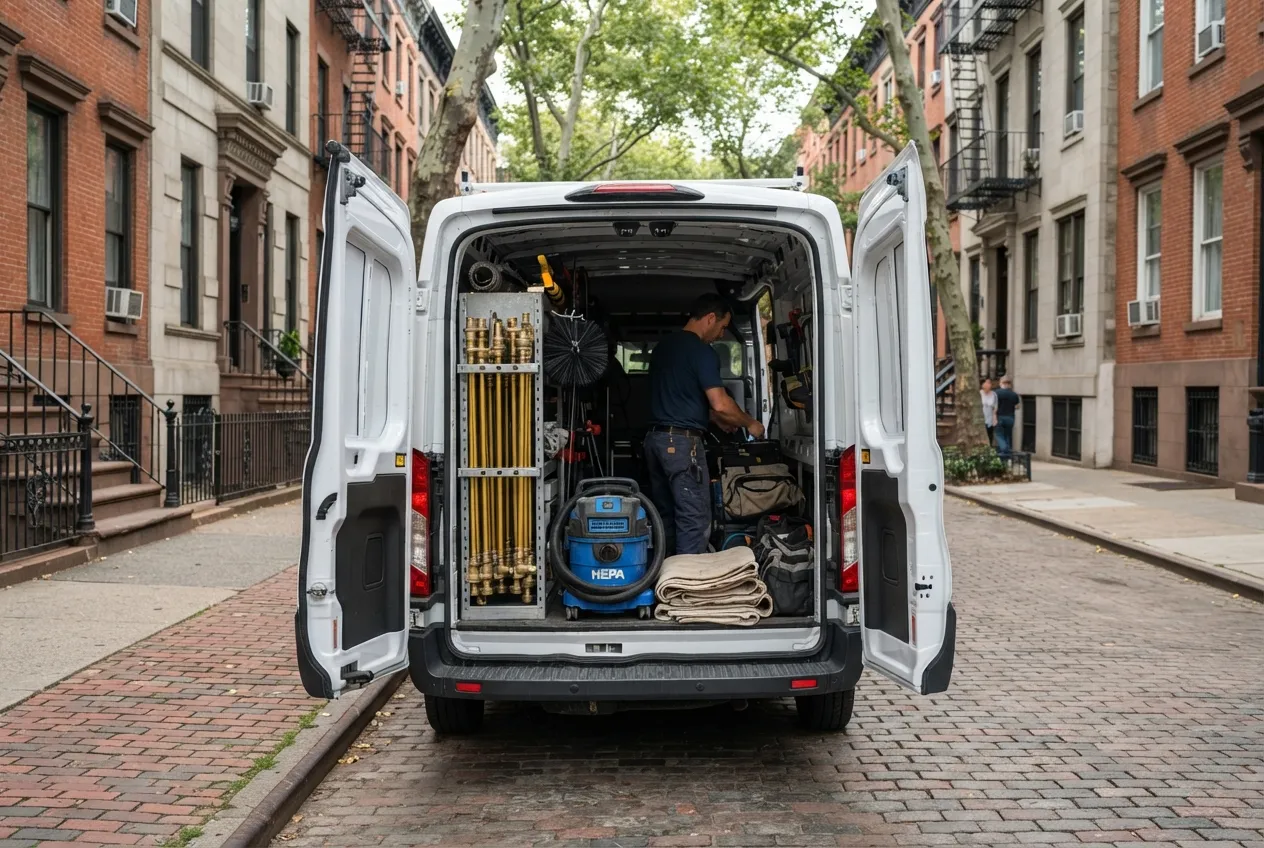
Inside, we lay drop cloths from the entry to the fireplace and cover the hearth and nearby furniture. A HEPA vacuum runs whenever the damper or firebox is opened, so soot and grit stay contained. If the flue needs cleaning before we can inspect it, we use rotary brushes with the vacuum running. Where the condition of the liner matters, we run a camera up the flue so you can see what we see.
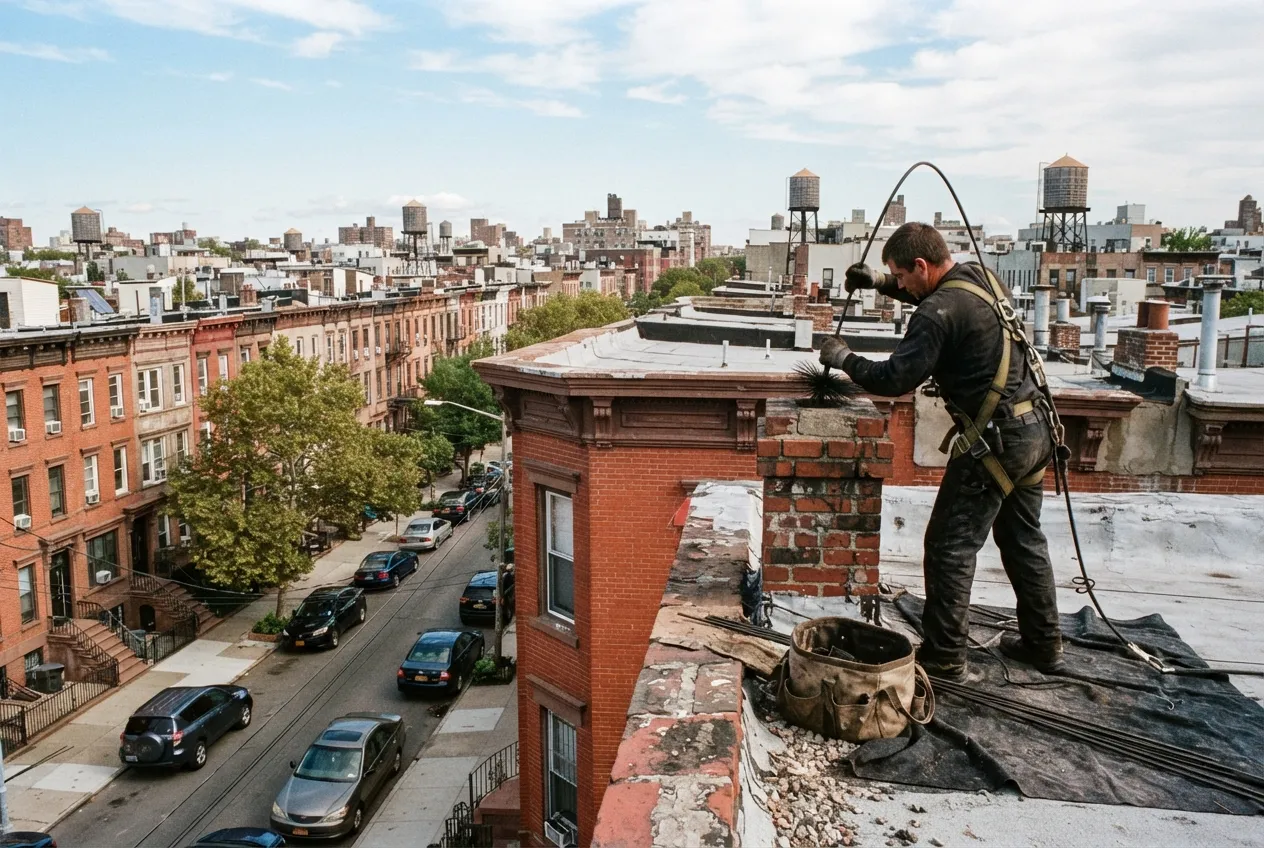
On the roof, we work from safe access points and protect the roofing and nearby surfaces before we start. We clean the masonry, seal the crown and flashing gaps, and then apply the repellent with a low-pressure sprayer, working from the top of the stack down until the brick is fully saturated. The product needs dry brick and dry, mild weather to soak in and cure. If rain is coming, we reschedule rather than seal wet masonry.
We use breathable products made for masonry. Paint and film-forming sealers trap moisture inside the brick, where it freezes in winter and pushes the brick faces off. A vapor-permeable repellent keeps rain out while letting that moisture escape.
Time for your annual chimney check?
The standard we follow
The NFPA 211 standard calls for chimneys, fireplaces and vents to be inspected once a year. Chimney professionals use three inspection levels. Level 1 applies when nothing about the system has changed. Level 2 applies when the system changes, such as a new appliance or a switch of fuel, or when the home is sold. Level 3 applies when a hidden hazard can only be reached by opening part of the chimney or building. Our certified technicians use the level that fits your situation. Most waterproofing visits start with a Level 1 review, and we move to a Level 2 camera inspection when water may be damaging the flue.
Not all chimney moisture comes from rain. When a New York City building converts its boiler from oil to gas, the chimney has to be evaluated as part of the work. A new liner is often needed because gas exhaust produces acidic condensate that can corrode a masonry flue. Exterior waterproofing will not fix that problem, so we tell you if we see it.
Timing matters too. New York City's heat season runs from October 1 through May 31, when building owners must keep apartments heated to the city's minimum temperatures. Scheduling waterproofing and any repairs before the heating system is running full time is usually easier for everyone.
What affects the price
Every chimney is different, so we price the job after we see it. These are the main factors:
- Chimney height and roof access, such as a flat row-house roof versus a steep pitched roof
- How much exposed brick there is to treat
- Fuel type, since gas, oil and wood each wear on a chimney differently
- Flue size and the condition of the liner
- How much soot or creosote buildup has to be cleaned before inspection
- Whether a camera inspection is needed
- Repairs to the crown, mortar, flashing or cap before sealing
How a visit works
You book a time, and we confirm it closer to the date based on the weather forecast, since waterproofing needs dry conditions. When the crew arrives, they set up drop cloths and the HEPA vacuum, then inspect the chimney inside and out.
Before any work starts, we walk you through what we found, with photos. If the chimney only needs cleaning, crown and flashing touch-ups and the repellent, we can usually finish on the same visit. If it needs bigger repairs, we explain the options, and the repellent goes on once the repairs are done. You get a written summary at the end, and we leave the work area as clean as we found it.