The short answer
Fireplace and damper repair fixes stuck or rusted dampers, cracked firebrick, open mortar joints and the water or draft problems behind them. StrongHold Chimney Services inspects the fireplace first, explains what it finds, and then makes the repair.
A fireplace that smokes into the room, a damper that won't close, or cracked firebrick is more than an annoyance. These parts control where heat, smoke and gases go. When they fail, a fire can draw poorly, cold air and rain can get in, and heat can reach materials it shouldn't. StrongHold Chimney Services repairs fireplaces and dampers in brownstones, row houses and single-family homes across Brooklyn and nearby neighborhoods. Our certified technicians inspect the whole system first, show you what they find, and explain the repair before any work starts. Below is what to watch for, what the work includes, and how a visit goes.
Signs you need it
Damper and firebox problems usually build slowly. Many owners first notice them at the start of the heating season, after the fireplace has sat unused for months. If you see any of the following, have the fireplace looked at before your next fire.
- Smoke rolling into the room instead of going up the flue, or a fire that is hard to start and keep going
- A smoky or creosote smell in the room, especially on humid days or when the air conditioning runs
- A damper handle that sticks, won't stay open, or won't close tightly
- Cold drafts or a whistling sound from the fireplace when it isn't in use
- Brick flakes, mortar sand or broken pieces of firebrick in the firebox
- Cracks or gaps in the firebox walls or between the firebox and the hearth
- Water, rust stains or a rusted damper plate in the firebox after rain
- White staining on the brick, a sign that moisture is moving through the masonry
- Scratching or chirping above the damper, which can mean an animal is nesting in the smoke chamber or flue
What's included
Every repair visit starts with an inspection, because a damper or firebox problem often has a cause higher up the chimney. Depending on what we find, the work can include:
- Inspection of the firebox, damper, smoke chamber and visible flue, with a camera when the problem is out of sight
- Cleaning soot and creosote from the damper area and smoke chamber so repairs go onto sound surfaces
- Freeing, adjusting or repairing a throat damper that sticks, warps or doesn't seal
- Replacing a damper that is rusted through or broken, including a top-sealing damper at the top of the flue where the chimney allows it
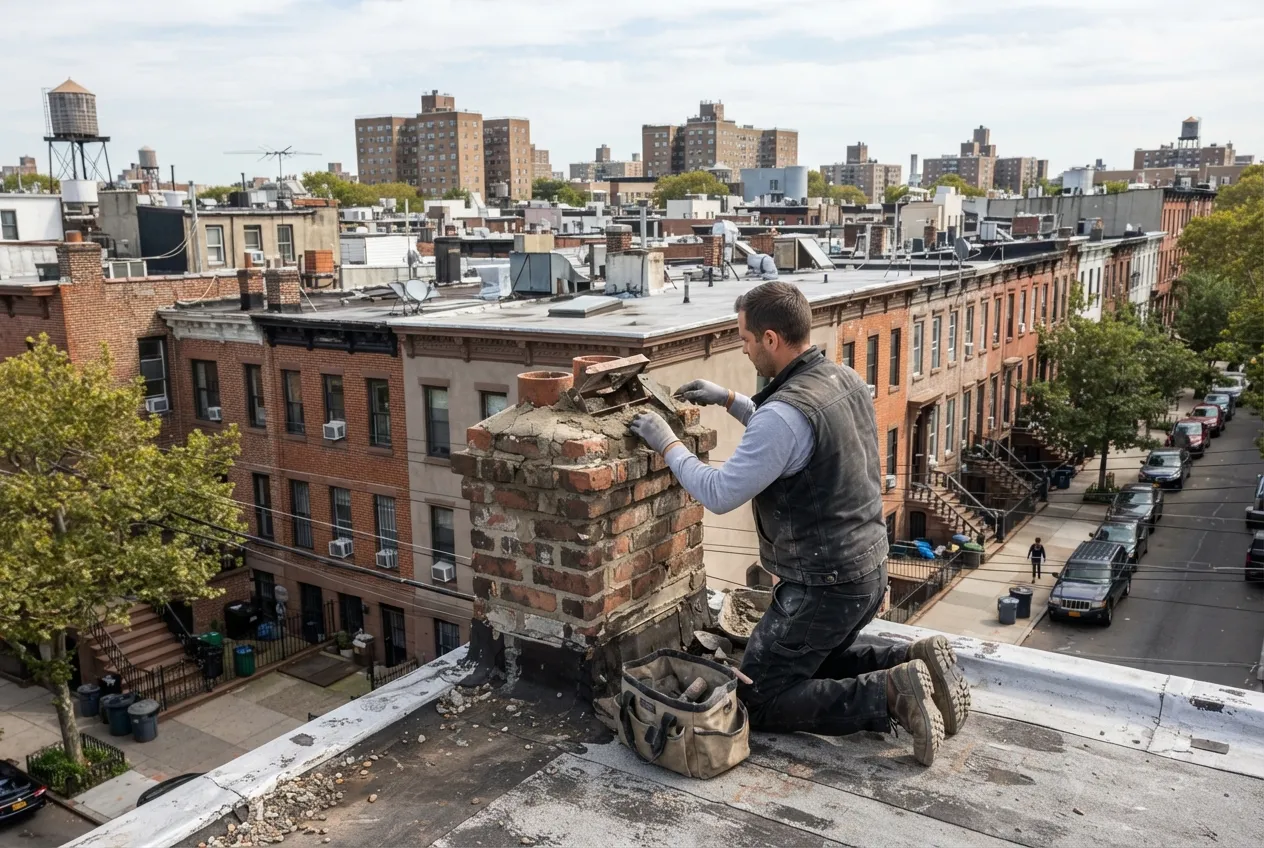
- Repointing open mortar joints and replacing cracked or missing firebrick with refractory materials made for fireplace heat
- Repairing gaps between the hearth and the firebox
- Checking the chimney cap, crown and flashing when water is reaching the firebox
- Removing nesting material and debris from the smoke shelf
- A written summary of what we found and what we repaired, with photos
How we work in your home and on the roof
Inside, we treat your living room as a work area that has to be left clean. Before anything is opened, we lay drop cloths from the door to the hearth and cover the fireplace opening. HEPA vacuums run during cleaning and demolition so soot and mortar dust are captured instead of spreading through the room. Rotary brushes clear buildup from the smoke chamber and flue walls, which lets us see the masonry clearly before we repair it.
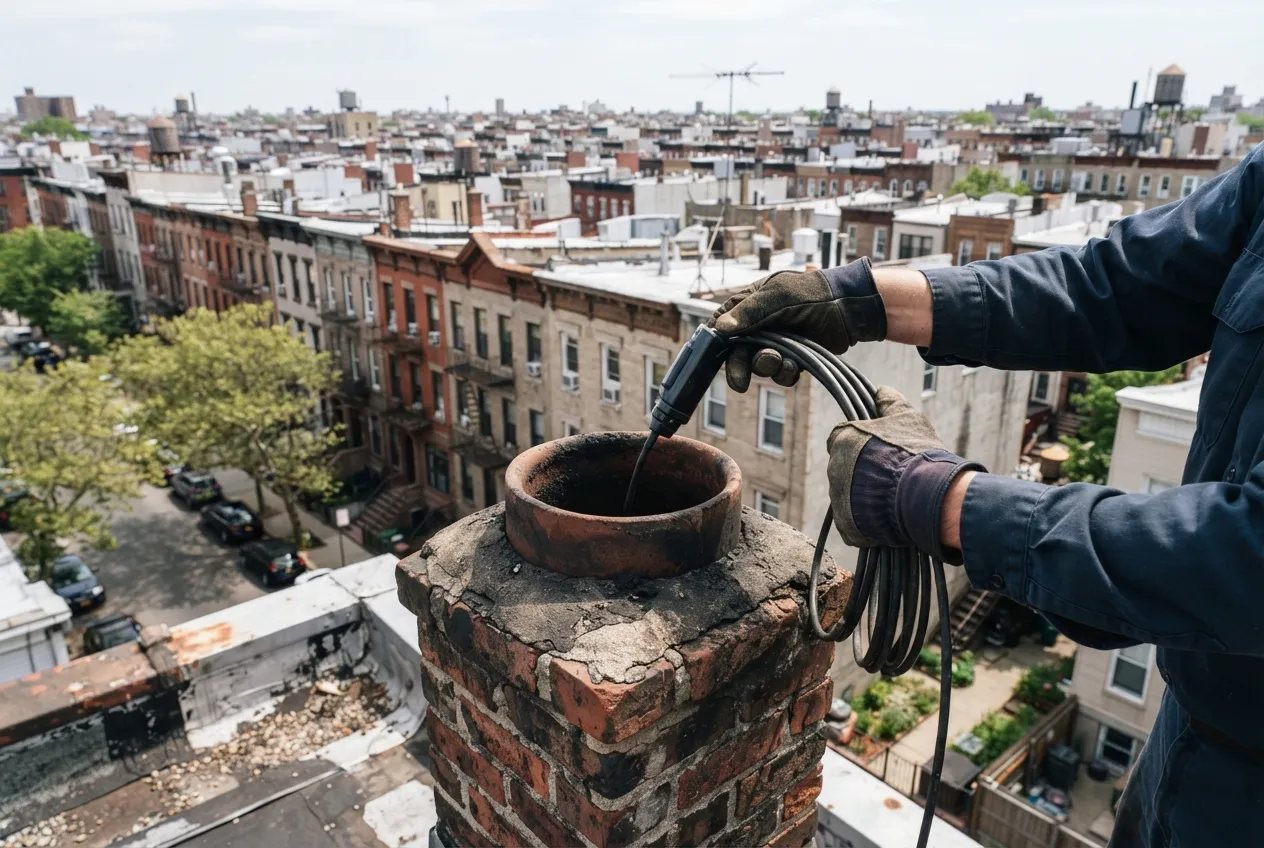
When the problem can't be seen from the firebox, we run a camera up the flue to record the damper area, smoke chamber and liner. You can watch the footage with the technician, so you see the same cracks and gaps we do.
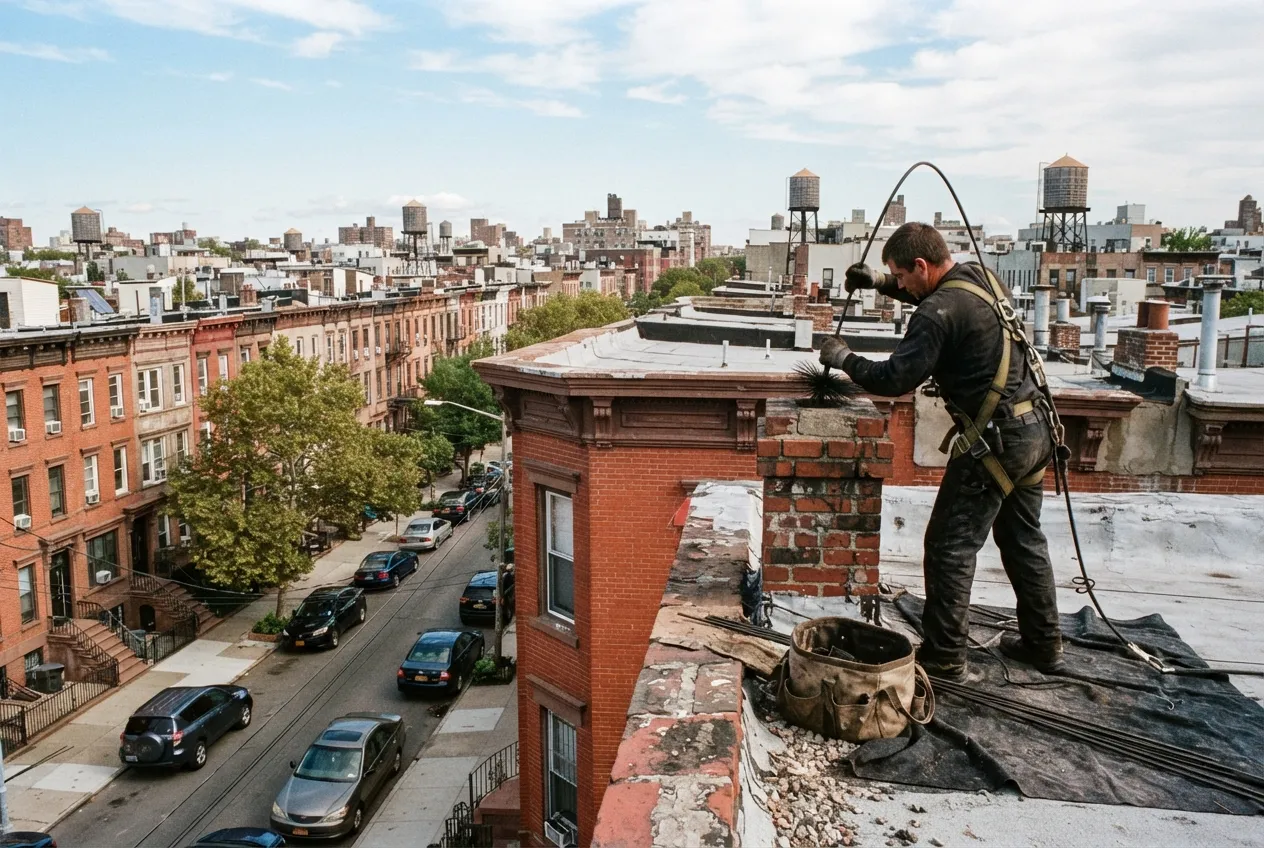
On the roof, we use proper access and fall protection, check the cap, crown and flashing, and look for openings where water or animals get in. On many Brooklyn row houses the roof is reached through a hatch, so we'll ask about access when you book.
Time for your annual chimney check?
The standard we follow
Our inspections follow NFPA 211, the national standard for chimneys, fireplaces and vents, which calls for these systems to be inspected once a year. Chimney professionals use three inspection levels:
Most damper and firebox repairs start with a Level 1 or Level 2 inspection. If you are adding gas logs or an insert to a wood fireplace, or buying or selling the home, Level 2 is the right starting point. We recommend Level 3 only when a hidden problem has to be reached by opening part of the chimney or wall, and we explain why before anything is opened.
- Level 1: for a system that hasn't changed and is used the same way as before
- Level 2: when the system changes, such as a new appliance or a switch of fuel, or when the home is sold
- Level 3: when a hidden hazard has to be reached by opening part of the chimney or building
What affects the price
We price the work after the inspection, because the right repair depends on what is behind the damper. The main factors are:
- Chimney height and roof access, including hatches, ladders and steep or shared roofs
- Fuel type: wood-burning, gas logs or an insert
- Flue size and condition, and whether the damper is a standard size or needs a custom part
- How much soot and creosote has to be cleaned before repairs can start
- Whether a camera inspection is needed to find the problem
- The scope of repair, from a damper adjustment to firebrick replacement or a new top-sealing damper
How a visit works
When you call, we'll ask what you've noticed, what fuel the fireplace burns, and how the roof is reached. Please let the fireplace cool completely before the visit and clear the area in front of the hearth.
On site, the technician protects the room, inspects the fireplace and chimney, and walks you through the findings with photos or camera footage. You get a clear explanation of the repair before any work begins. Many damper and firebox repairs are finished the same visit; larger masonry work or custom dampers are scheduled once parts are ready.
New York City's heat season begins October 1, and fall is when most owners want their fireplaces ready. Booking in late summer gives you the most scheduling flexibility.