
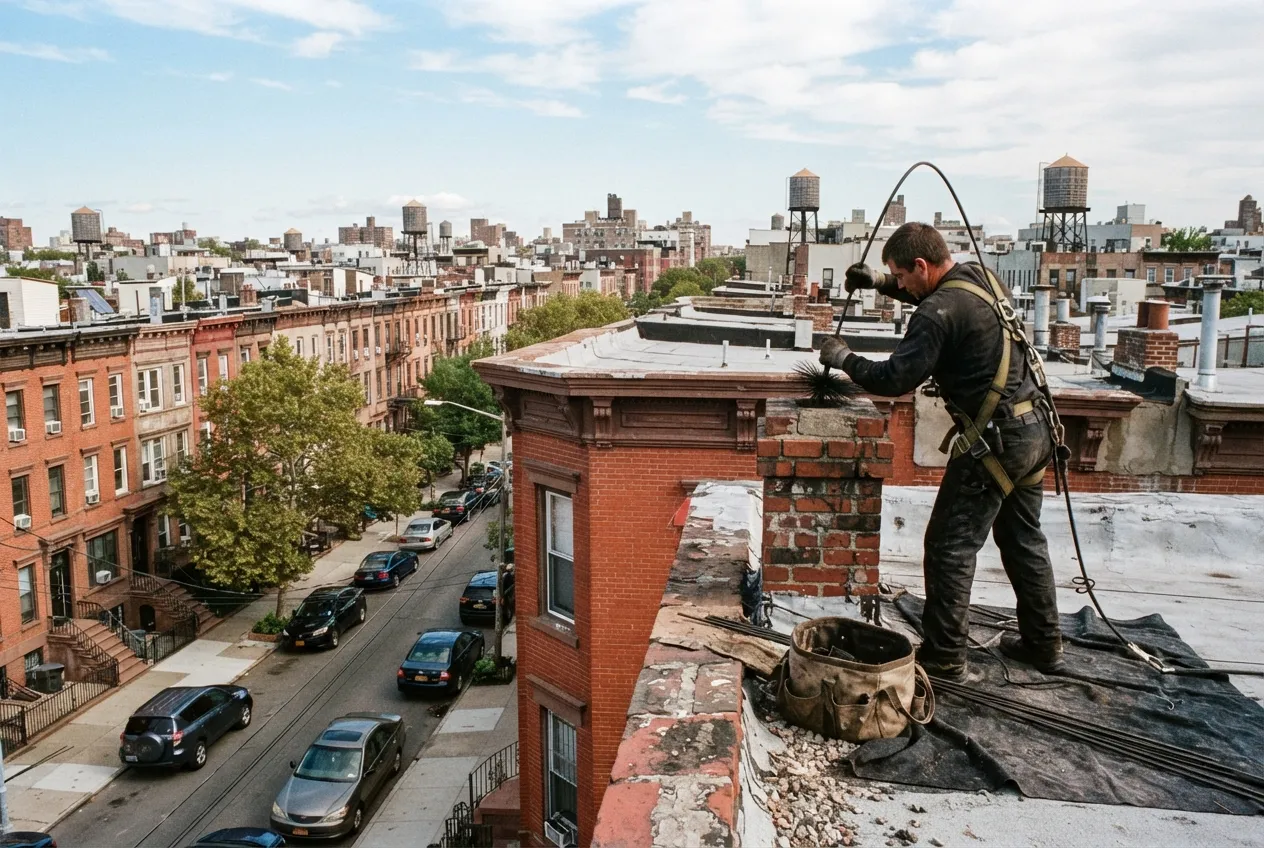
Chimney and Air Duct Cleaning Prices in Brooklyn: What Affects the Cost
Serving Brooklyn and nearby cities.
- Diagnosis before any repair
- Written price up front
- Written price before we start
Homeowners usually want to know what a chimney sweep or duct cleaning will cost before they book. That's a fair question, and we'd rather answer it honestly than quote a number that changes once we're on your roof or in your basement. This page explains what drives the price of each service we offer, how we arrive at a written price, and why a cheap advertised duct cleaning special rarely stays cheap. Once you know what we look at, you can compare quotes on equal terms.
Why we give a written price after we see the job
Two Brooklyn homes on the same block can need very different work. One chimney may serve a gas boiler through a clay liner in good shape. The one next door may serve a wood-burning fireplace with heavy creosote and a cracked crown. A phone quote can't account for that, so we look at the system, explain what we found, and put the price in writing. You decide whether to go ahead.
If we find something during the work that changes the scope, we stop and talk to you before doing anything extra. You won't learn about new charges when the invoice arrives.
What affects the price of a chimney sweep and inspection
The national fire safety standard for chimneys calls for chimneys, fireplaces and vents to be inspected once a year. Inspections come in levels, and the level affects the price.
A Level 1 inspection is a visual check of the readily accessible parts of the chimney and is appropriate when nothing about the system has changed. A Level 2 inspection is called for when the system changes, such as a new appliance or a switch of fuel, or when the home is being sold. It usually includes a camera run through the full length of the flue, which takes more time and equipment. When a hidden hazard has to be reached by opening part of the chimney or building, a Level 3 inspection is needed, and that is priced for the specific job.
- Height and roof access: a steep roof, a tall building or a chimney we can't reach safely from the roof takes more setup.
- Fuel type: wood fires leave creosote, oil leaves soot and scale, and gas leaves less visible residue but can still cause corrosion and blockages.
- Flue size and condition: large or oddly shaped flues, multiple flues, and damaged liners take longer to clean and inspect.
- Amount of buildup: light soot sweeps out quickly, while glazed creosote needs more work to remove.
Repairs, liners and other chimney work
Repairs are priced by the scope of the damage and the materials needed. Replacing a chimney cap or chase cover depends on the size and shape of the chimney top. Waterproofing depends on the surface area and the condition of the brick. Fireplace and damper repair depends on whether a part can be fixed or must be replaced. Chimney rebuilding, from the roofline up or deeper, depends on how much masonry has to come down.
Liner installation depends on the flue's height, its shape, the appliance it serves and how much prep the old flue needs. When a New York City building converts its boiler from oil to gas, the chimney has to be evaluated as part of the work. A new liner is often needed because gas exhaust produces acidic condensate that can corrode a masonry flue. We'll show you what we see in the flue so you can judge the need for yourself.
What affects the price of air duct and dryer vent cleaning
Duct cleaning is priced mainly by the size and layout of the system and how easy it is to reach. The U.S. EPA advises cleaning air ducts when there is substantial visible mold growth, vermin, or excessive dust and debris. It also says duct cleaning has not been shown to prevent health problems, so we won't promise health benefits. If your ducts don't need cleaning, we'll tell you.
Dryer vents are simpler but still vary. According to the U.S. Fire Administration, failure to clean is the leading factor contributing to clothes dryer fires in homes, so a long or clogged vent is worth taking care of.
- Number of supply vents and returns in the system.
- Length and routing of the ducts and whether access panels exist or must be added.
- The amount and type of debris, including construction dust, pet hair or signs of pests.
- For dryer vents: the length of the run, number of turns, and whether the exit is at ground level, on a wall high up or on the roof.
Why cheap whole-house duct cleaning offers turn into upsells
You've likely seen ads offering a whole-house duct cleaning for a strikingly low price. The EPA warns consumers to research the process before responding to very cheap advertised offers. A low price often covers only a few vents or a quick vacuum at the registers. Once the crew is inside, the real job gets added on piece by piece: extra vents, the main trunk lines, sanitizing sprays or coil cleaning.
Be careful with chemical treatments in particular. The EPA urges caution with them, and we only discuss them when there's a clear reason. Our approach is to quote the full job in writing up front.
Apartments, co-ops and timing
Access shapes the price in multi-family buildings. Work in an apartment or co-op may require board approval, roof keys, a building superintendent on site or scheduled elevator time. Shared flues and long vertical duct runs take more coordination than a single-family house.
Timing matters too. New York City's heat season runs from October through May, and building owners must keep apartments heated to the city's minimums during that period. Boiler chimney work that interrupts heat needs careful planning, so scheduling inspections and repairs before the season starts is easier on everyone.
Can you give me a price over the phone?
We can explain what affects the cost and what to expect, but we give a firm written price only after seeing the job, because access, condition and buildup vary so much from home to home.
Why does a Level 2 inspection cost more than a Level 1?
A Level 2 inspection usually includes a camera run through the entire flue and a closer review of the system, which takes more time and equipment than a visual Level 1 check.
Will the price change once you start?
Only if we find something that changes the scope, and we stop to explain it and get your approval before doing any extra work.
Do I need a new liner when converting from oil to gas?
Often, yes. The chimney has to be evaluated as part of the conversion, and gas exhaust produces acidic condensate that can corrode a masonry flue, so many conversions need a new liner.
Is duct cleaning worth it for my home?
It makes sense when there is substantial visible mold, vermin, or excessive dust and debris. If we don't see those signs, we'll tell you cleaning may not be needed.
Does working in a co-op or apartment cost more?
It can, because of building approvals, roof access, shared flues and scheduling with the super. We factor those into the written price.
Schedule a chimney or vent inspection
Tell us what you are noticing, whether it is a smell, a leak or a dryer that runs too long. We will look at the whole system, show you what we find and give you a written price before any work begins.