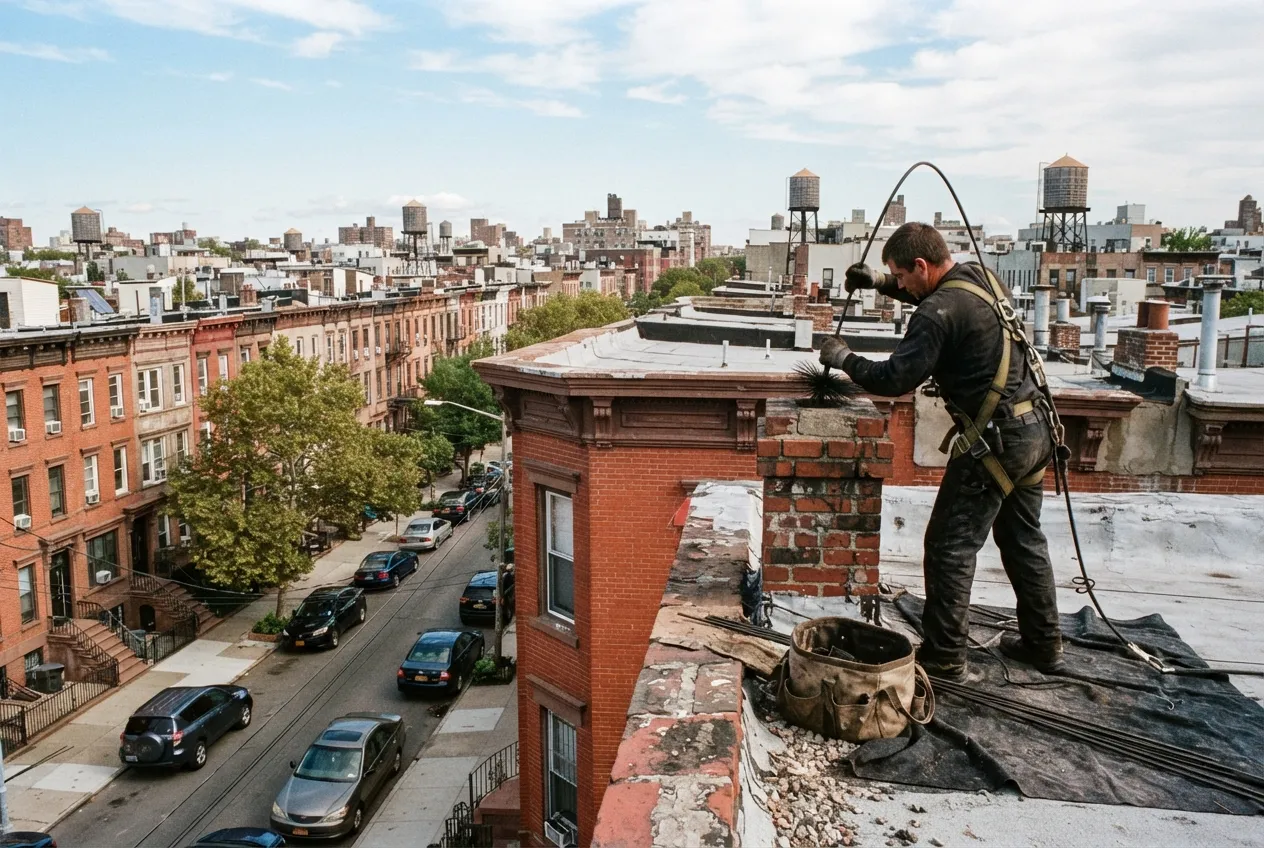
The short answer
Yes. The NFPA 211 standard calls for chimneys, fireplaces and vents to be inspected once a year. In Williamsburg, a yearly check before heat season starts on October 1 is a sensible habit. A deeper Level 2 inspection is called for when you buy or sell a home or convert a boiler from oil to gas.
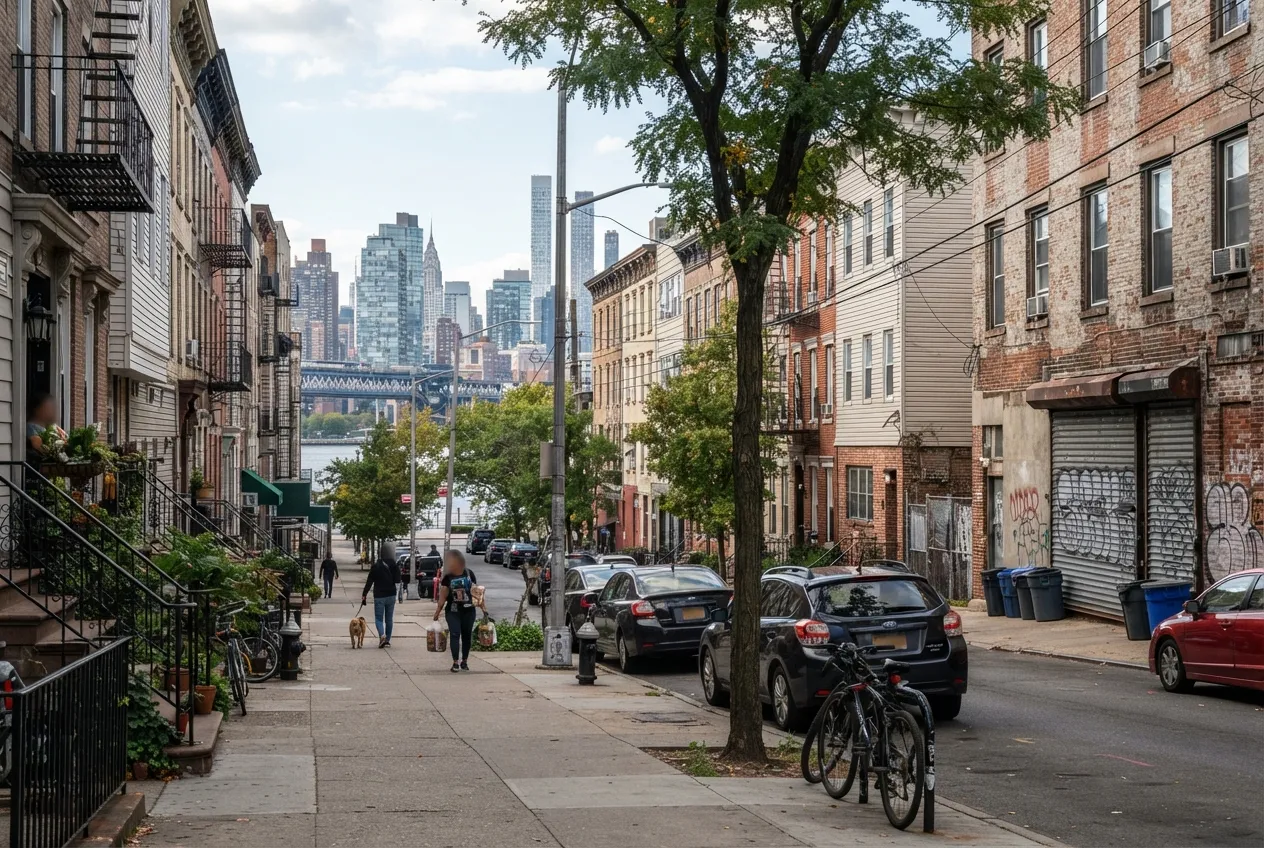
Williamsburg's housing is old and varied: brick rowhouses, brownstones, pre-war apartment buildings, and newer construction tucked between them. Many of these buildings have flues that served coal, then oil, then gas, and some still have a wood-burning fireplace. Each change leaves its mark inside the chimney, where you can't see it. StrongHold Chimney Services is based right here on S 6th St. Our certified technicians inspect chimneys, fireplaces and appliance vents across the neighborhood, so owners know what they're working with before the heat comes on.
Why Williamsburg Chimneys Need a Yearly Look
The NFPA 211 standard calls for chimneys, fireplaces and vents to be inspected once a year. That advice matters even more in a neighborhood where many flues are decades old. Mortar joints wear, clay tiles crack, and liners that worked for one fuel can break down when used with another.
Timing matters too. New York City's heat season runs from October 1 through May 31. During those months, building owners must keep apartments heated to the city's minimum temperatures. A problem found in early fall can be fixed on your schedule. A problem found in January can shut down a boiler when tenants need heat most.
Wood-burning fireplaces need their own attention. Creosote, a byproduct of burning wood, builds up inside the flue and can catch fire. Even a fireplace used only a few times a winter can collect enough to be a concern, especially if it burned unseasoned wood.
Which Inspection Level Fits Your Building
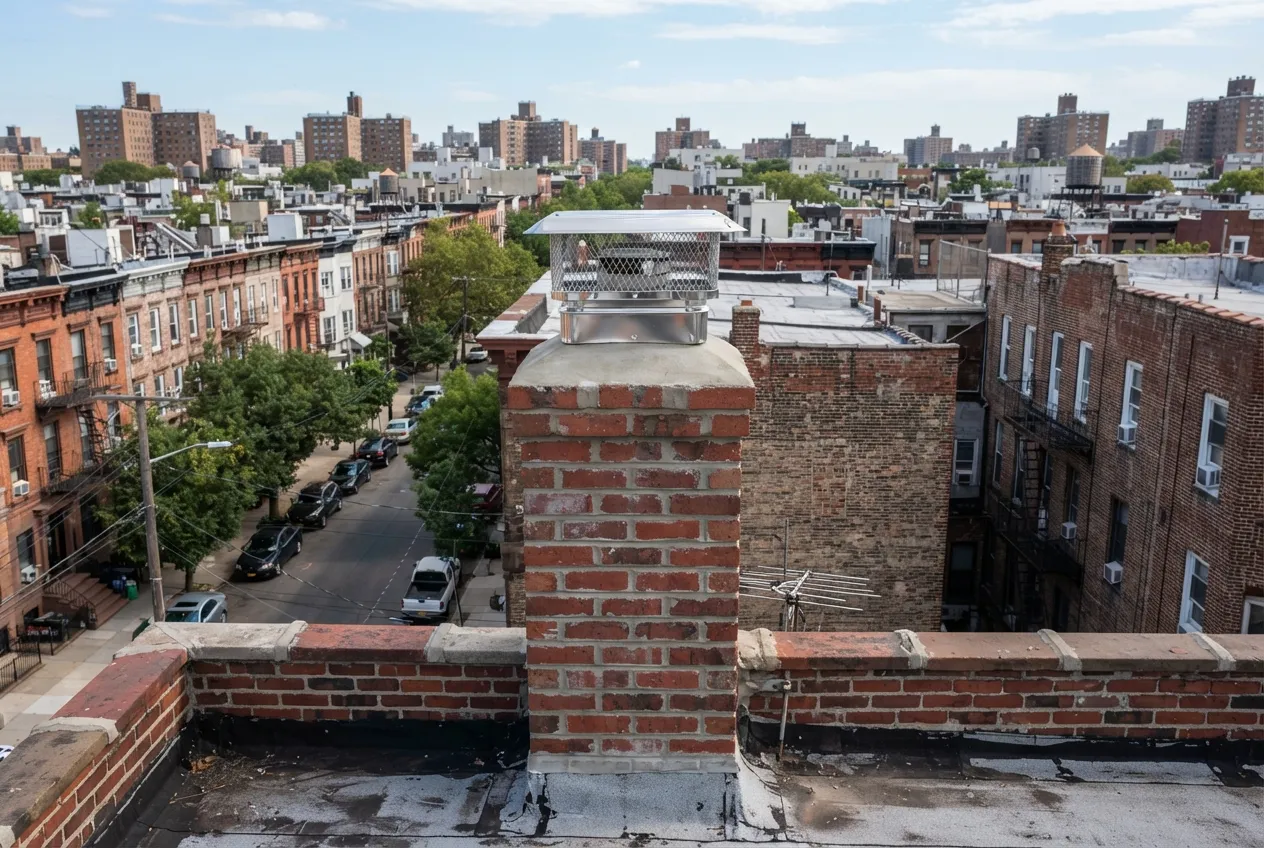
Chimney professionals use three inspection levels. We'll tell you which one your situation calls for and explain why.
- Level 1: For chimneys in regular use when nothing about the system has changed. We check the accessible parts of the chimney, the firebox or appliance connection, and the flue for blockages and combustible deposits.
- Level 2: For when the system changes, such as a new boiler or water heater or a switch of fuel, or when the home is being sold. This includes a closer look at the flue interior, usually with a camera, plus accessible attics, basements and the roof.
- Level 3: For when a hidden hazard is suspected and the only way to reach it is to open part of the chimney or building. We recommend this only when earlier findings point to it.
Converting from Oil to Gas
Many brownstones and pre-war buildings in Williamsburg and Greenpoint have switched from oil to gas heat, or plan to. When a New York City building converts its boiler from oil to gas, the chimney has to be evaluated as part of the work.
A new liner is often needed. Gas exhaust produces acidic condensate, and over time that moisture can corrode a masonry flue. An inspection before the conversion tells you and your heating contractor whether the existing flue can handle the new appliance or whether a liner should be part of the plan.
Time for your annual chimney check?
What We Look for During an Inspection
Every chimney is different, but most inspections in the neighborhood cover the same core concerns:
After the visit, you get a plain-language report with photos of what we found and what, if anything, should be done next. If the chimney is in good shape, we'll say so.
- Creosote and soot buildup in wood-burning flues
- Cracked or missing flue tiles and gaps in the liner
- Loose bricks, failing mortar, and a damaged crown or cap at the roofline
- Debris, nests or fallen masonry blocking the flue
- Proper connection and venting for boilers, furnaces and water heaters
- Signs of water getting in, such as staining, a rusted damper, or white mineral deposits on the brick
Buying or Selling in Williamsburg
A sale is one of the times a Level 2 inspection is called for. Buyers learn the real condition of a flue that a general home inspection may only glance at. Sellers can address issues before they come up during negotiations.
We inspect homes and buildings throughout Williamsburg, South Williamsburg, East Williamsburg and Greenpoint, and across the river in the Lower East Side and East Village. In multi-unit buildings, we'll work with you to schedule a time that limits disruption for tenants.
More services in Williamsburg
- Chimney Sweep in Williamsburg
- Chimney Repair in Williamsburg
- Air Duct Cleaning in Williamsburg
- Chimney Liner Installation in Williamsburg