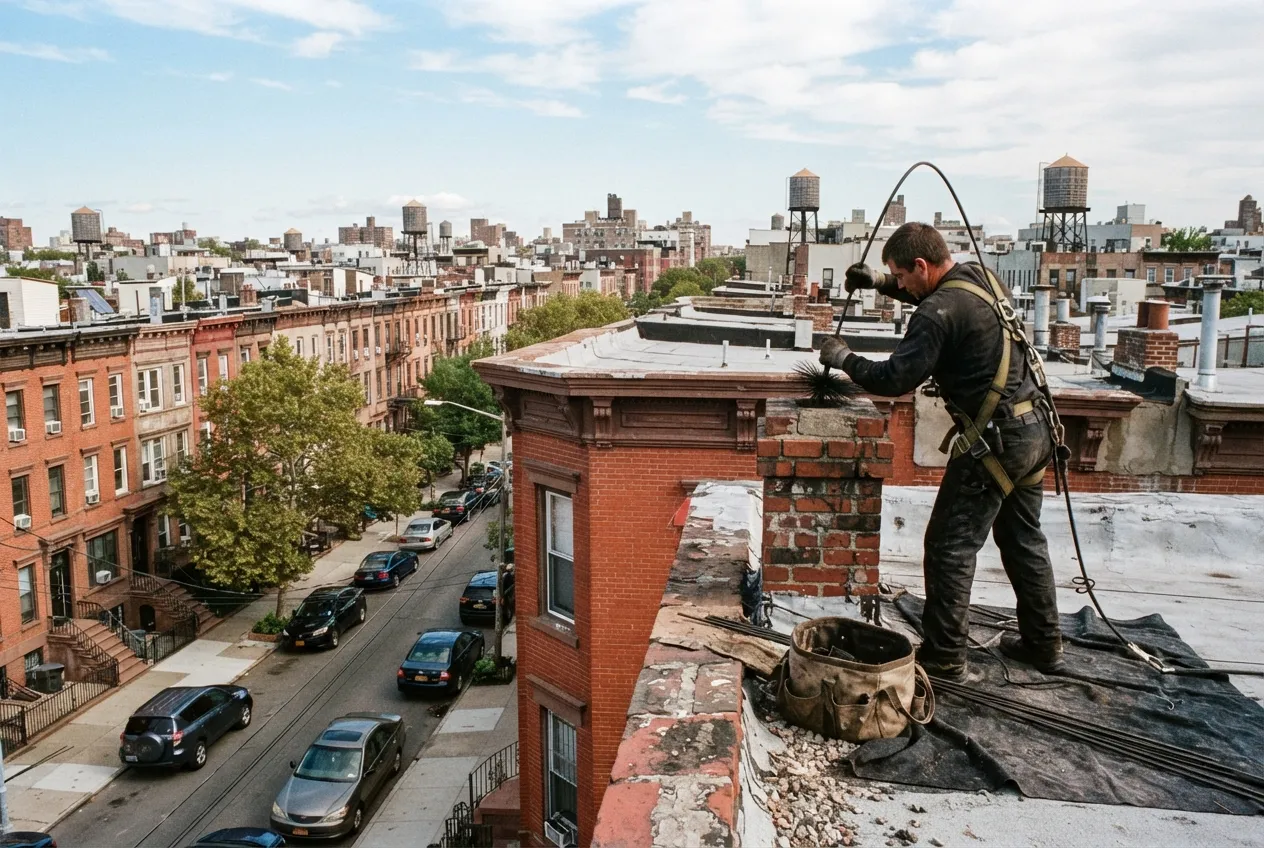
The short answer
Under the NFPA 211 standard, chimneys, fireplaces and vents should be inspected once a year, and more closely when you change appliances, switch fuel or sell the property. StrongHold Chimney Services inspects chimneys across the Lower East Side and reports clearly on condition, needed repairs and next steps.
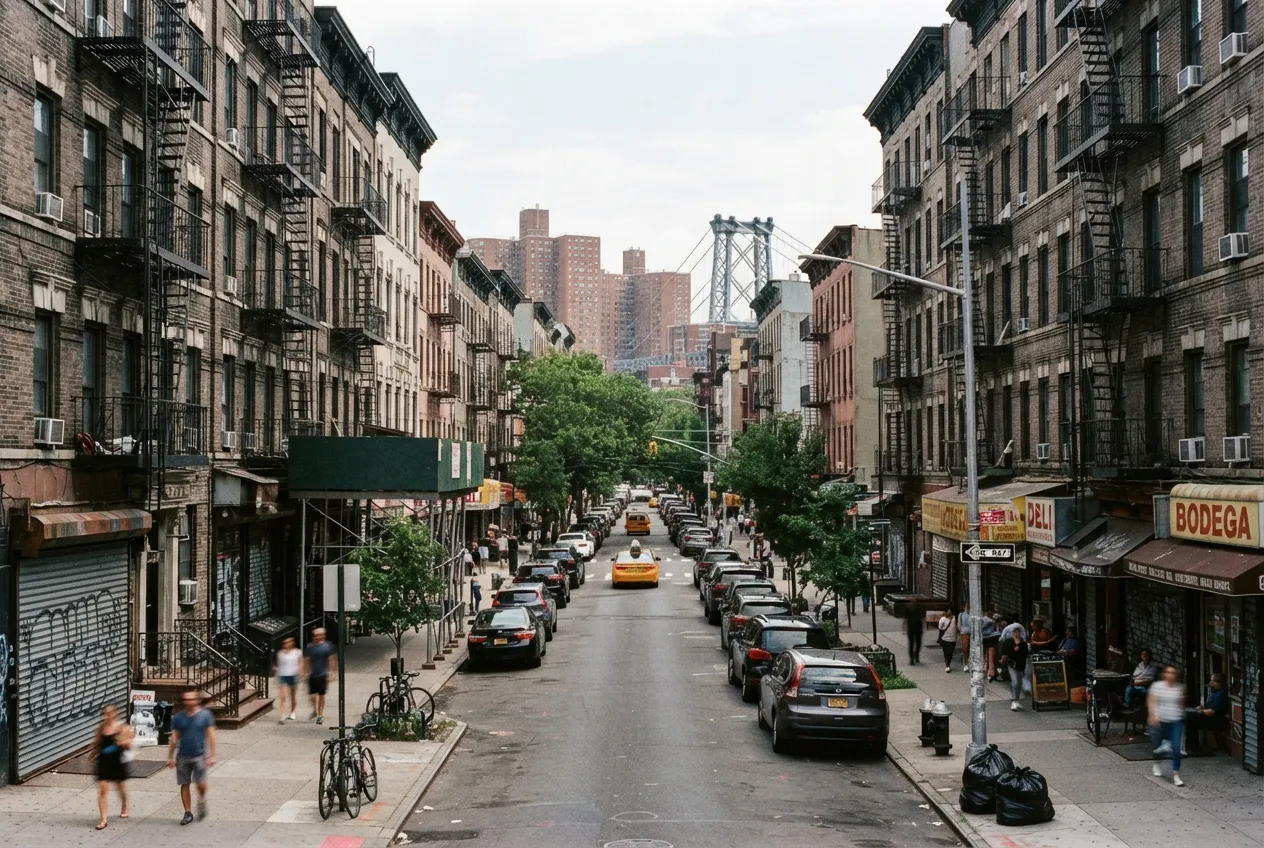
Many Lower East Side homes and buildings are older walk-ups and pre-war apartment buildings with masonry chimneys that have served several generations of boilers, furnaces, water heaters and fireplaces. Over time, flues crack, liners corrode, mortar joints wear out and debris settles where no one can see it. StrongHold Chimney Services provides chimney inspections for homeowners, co-op and condo boards, and small building owners in ZIP code 10002. Our office in Williamsburg, Brooklyn is about a mile away, so getting to you is a short trip. Our certified technicians explain what they find in plain terms so you can decide what to do next.
Why Yearly Inspections Matter for Lower East Side Buildings
The NFPA 211 standard calls for chimneys, fireplaces and vents to be inspected once a year. That applies whether your chimney serves a wood-burning fireplace in a rowhouse parlor or vents a gas boiler in the basement of a pre-war building. A chimney can look fine from the street or the roof while hiding cracked flue tiles, loose bricks or blockages inside.
Timing matters in New York City. Heat season runs from October 1 through May 31, and during those months building owners must keep apartments heated to the city's minimum temperatures. A venting problem found in January can mean shutting down a boiler when tenants need heat most. An inspection before October gives you time to plan repairs.
The Three Levels of Chimney Inspection
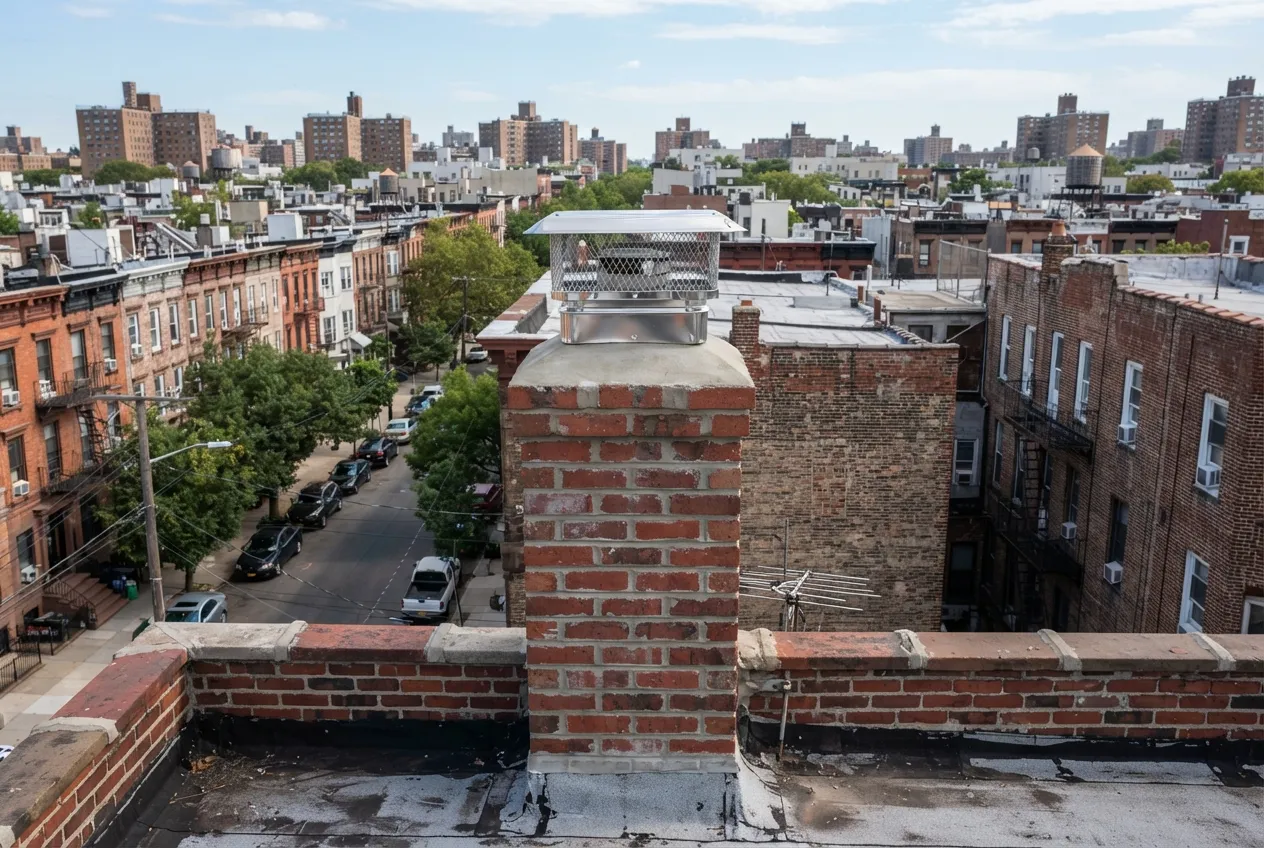
Chimney professionals use three inspection levels. Which one you need depends on what has changed with your system and what we find along the way.
- Level 1: For a chimney in regular use when nothing has changed. We check the accessible parts of the chimney, the appliance connection and the flue for soundness, proper clearances and obstructions.
- Level 2: Required when the system changes, such as a new boiler or water heater or a switch from oil to gas, and when the property is sold. It covers everything in Level 1 plus accessible attics, basements and crawl spaces, and usually includes a camera inspection of the flue's interior.
- Level 3: Used when a suspected hidden hazard can only be reached by opening part of the chimney or the building. We recommend this only when a Level 1 or Level 2 inspection points to it.
Oil-to-Gas Conversions and Chimney Liners
Many Lower East Side buildings have moved, or are planning to move, their boilers from oil to gas. When a New York City building converts its boiler from oil to gas, the chimney has to be evaluated as part of the work. Gas exhaust produces acidic condensate that can corrode a masonry flue, so a new liner is often needed.
If your building is planning a conversion, schedule the chimney inspection early. Knowing whether the flue needs a liner, and what size, helps your boiler contractor and board plan the job and avoids surprises late in the project. We share our findings in writing so everyone works from the same information.
Time for your annual chimney check?
What We Check During an Inspection
Every chimney is different, but a typical inspection in an older Manhattan building covers these areas:
- Flue liner condition, including cracks, gaps, missing tiles and corrosion
- Creosote and soot buildup in fireplace and wood-stove flues
- Blockages from debris, fallen masonry or nesting animals
- Connector pipes from boilers, furnaces and water heaters, including fit, slope and rust
- Crown, cap and flashing on the roof, where water often gets in
- Exterior brickwork and mortar joints, especially on tall, exposed chimneys
- Smoke chamber, damper and firebox on working fireplaces
Serving the Lower East Side and Nearby Neighborhoods
We work in walk-up buildings, rowhouses and larger pre-war apartment buildings throughout the Lower East Side. Because many chimneys here serve several units or shared heating equipment, we coordinate with owners, supers and managing agents on access to the roof, basement and individual apartments.
We also inspect chimneys in nearby Chinatown, Two Bridges and the East Village, and across the river in Williamsburg and Downtown Brooklyn. After each inspection, you get a clear explanation of what we found, photos where helpful, and recommendations ranked by urgency, so you know what needs attention now and what can wait.
More services in Lower East Side
- Chimney Sweep in Lower East Side
- Chimney Repair in Lower East Side
- Air Duct Cleaning in Lower East Side
- Chimney Liner Installation in Lower East Side