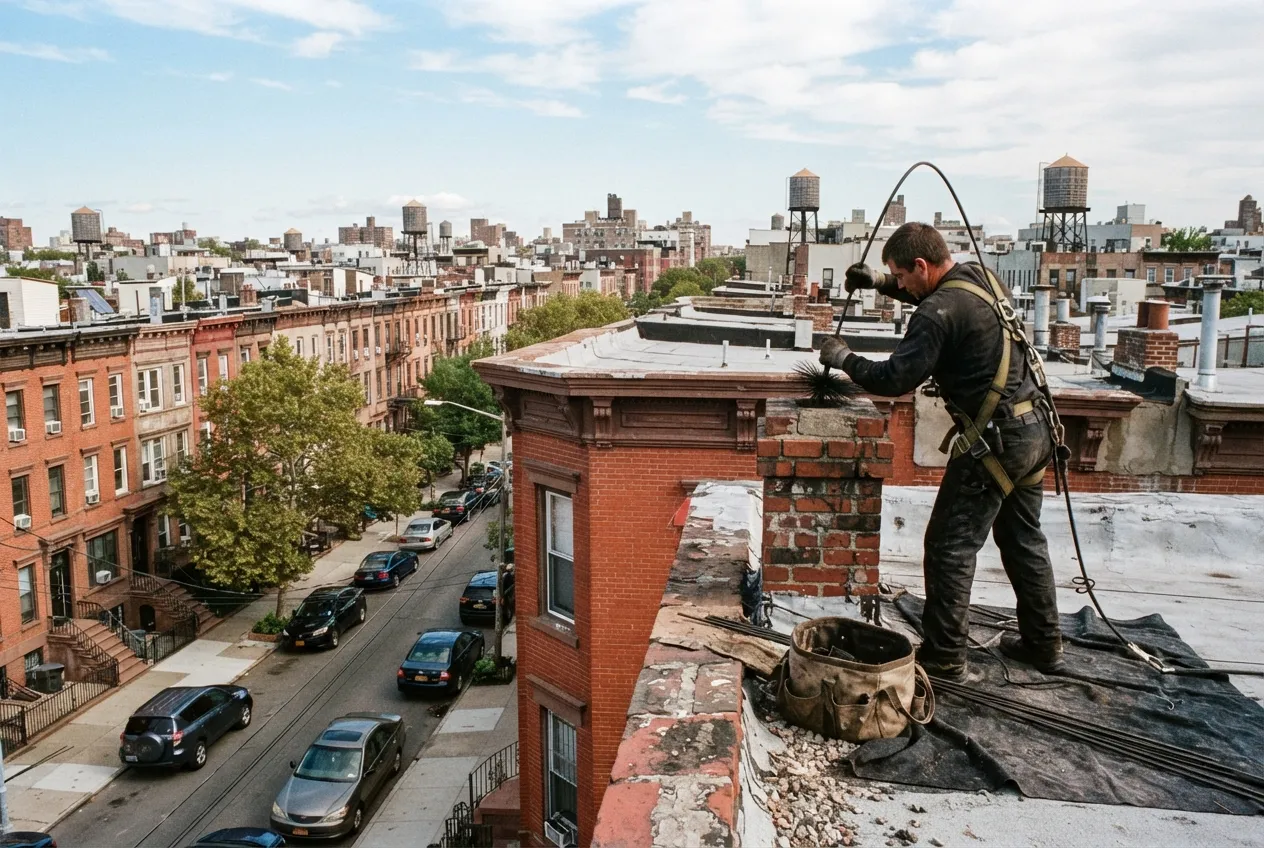
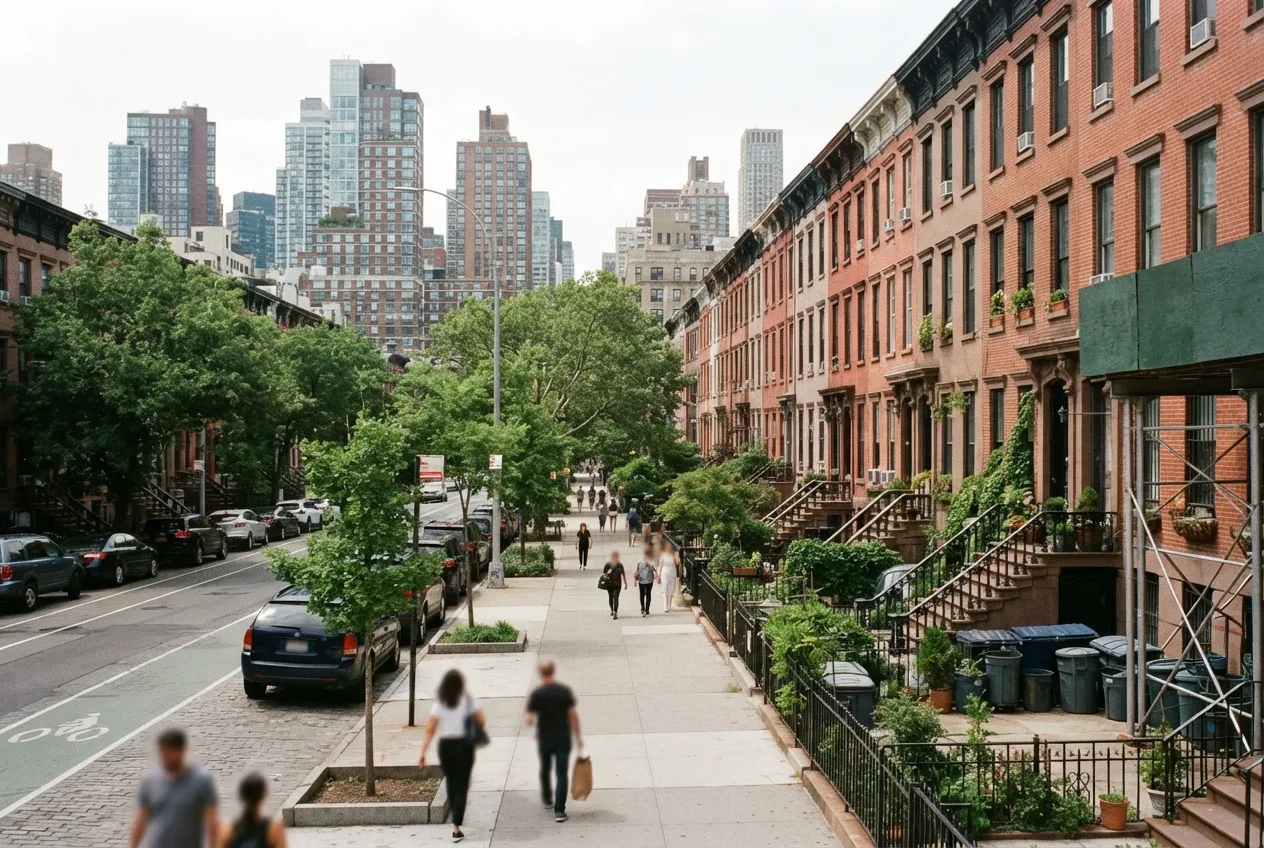
The short answer
Chimney repair in Downtown Brooklyn usually means fixing worn masonry, crowns, caps, flashing and flue liners on older brownstones, rowhouses and pre-war buildings. StrongHold Chimney Services inspects first, shows you the damage, and repairs what is actually causing the problem. Scheduling before the October 1 start of New York City's heat season helps your heating system stay in service.
Downtown Brooklyn has a mix of nineteenth-century brownstones and rowhouses, pre-war apartment buildings, and newer construction, and each puts different demands on a chimney. Old brick flues have been through decades of freeze-thaw winters, coal and oil heat, and changes in how the building is used. StrongHold Chimney Services repairs chimneys in the 11201 ZIP code from our office in Williamsburg, about 2 miles northeast. Our certified technicians find out why a chimney is failing, explain what they found in plain terms, and fix the problem instead of covering it up.
What Goes Wrong With Chimneys in Downtown Brooklyn Homes
Most chimneys in the neighborhood are brick, and many are much older than the boilers, furnaces or fireplaces now venting through them. The problems we see follow from that age and the local climate. Water gets into the top of the chimney, freezes, expands, and slowly breaks mortar and brick apart. Over time this shows up as stains inside the house, loose bricks on the roof, or bits of masonry at the bottom of the flue.
On attached rowhouses and brownstones the chimney often sits on a shared wall or close to a neighbor's roof. Leaks can show up far from where the water actually gets in, and that makes a careful inspection more important than a quick guess.
- Cracked or crumbling chimney crowns that let water into the masonry
- Missing or eroded mortar joints (repointing)
- Spalling brick, where the face of the brick flakes or pops off
- Failed flashing where the chimney meets the roof
- Missing, rusted or damaged chimney caps
- Cracked clay tile liners or unlined flues
- Damaged fireplace fireboxes and smoke chambers
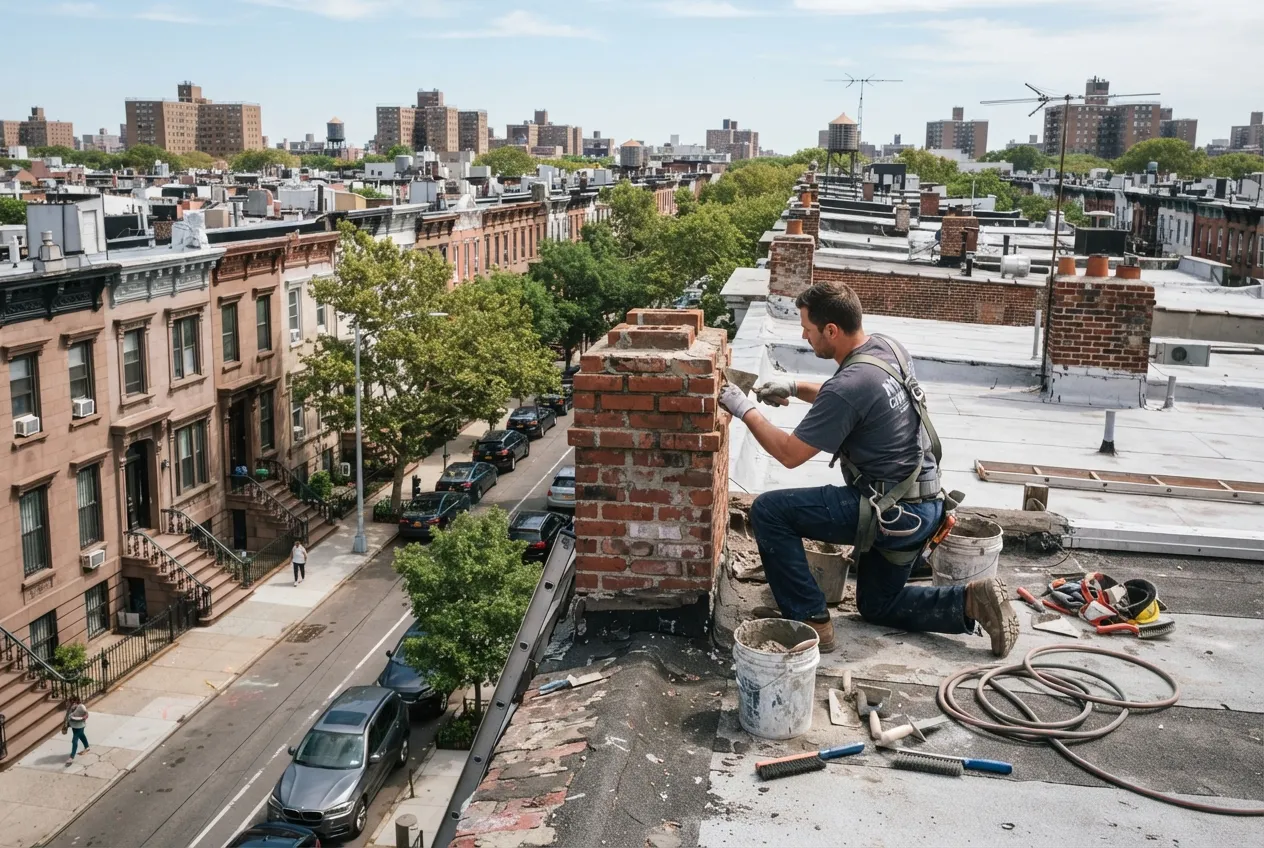
Liners and Oil-to-Gas Conversions
Many older Brooklyn buildings have changed fuels over the years. When a New York City building converts its boiler from oil to gas, the chimney has to be evaluated as part of the job. A new liner is often needed because gas exhaust produces acidic condensate that can corrode a masonry flue that was never built for it.
If your building has changed fuel, added a high-efficiency appliance, or has a flue with cracked or missing tiles, we will look at the liner closely. Depending on the flue and the appliance, a properly sized liner can protect the masonry, help the system draft correctly, and keep combustion gases moving out of the house where they belong.
How We Approach a Repair
Every repair starts with an inspection. The NFPA 211 standard calls for chimneys, fireplaces and vents to be inspected once a year, and it describes three levels of inspection. A Level 1 inspection fits when nothing has changed. A Level 2 inspection applies when the system changes, such as a new appliance or a switch of fuel, or when the home is sold. A Level 3 inspection is used when a hidden hazard can only be reached by opening part of the chimney or building.
After the inspection we walk you through what we found, with photos where possible, and separate urgent safety issues from repairs that can wait. Then we recommend specific work. We don't hand you a long list of extras you don't need.
Time for your annual chimney check?
Timing Repairs Around Heat Season
New York City's heat season runs from October 1 through May 31. During that period building owners have to keep apartments heated to the city's minimum temperatures. A chimney problem that takes a boiler offline in January is a much bigger headache than one fixed in late summer, especially in a multi-unit brownstone or pre-war building with tenants.
Masonry work also goes better in mild, dry weather. If you have noticed leaks, loose brick, or odors from the fireplace or boiler room, spring and summer are the best times to call. If something breaks mid-winter, we will still help you work out the safest way to get heat running again.
Serving Downtown Brooklyn and Nearby Neighborhoods
Along with Downtown Brooklyn, our technicians repair chimneys in DUMBO, Fort Greene and Clinton Hill, and across the river in Chinatown and Two Bridges. Whether you own a single-family rowhouse, manage a small apartment building, or live in a converted brownstone, we look at the chimney as part of the whole heating and venting system, not as a stack of bricks on its own.
More services in Downtown Brooklyn
- Chimney Sweep in Downtown Brooklyn
- Chimney Inspection in Downtown Brooklyn
- Air Duct Cleaning in Downtown Brooklyn
- Chimney Liner Installation in Downtown Brooklyn