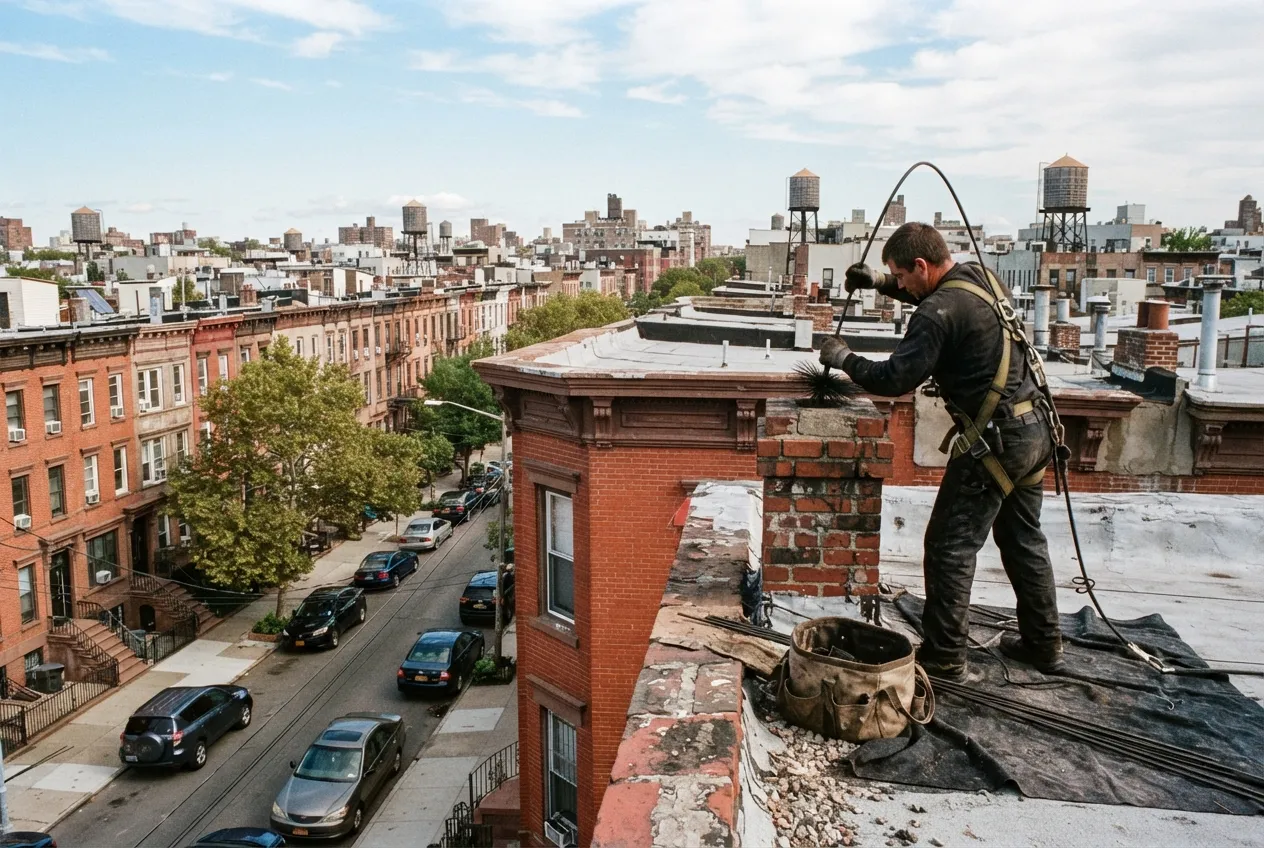
The short answer
Most chimney repairs in Greenpoint's older rowhouses and pre-war buildings involve water damage to mortar, crowns and flashing, or worn-out flue liners. We start with an inspection, explain what we find, and repair the masonry or reline the flue so the chimney vents safely, especially before heat season or after an oil-to-gas conversion.
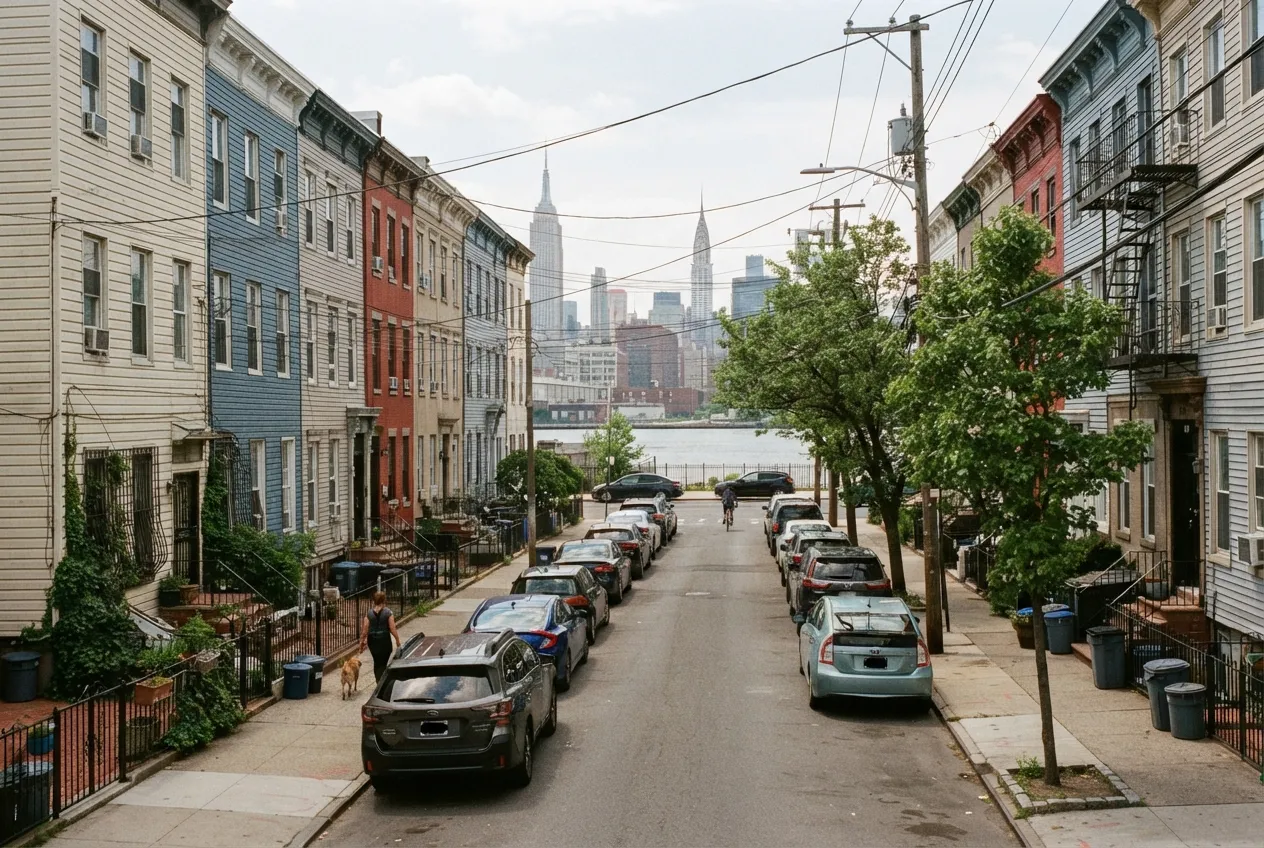
Most of Greenpoint's homes are older: rowhouses, small multifamily buildings, brownstones and pre-war apartment buildings. Many have masonry chimneys that have been through decades of freeze-thaw winters and at least one change in heating fuel. When a chimney starts leaking, shedding brick or venting poorly, the repair has to match how that chimney is built and what it serves. StrongHold Chimney Services repairs chimneys throughout Greenpoint (11222) from our office in Williamsburg, about 2 miles away, so getting a technician to your building is quick and simple.
What usually goes wrong with Greenpoint chimneys
Most chimney damage in older Brooklyn buildings starts with water. Rain and melting snow get in through cracked mortar joints, a broken crown, or a gap in the flashing where the chimney meets the roof. Once inside, the water freezes, expands and pushes brick apart. Over a few seasons that turns into loose or crumbling brick, stained ceilings and walls, and a damp, musty smell near the fireplace.
Problems inside the flue are harder to spot. Clay tile liners crack, the mortar between tiles washes out, and older unlined flues let heat and exhaust reach the surrounding masonry. In buildings that heat with gas, acidic condensate can eat away at the inside of a brick flue and leave debris at the base of the chimney. Watch for these signs:
- Water stains on ceilings or walls next to the chimney
- Brick fragments or mortar dust on the roof, in the firebox or at the cleanout
- White, chalky staining on the outside brick
- Rust on the damper, firebox or chimney cap
- A chimney that leans or has gaps where it meets the roof
- Smoke or exhaust smells indoors when the fireplace or boiler runs
How we figure out what needs fixing
We start with an inspection, not a guess. The NFPA 211 standard calls for chimneys, fireplaces and vents to be inspected once a year, and chimney professionals use three inspection levels. Level 1 applies when nothing about the system has changed. Level 2 applies when the system changes, such as a new appliance or a switch in fuel, or when the home is sold. Level 3 is used when a hidden hazard can only be reached by opening part of the chimney or building.
After the inspection, our certified technicians walk you through what they found, show you photos, and explain which repairs are urgent and which can wait. You get a clear written scope of work before anything starts.
Chimney repairs we handle
Many Greenpoint chimneys serve several units, or carry exhaust from both a boiler and a water heater. We size repairs and liners to the appliances actually connected to the flue, not just the fireplace. Common repairs include:
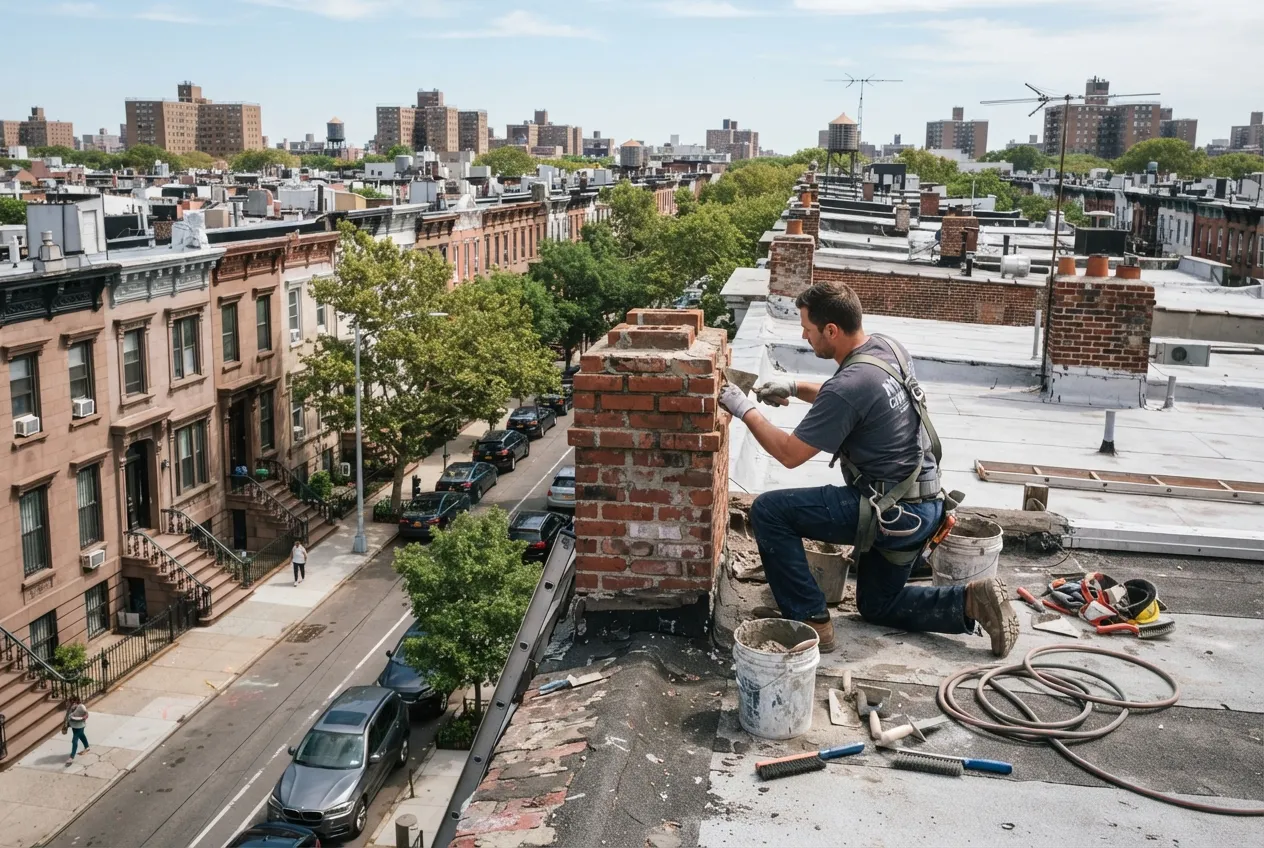
- Repointing: removing failed mortar and replacing it with mortar suited to older brick
- Rebuilding chimney crowns and installing or replacing caps
- Replacing damaged brick or rebuilding the top of the chimney above the roofline
- Repairing or replacing flashing where the chimney meets the roof
- Relining flues with stainless steel liners sized to the appliance
- Firebox and smoke chamber repair and damper replacement
- Waterproofing outside masonry with a breathable sealer
Time for your annual chimney check?
Oil-to-gas conversions and new liners
Many older Brooklyn buildings have switched, or plan to switch, from oil to gas heat. In New York City, the chimney has to be evaluated as part of that conversion, and a new liner is often needed. Gas exhaust produces acidic condensate that can corrode a masonry flue, so a chimney that worked fine for oil may not be ready for gas.
If you're planning a conversion, bring us in early. We can inspect the chimney, tell you whether it needs a liner or masonry work, and schedule around your boiler contractor.
Plan repairs around heat season
New York City's heat season runs from October 1 through May 31. During that time, building owners must keep apartments heated to the city's minimum temperatures. A chimney problem that shuts down the boiler in January is much harder to deal with than one fixed in the off-season. Late spring through early fall is the easiest time for masonry work and relining, because the heating system can be offline without leaving tenants cold.
Along with Greenpoint, we serve nearby Williamsburg, East Williamsburg, South Williamsburg, the East Village and the Lower East Side.
More services in Greenpoint
- Chimney Sweep in Greenpoint
- Chimney Inspection in Greenpoint
- Air Duct Cleaning in Greenpoint
- Chimney Liner Installation in Greenpoint