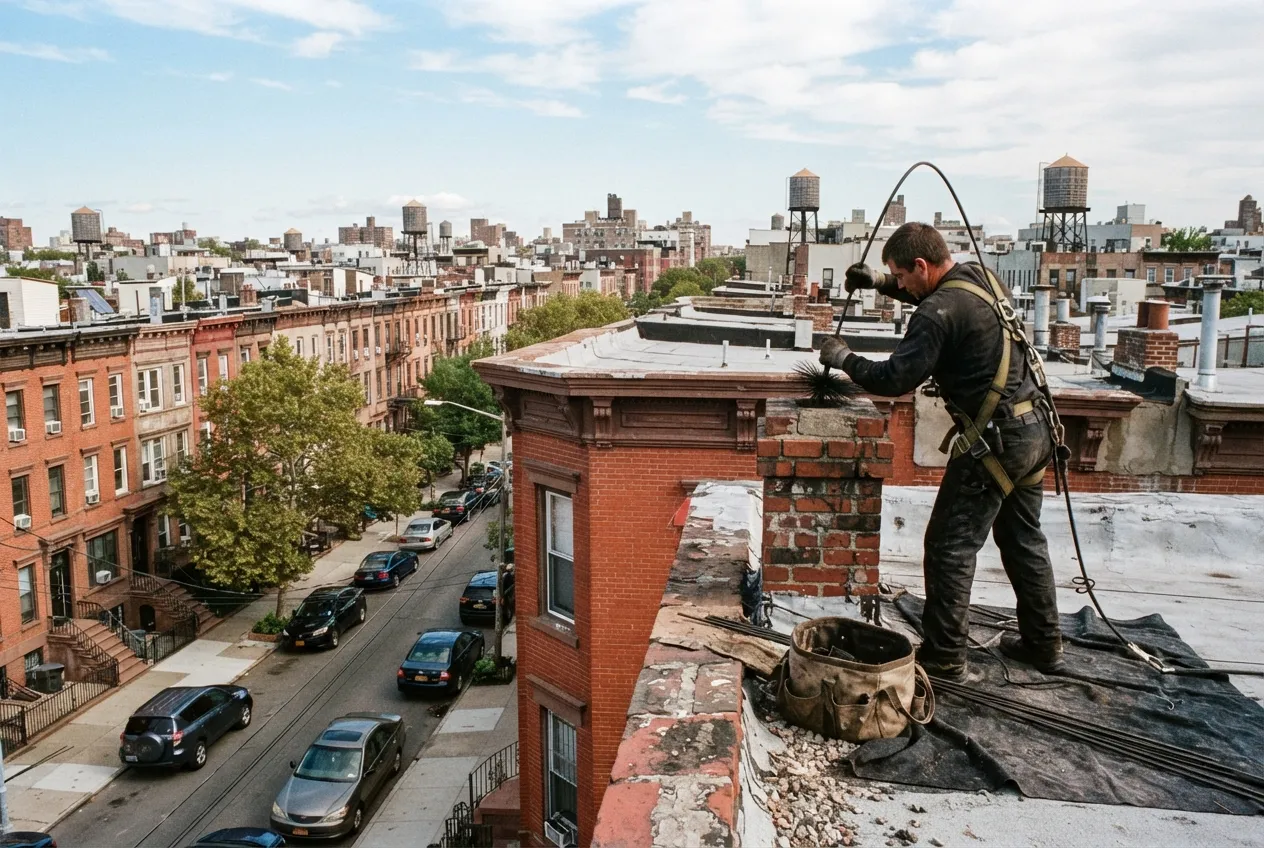
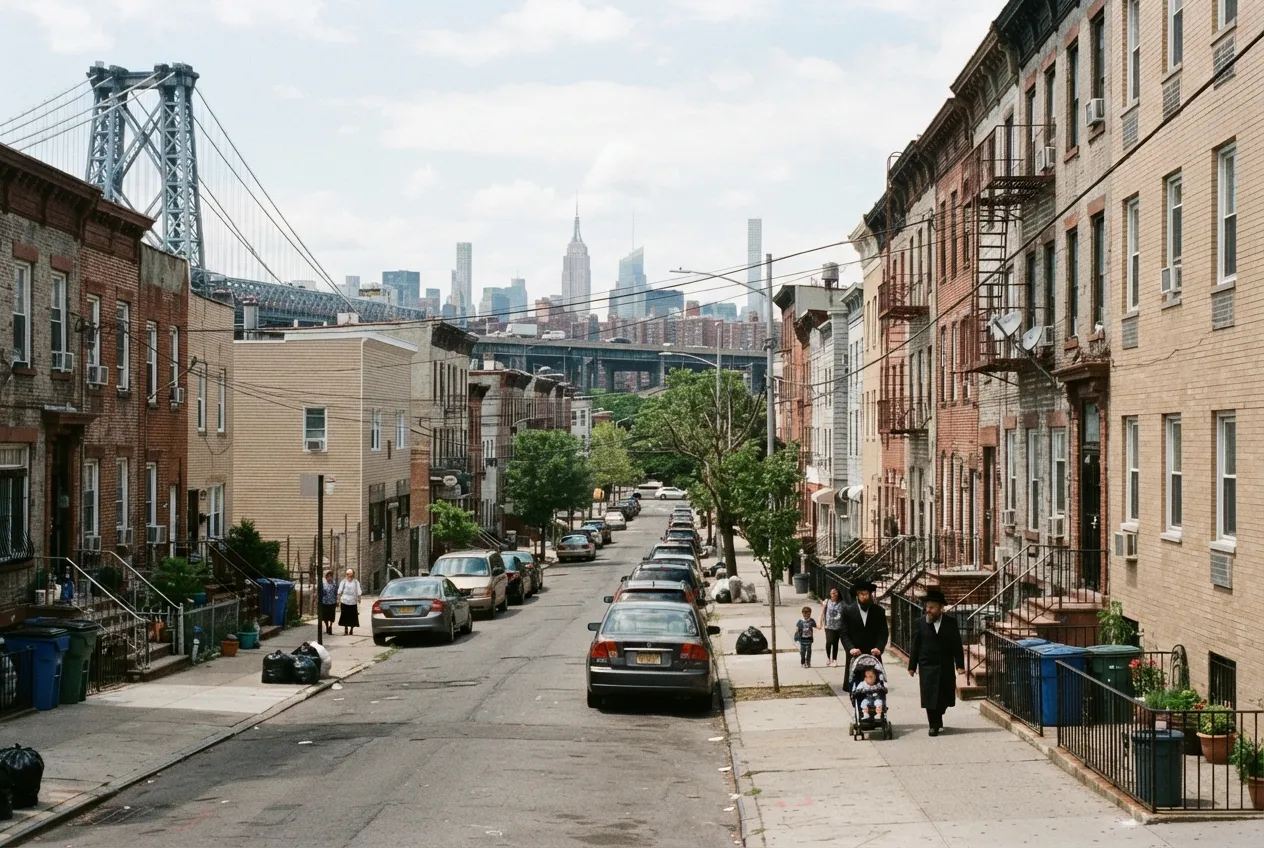
The short answer
Most chimney repairs in South Williamsburg involve weathered brick and mortar, failed crowns and flashing, or flues that need relining, especially after an oil-to-gas conversion. StrongHold inspects the chimney first and then repairs the cause. Planned work is easiest to schedule outside the October 1 to May 31 heat season.
Most chimneys in South Williamsburg are attached to older masonry buildings: rowhouses, brownstones, pre-war apartment buildings and small multifamily walk-ups. Brick and mortar that have been through decades of freeze-thaw cycles, roof leaks and heating seasons eventually need work. StrongHold Chimney Services repairs chimneys throughout ZIP code 11249 from our office in Williamsburg, about a mile away. Our certified technicians find the actual cause of the problem, explain what they see, and fix what needs fixing. That can be a few loose bricks at the roofline or a flue that is no longer safe to vent a boiler.
Signs your South Williamsburg chimney needs repair
On attached Brooklyn buildings, the chimney often rises through the roof beside a neighbor's or as part of a shared wall. Because of that, problems at the top often show up somewhere else first. You might see a water stain on a top-floor ceiling, damp plaster beside a fireplace, or brick dust on the roof. Any of the signs below is worth a call, even if the fireplace or boiler still seems to work.
- Brick faces flaking or popping off (spalling), often from water getting into the masonry and freezing
- Mortar joints that are recessed, crumbling or sandy to the touch
- A cracked or broken crown, the concrete cap that sheds water off the top of the chimney
- Leaks where the roof meets the chimney, usually from failed or poorly sealed flashing
- Cracked, shifted or missing clay flue tiles
- A missing or rusted chimney cap, which lets in rain, birds and debris
- A damper that sticks, won't seal or has rusted through
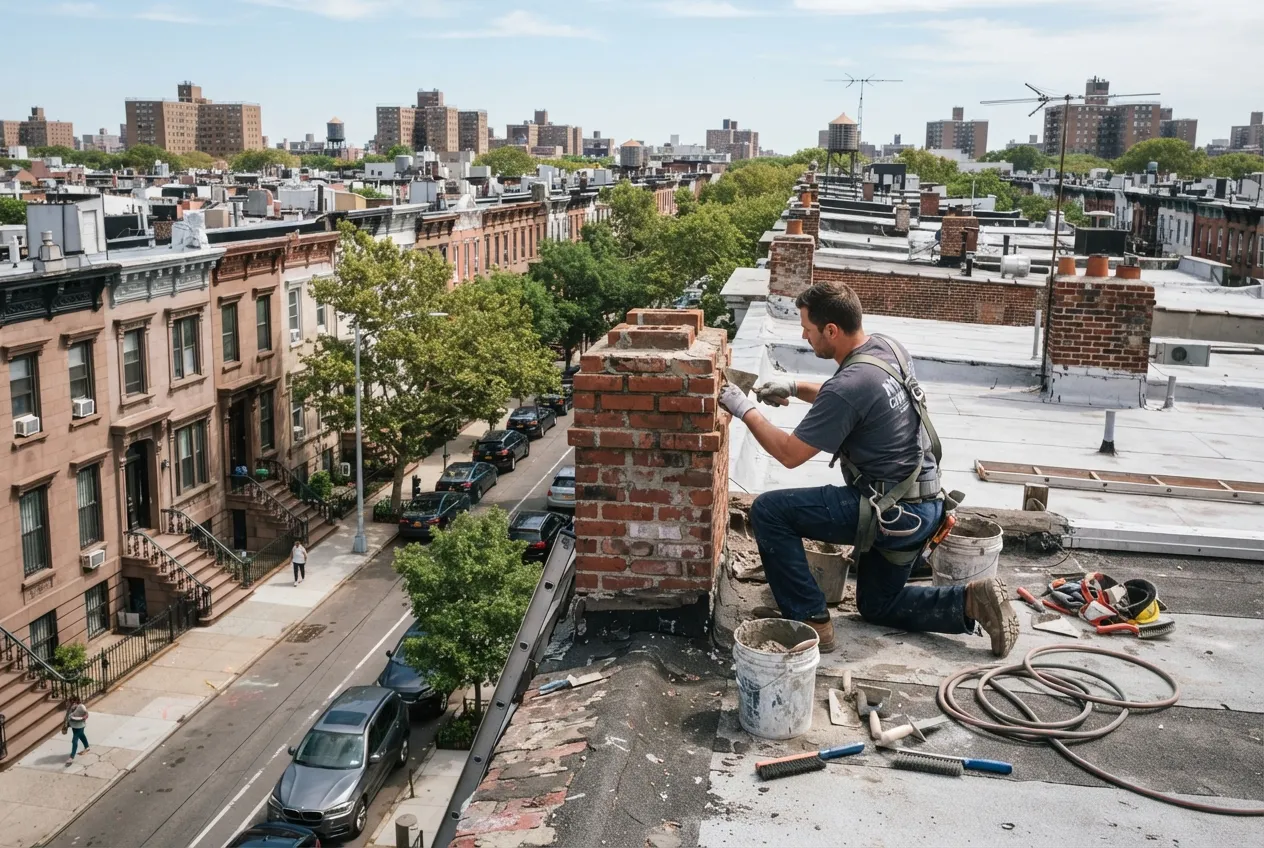
We inspect before we recommend a repair
Repair work starts with knowing the condition of the whole system. The NFPA 211 standard calls for chimneys, fireplaces and vents to be inspected once a year, and chimney professionals use three inspection levels. A Level 1 inspection fits when nothing has changed. A Level 2 inspection is called for when the system changes, such as a new appliance or a switch of fuel, or when the home is sold. A Level 3 inspection is used when a hidden hazard can only be reached by opening part of the chimney or building.
After the inspection, we walk you through what we found. We separate urgent safety issues from items that can wait, and we recommend the repair that addresses the cause, not just the symptom. If you only patch a ceiling stain and leave the failed flashing above it, the stain usually comes back.
Chimney repairs we handle
Most chimneys in the neighborhood are brick, so much of our work is masonry. We match repairs to the existing structure and use mortar suited to older brick.
- Repointing: removing failed mortar joints and refilling them
- Replacing spalled or broken bricks
- Rebuilding or resealing cracked crowns
- Repairing or replacing flashing where the chimney meets the roof
- Installing caps and screens on single and multi-flue chimneys
- Rebuilding the top of a chimney above the roofline when it has deteriorated too far to patch
- Relining flues with liners sized to the appliance they serve
- Replacing fireplace dampers, including top-sealing dampers
Time for your annual chimney check?
Oil-to-gas conversions and chimney liners
Many pre-war buildings in the area have converted their boilers from oil to gas, or are planning to. When a New York City building makes that switch, the chimney has to be evaluated as part of the work. A new liner is often needed because gas exhaust produces acidic condensate that can corrode a masonry flue from the inside.
We evaluate the existing flue and confirm whether it can safely vent the new equipment. If it can't, we install a properly sized liner. We can also coordinate timing with your boiler contractor so the chimney work fits into the conversion schedule.
Plan repairs around heat season
New York City's heat season runs from October 1 through May 31. During that time, building owners must keep apartments heated to the city's minimum temperatures. If you own a multifamily building, a chimney problem that takes the boiler offline in January is a serious problem.
The easiest time for planned work, such as relining or rebuilding a chimney top, is late spring through early fall, when the heat can be off for a day or two. Leaks and loose masonry should not wait for the off-season, though. Falling brick is a hazard to people below, and water that gets into the chimney keeps damaging it with every freeze.
Serving South Williamsburg and nearby neighborhoods
We repair chimneys on homes and buildings throughout South Williamsburg and ZIP code 11249. We also work in nearby Williamsburg, East Williamsburg, Clinton Hill, Fort Greene and Downtown Brooklyn. Our office is about a mile away, which makes it easier to schedule inspections, repairs and follow-up visits.
More services in South Williamsburg
- Chimney Sweep in South Williamsburg
- Chimney Inspection in South Williamsburg
- Air Duct Cleaning in South Williamsburg
- Chimney Liner Installation in South Williamsburg