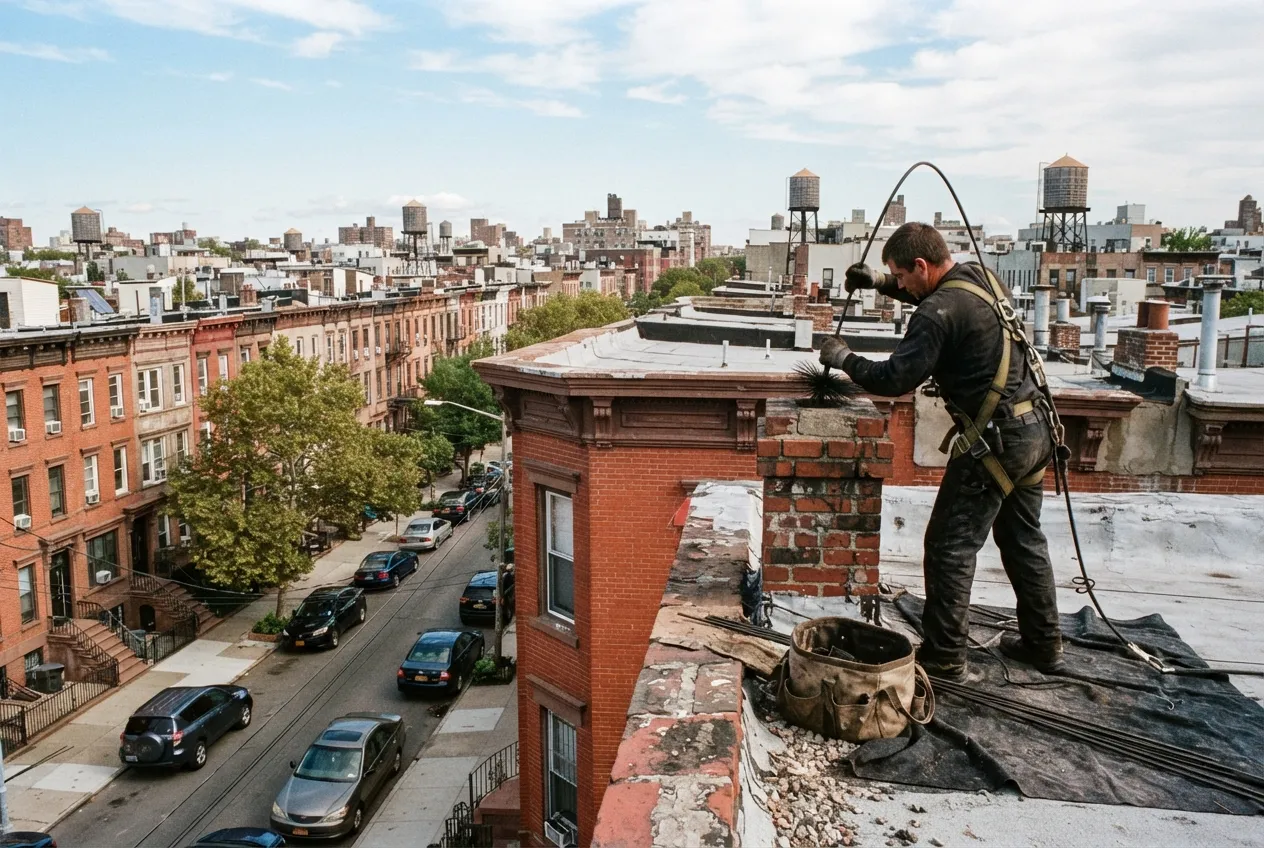
The short answer
StrongHold Chimney Services repairs masonry chimneys, crowns, flashing and flue liners in East Williamsburg homes and buildings in ZIP codes 11206 and 11211. We start by finding the cause of the problem, then repair what is damaged and explain what can wait and what can't.
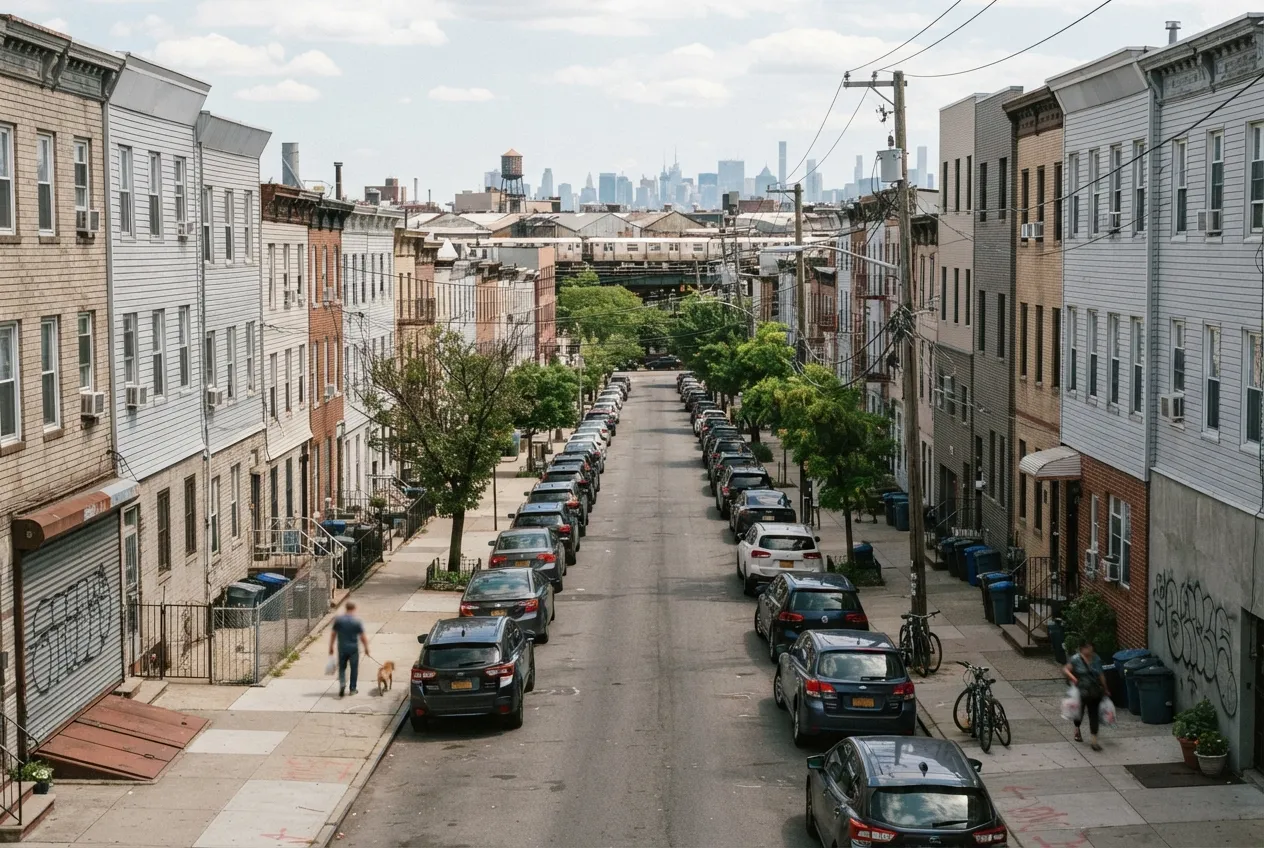
East Williamsburg has a mix of older rowhouses, pre-war apartment buildings, small multi-family homes and converted buildings, and many of their chimneys have been working through decades of Brooklyn winters. StrongHold Chimney Services repairs chimneys across East Williamsburg in ZIP codes 11206 and 11211, about 2 miles east of our Williamsburg office. Our certified technicians find out why a chimney is failing, explain what they found in plain terms, and fix the cause rather than covering up the symptom. This page covers the repairs we see most often here and how we approach them.
Common chimney problems in East Williamsburg homes
Most chimneys in this part of Brooklyn are brick, and brick chimneys age in predictable ways. Water is usually the cause. It gets into mortar joints, freezes, expands and loosens the masonry over time. On flat-roofed rowhouses and apartment buildings, the chimney often sits right where roof water collects, so problems at the base can go unnoticed until a ceiling stain appears inside.
These are the repairs we handle most often in the neighborhood:
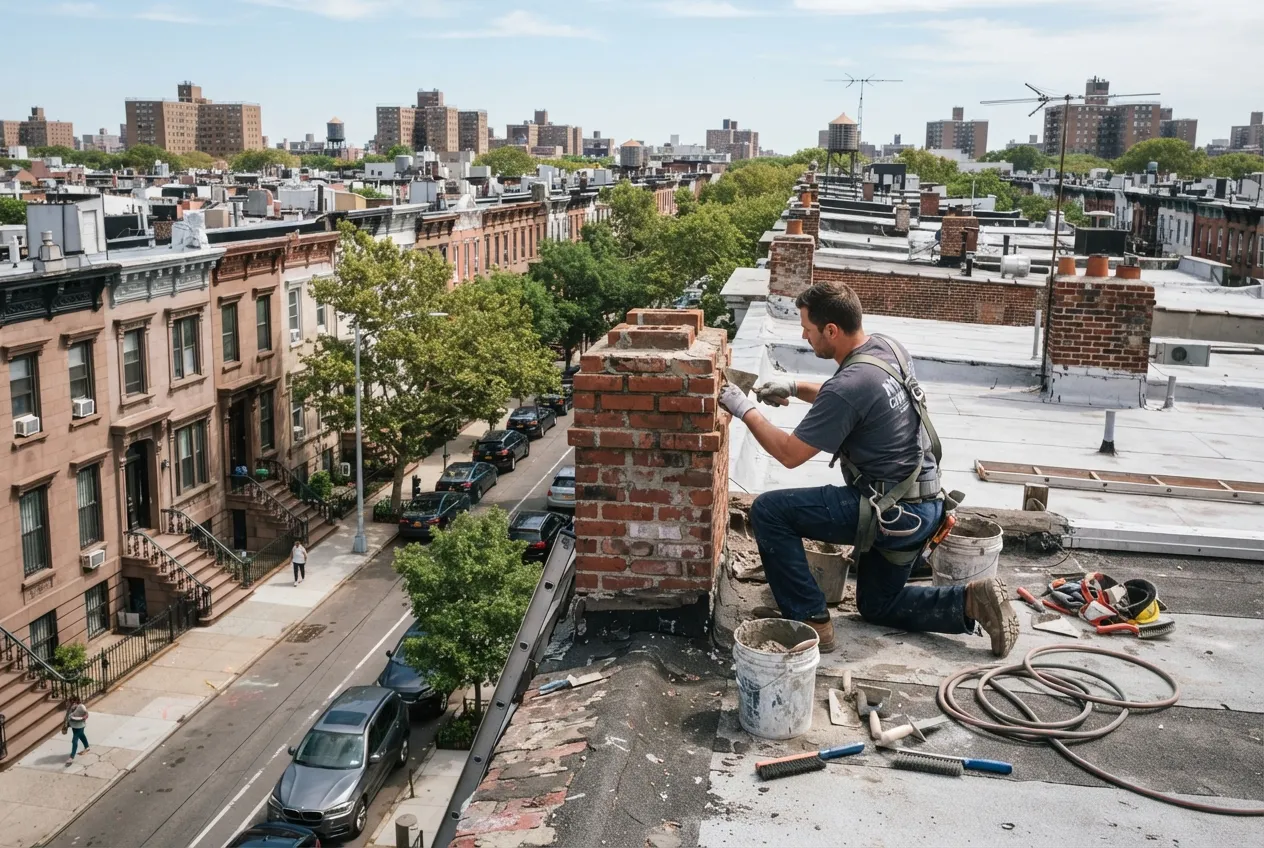
- Repointing: grinding out cracked or missing mortar and replacing it so water stops entering the joints
- Rebuilding loose or leaning brickwork above the roofline
- Crown repair or replacement where the concrete cap at the top has cracked
- Flashing repair where the chimney meets the roof and leaks show up inside
- Chimney caps to keep out rain, debris and animals
- Flue liner repair or relining when tiles are cracked or the liner no longer fits the appliance
- Damper repair on fireplaces that no longer seal
Oil-to-gas conversions and flue liners
Many older buildings in East Williamsburg have switched or are planning to switch boilers from oil to gas. When a New York City building converts its boiler from oil to gas, the chimney has to be evaluated as part of the work. A new liner is often needed because gas exhaust produces acidic condensate that can corrode a masonry flue from the inside.
That corrosion is easy to miss from the street. Signs can include crumbling material at the base of the flue, staining or dampness on walls near the chimney, and loose debris at the clean-out. If your building has already converted and the flue was never relined, we can inspect it and tell you whether relining is needed. If a conversion is still in the planning stage, it makes sense to bring us in early so the liner work is coordinated with the boiler installation rather than added later.
How we diagnose and repair
Good repair starts with a clear inspection. The NFPA 211 standard calls for chimneys, fireplaces and vents to be inspected once a year. Chimney professionals use three inspection levels: Level 1 when nothing has changed, Level 2 when the system changes (for example, a new appliance or a switch of fuel) or the home is sold, and Level 3 when a hidden hazard has to be reached by opening part of the chimney or building.
For most repair calls, we look at the chimney from the roof and from inside, and we use camera inspection of the flue when the problem may be inside the liner. We then explain what we found, which repairs address safety, which prevent further damage, and which are optional. You get a straight answer about what needs to happen now and what can be planned for later.
We match repair materials to the existing chimney whenever possible, including mortar that suits older brick, so new work doesn't speed up wear on the surrounding masonry.
Time for your annual chimney check?
Timing repairs around heat season
New York City's heat season runs from October 1 through May 31, when building owners must keep apartments heated to the city's minimum temperatures. For buildings with a central boiler, a chimney or liner problem in the middle of winter can put heat at risk, so it pays to have the chimney looked at in late spring or summer.
Masonry work is also easier to schedule in warmer months. If a problem turns up during heat season, we still respond and can often make repairs that keep the system operating safely until a full fix is possible.
Serving East Williamsburg and nearby neighborhoods
Our office is in Williamsburg, so East Williamsburg is close by for inspections, follow-up visits and repair work. We also repair chimneys in Williamsburg, South Williamsburg, Greenpoint, Clinton Hill and the Lower East Side. Whether you own a single rowhouse or manage a pre-war apartment building, we will review the chimney with you and plan the repair around how the building is used.
More services in East Williamsburg
- Chimney Sweep in East Williamsburg
- Chimney Inspection in East Williamsburg
- Air Duct Cleaning in East Williamsburg
- Chimney Liner Installation in East Williamsburg