The short answer
StrongHold Chimney Services repairs chimneys in Two Bridges, including crowns, mortar joints, flashing, caps and flue liners in older apartment buildings and rowhouses. Every repair starts with an inspection to find the real cause, and larger jobs are best planned outside New York City's October-through-May heat season.
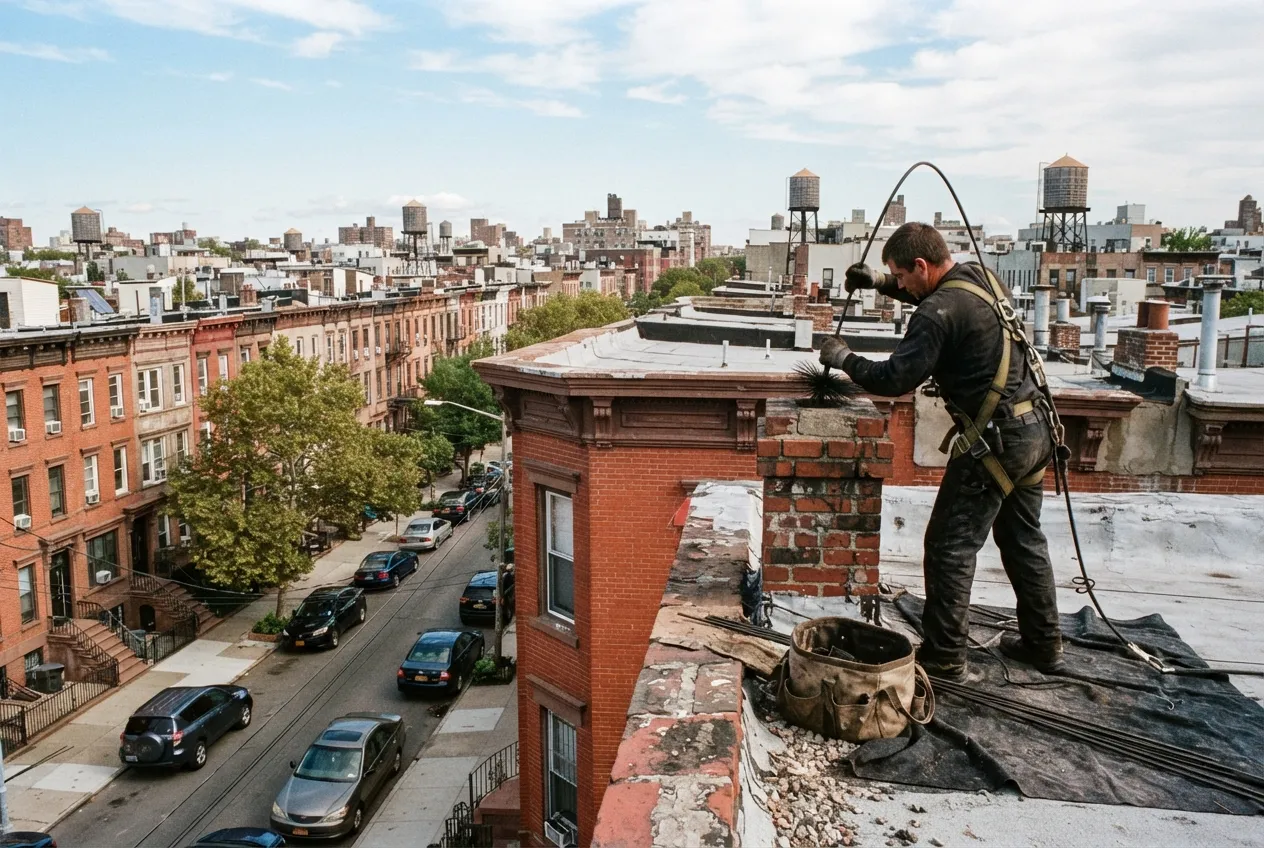
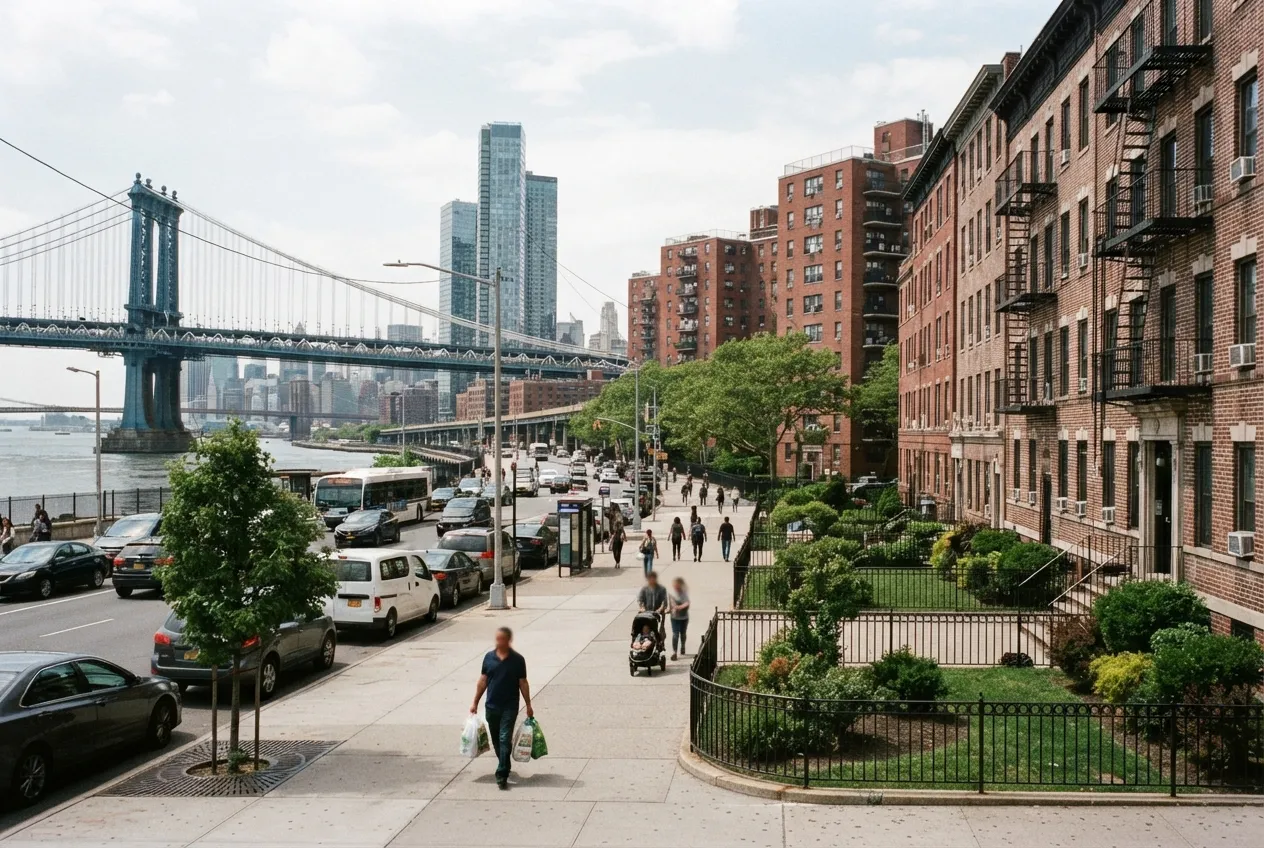
StrongHold Chimney Services repairs chimneys for homes and buildings in Two Bridges, about 2 miles from our office in Williamsburg, Brooklyn. Much of the housing here is older: pre-war apartment buildings, walk-ups and rowhouses with masonry chimneys that have been through decades of weather and heating seasons. When mortar loosens, a crown cracks or a flue liner fails, the problem rarely stays small. Our certified technicians find the cause, explain what they see in plain terms and repair the chimney so it vents safely.
Chimney problems we see in older Manhattan buildings
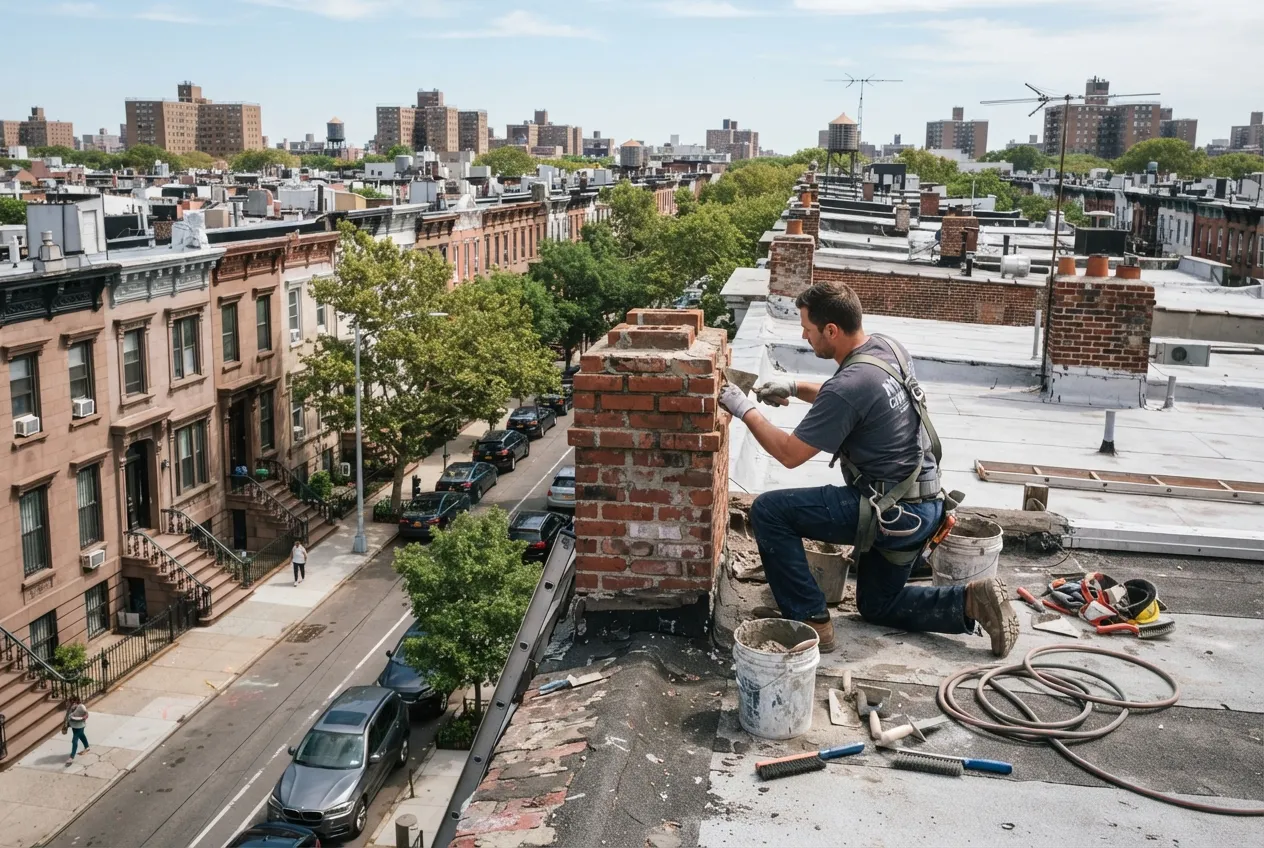
Tall masonry chimneys on multi-story buildings take a lot of exposure. Water is usually where the damage starts. It gets into cracked crowns, worn mortar joints and gaps in flashing. In winter it freezes and expands, which pushes bricks apart from the inside. Inside the flue, heat and exhaust wear down clay tile and older liners over time.
Watch for water stains on walls or ceilings near the chimney and for bits of brick or tile in the fireplace or at the base of the flue. A white, powdery residue on the masonry is another warning sign, as is smoke or odor coming back into the living space.
- Cracked or crumbling chimney crowns that let water into the masonry
- Loose, missing or eroded mortar joints that need repointing
- Spalling brick, where the face of the brick flakes or pops off
- Failed or poorly sealed flashing where the chimney meets the roof
- Damaged, missing or rusted chimney caps that let in rain, debris and animals
- Cracked, shifted or corroded flue liners
Oil-to-gas conversions and chimney liners
If your building is converting its boiler from oil to gas, the chimney has to be part of the plan. When a New York City building makes that conversion, the chimney must be evaluated as part of the work. A new liner is often needed because gas exhaust produces acidic condensate, which can corrode a masonry flue that was built for a different fuel.
We inspect the existing flue and check its size and condition against the new appliance. If the chimney needs a liner, we recommend one. Getting this right protects the masonry and helps exhaust leave the building the way it should.
How a chimney repair visit works
Repair starts with an inspection, because the visible damage is not always the real problem. The NFPA 211 standard calls for chimneys, fireplaces and vents to be inspected once a year. Chimney professionals use three levels of inspection, depending on the situation.
After the inspection, we walk you through what we found. We explain which repairs are needed now and which can be planned for later. Then we schedule the work, whether that means repointing, rebuilding a crown, replacing flashing, installing a cap or relining a flue.
- Level 1: used when nothing about the chimney or the appliances it serves has changed
- Level 2: used when the system changes, such as a new appliance or a switch of fuel, or when the home is sold
- Level 3: used when a hidden hazard has to be reached by opening part of the chimney or building
Time for your annual chimney check?
Plan repairs around heat season
New York City's heat season runs from October 1 through May 31. During those months, building owners must keep apartments heated to the city's minimum temperatures. That makes a boiler chimney that can't be used a serious problem. Masonry work also goes best in milder weather, when mortar can cure properly.
For most buildings, late spring and summer are the easiest times for larger repairs like relining or rebuilding. If you notice a problem during the heating months, contact us early. We can assess it and help you decide what has to happen right away.
Serving Two Bridges and nearby neighborhoods
Two Bridges is a short trip from our Williamsburg office, so it is easy for us to schedule inspections and come back for follow-up work. We also repair chimneys in nearby Chinatown, the Lower East Side, the East Village, Downtown Brooklyn and DUMBO. If you own or manage property in more than one of these areas, we can coordinate the work.
More services in Two Bridges
- Chimney Sweep in Two Bridges
- Chimney Inspection in Two Bridges
- Air Duct Cleaning in Two Bridges
- Chimney Liner Installation in Two Bridges