The short answer
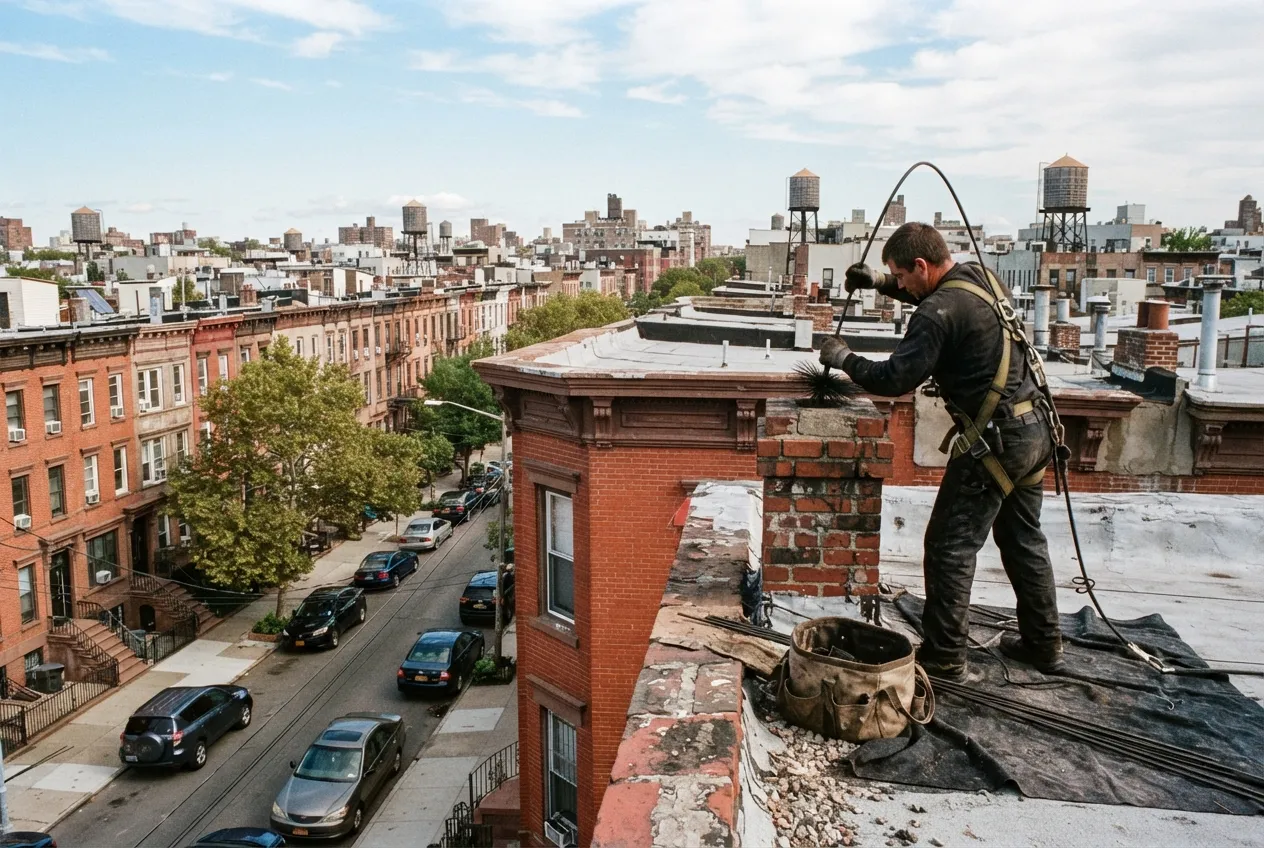
Chimney repair in the East Village usually means fixing worn masonry, cracked crowns, failed flashing or a damaged flue liner on an older rowhouse or apartment building. StrongHold Chimney Services inspects the chimney first, shows you what we find, and repairs only what the chimney needs to vent safely.
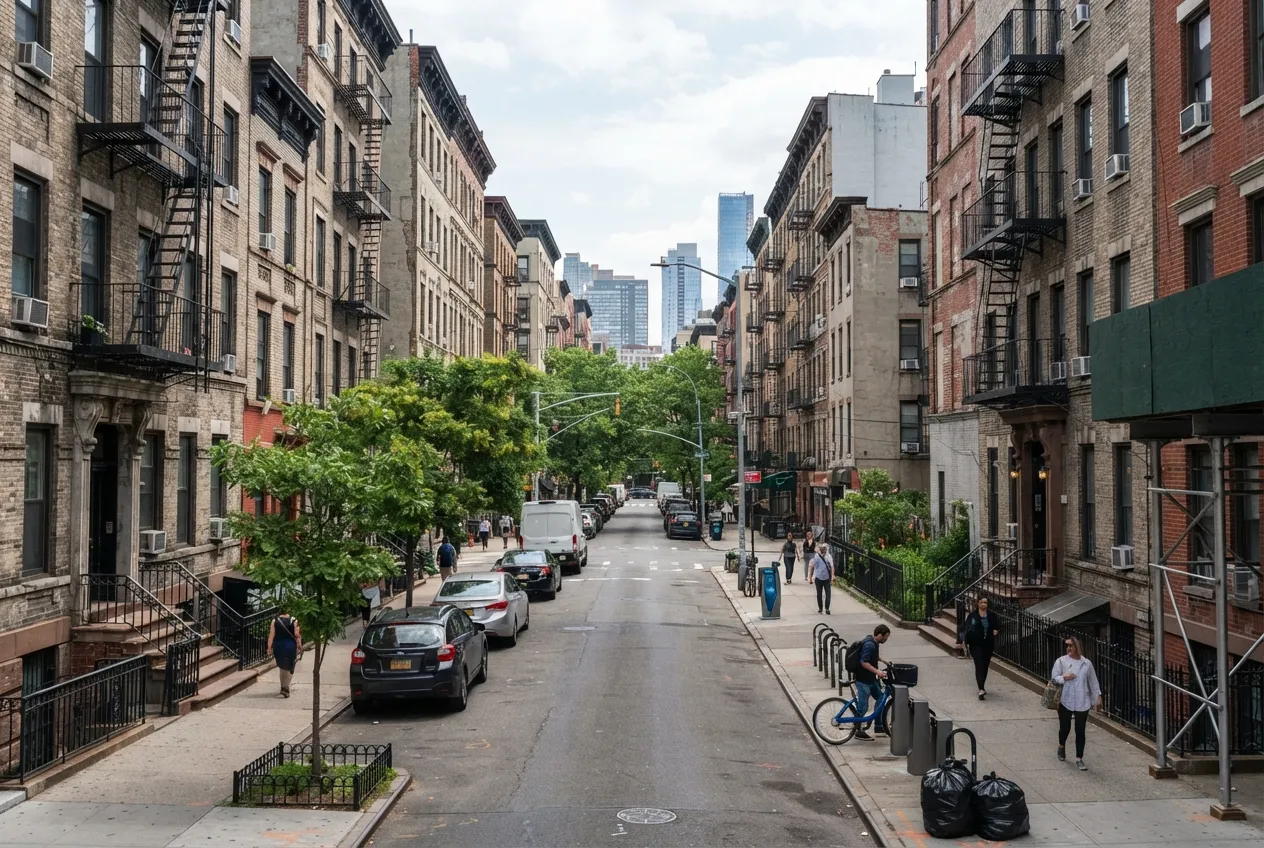
East Village chimneys work hard. Many run up through rowhouses, brownstones and pre-war apartment buildings, and they serve fireplaces, boilers and water heaters. Brick and mortar that have been through decades of freeze-thaw cycles, roof work and fuel changes eventually need attention. StrongHold Chimney Services repairs chimneys across the 10003 and 10009 ZIP codes from our office in Williamsburg, Brooklyn, about a mile away. Our certified technicians find what is actually wrong, explain it in plain terms, and fix the problem without selling you work you don't need.
Common Chimney Problems in East Village Buildings
Most chimneys in the neighborhood are masonry, and they wear out in predictable places. The top of the chimney takes the most weather, so the trouble usually starts there and works its way down. Inside, the flue deals with heat, moisture and combustion byproducts. Over time those break down mortar and older clay tile liners.
These are the repairs we handle most often on East Village homes and buildings:
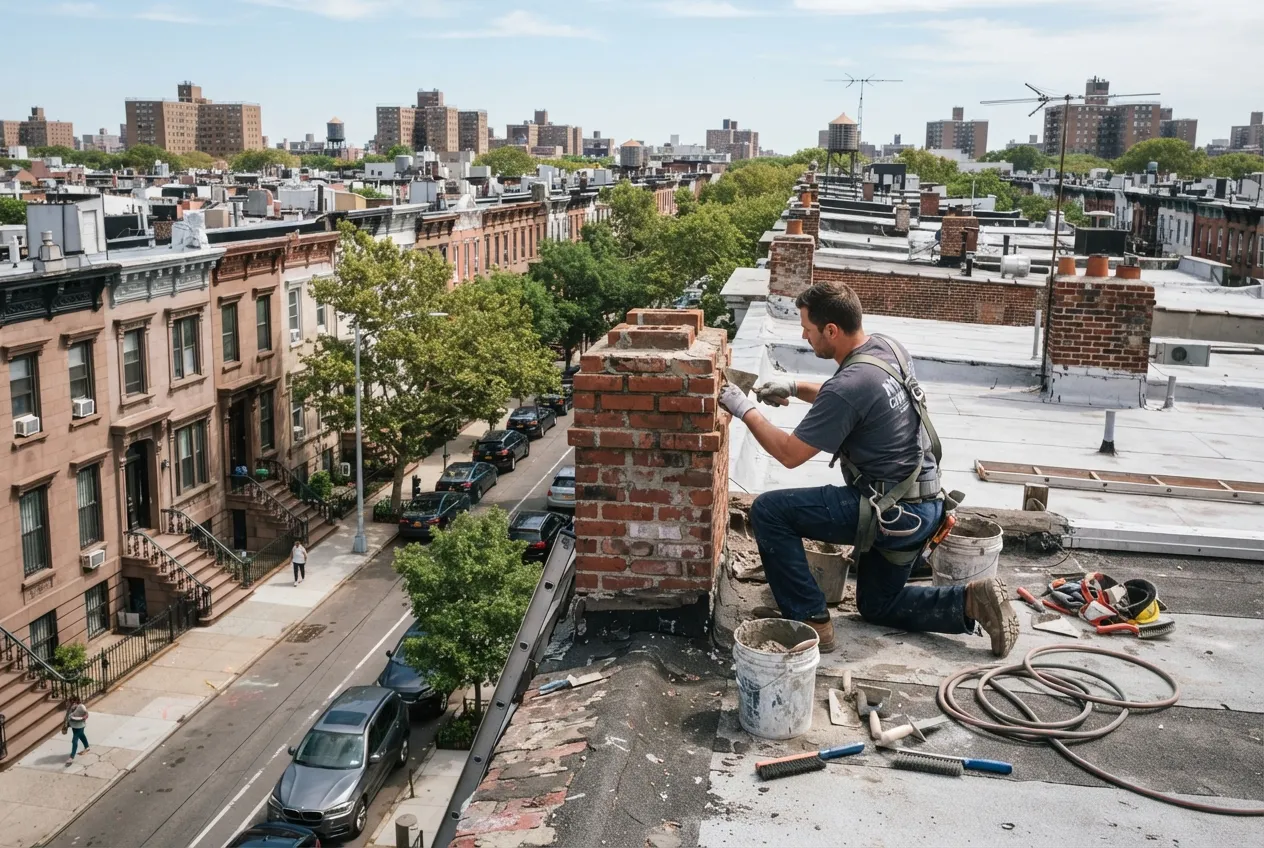
- Repointing loose or eroded mortar joints and replacing spalled or cracked brick
- Rebuilding or resurfacing cracked chimney crowns so water can't soak into the masonry
- Resealing or replacing flashing where the chimney meets the roof, a frequent source of ceiling leaks
- Installing or replacing chimney caps to keep out rain, birds and debris
- Repairing or relining damaged flues, including stainless steel liners for gas appliances
- Fixing damper and smoke chamber problems in fireplaces
Oil-to-Gas Conversions and Flue Liners
Plenty of older Manhattan buildings have switched their boilers from oil to gas. When a New York City building makes that change, the chimney has to be evaluated as part of the work. A new liner is often needed, because gas exhaust produces acidic condensate that can corrode a masonry flue that was built for oil.
If your building converted years ago and nobody checked the chimney, or you are planning a conversion now, we can look at the flue and tell you whether it can safely carry the new appliance's exhaust. We also look for signs that corrosion has already started, such as crumbling tile, debris at the base of the flue, or staining on the outside brick.
How We Approach a Repair
Every repair starts with an inspection. The NFPA 211 standard calls for chimneys, fireplaces and vents to be inspected once a year, and it describes three levels. A Level 1 inspection fits when nothing about the system has changed. A Level 2 inspection applies when something does change, such as a new appliance or a switch of fuel, or when the home is sold. A Level 3 inspection is used when a hidden hazard can only be reached by opening part of the chimney or building.
After the inspection we walk you through what we found, with photos when they help, and lay out the repair options. For multi-unit buildings we can coordinate with owners, managers and superintendents about roof access and timing. Once the work is done, we show you the finished repair and point out anything you should keep an eye on.
Time for your annual chimney check?
Timing Repairs Around Heat Season
New York City's heat season runs from October 1 through May 31. During those months building owners must keep apartments heated to the city's minimum temperatures. If the boiler flue is damaged, that can mean pressure to get the system running again quickly. The safer plan is to schedule an inspection and any needed repairs in late spring or summer, before the boiler is working every day.
If a problem turns up in the middle of winter, such as a leak, a blocked flue or a liner failure, call us anyway. We'll tell you what can be fixed right away and what is better done in a planned visit.
Serving the East Village and Nearby Neighborhoods
We work throughout the East Village, in both the 10003 and 10009 ZIP codes. We also serve the Lower East Side, Chinatown and Two Bridges, as well as Williamsburg and Greenpoint near our Brooklyn office. Whether you own a single rowhouse or manage a pre-war walk-up, we can help you keep your chimney sound and venting the way it should.
More services in East Village
- Chimney Sweep in East Village
- Chimney Inspection in East Village
- Air Duct Cleaning in East Village
- Chimney Liner Installation in East Village