The short answer
Most chimney repairs in Clinton Hill involve worn mortar, cracked crowns, failed flashing, missing caps or a damaged flue liner, and most are caused by water. StrongHold Chimney Services inspects the chimney, shows you what is wrong and repairs it before small damage turns into a leak or a safety hazard.
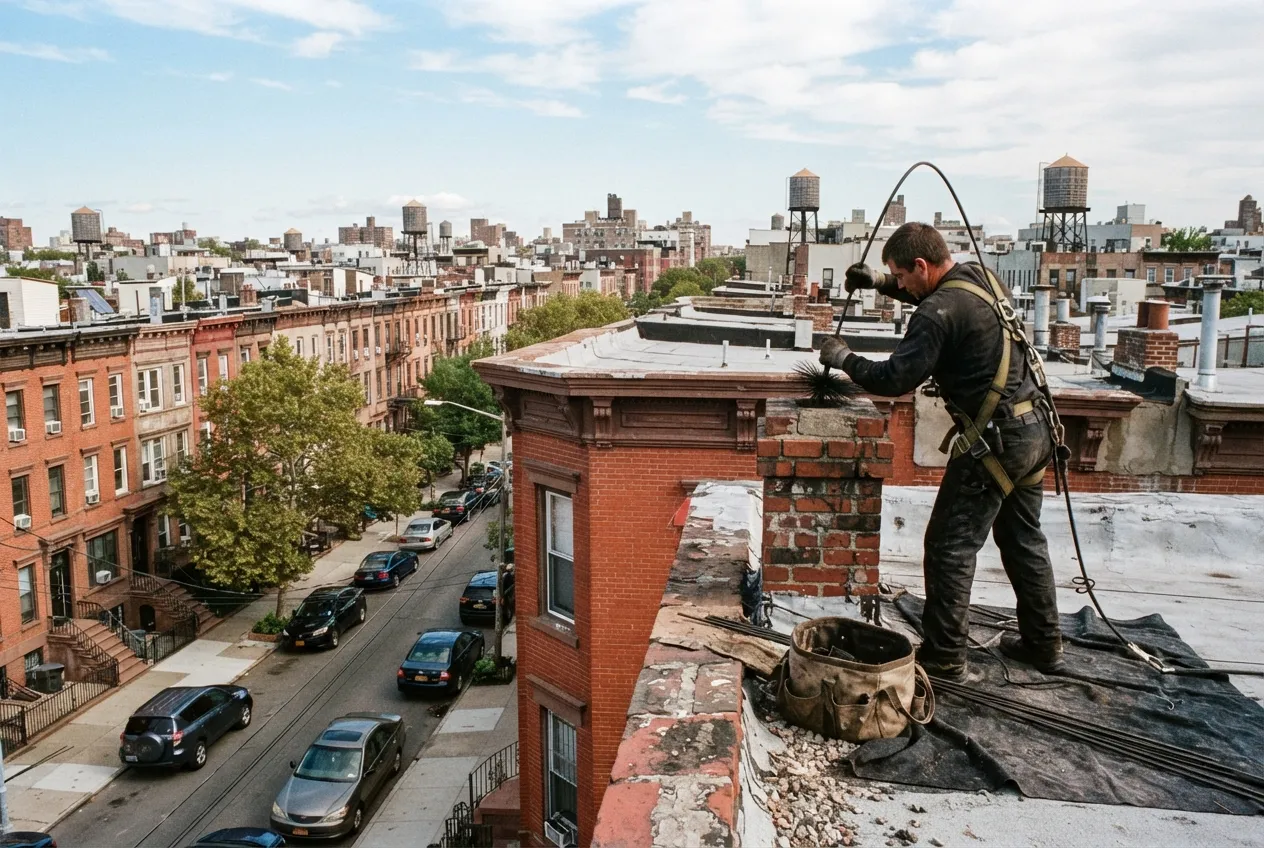
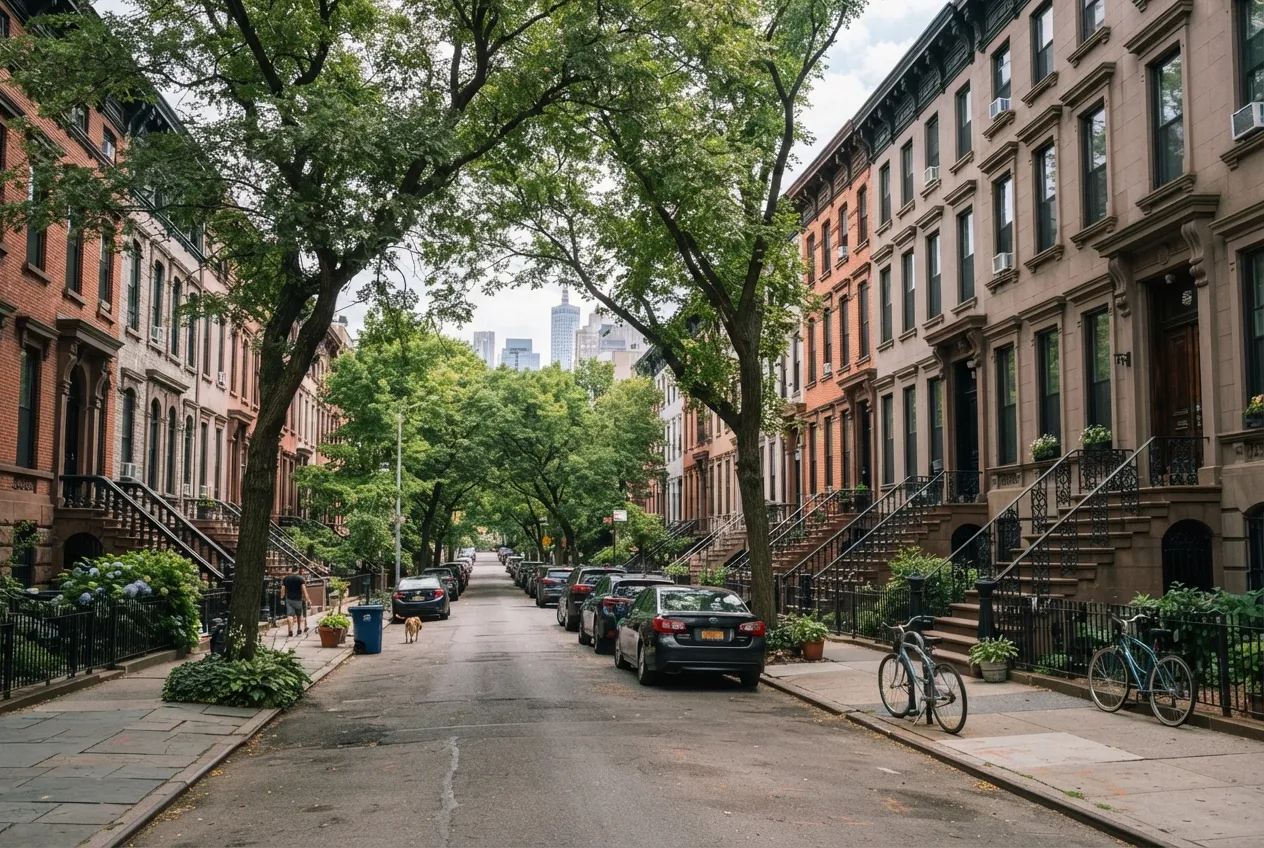
Clinton Hill has many brownstones, rowhouses and pre-war apartment buildings, and a lot of them still have their original masonry chimneys. After decades of freeze-thaw cycles, rain and boiler exhaust, those chimneys need attention. StrongHold Chimney Services repairs chimneys in Clinton Hill from our office in Williamsburg, about 2 miles north. Our certified technicians find out why a chimney is failing, explain what they found in plain terms, and fix the cause so the problem doesn't come back.
Why Chimneys in Clinton Hill Need Repair
Most chimneys in this neighborhood are brick, often in rowhouses where stacks sit on a shared party wall or rise high above a flat roof. A tall, exposed stack takes the full force of wind, rain and winter freezes. When water soaks into the brick and mortar and then freezes, it expands and pushes the masonry apart. Over the years, joints open up, bricks start to flake (this is called spalling), and the concrete crown on top cracks.
Water does not stay outside. A cracked crown or loose flashing where the chimney meets the roof can let moisture into the flue, the walls and the ceilings below. Many Clinton Hill owners first notice the problem as a stain on a top-floor ceiling or plaster bubbling next to the fireplace, not as damage on the chimney itself.
Chimney Repairs We Handle
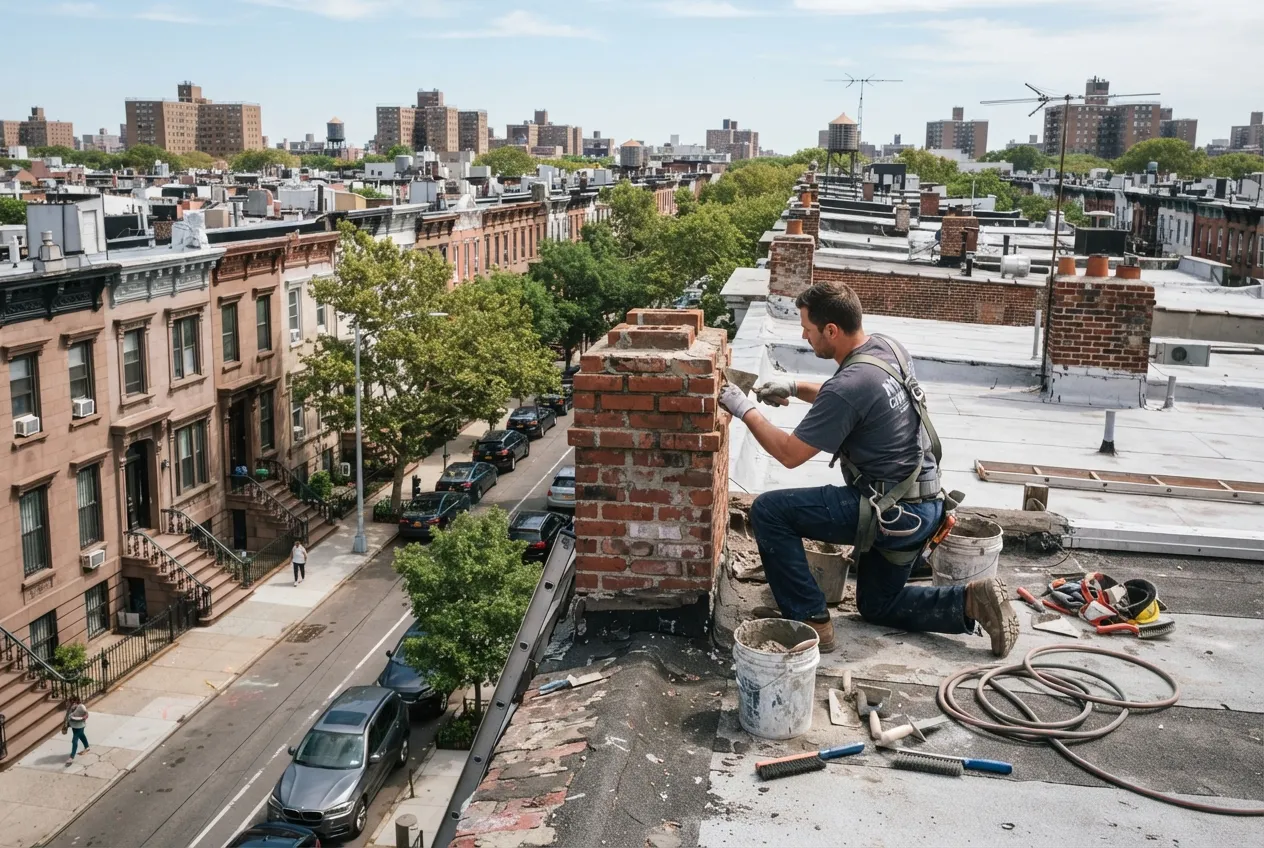
We fix the masonry, the parts that keep water out, and the flue that carries smoke and exhaust out of the house. Common repairs include:
- Repointing: removing and replacing failed mortar joints
- Replacing spalled or broken bricks
- Rebuilding or resealing cracked chimney crowns
- Repairing or replacing roof flashing around the stack
- Installing chimney caps to keep out rain, birds and animals
- Fixing or replacing fireplace dampers, including top-sealing dampers
- Repairing cracked flue tiles or installing a stainless steel liner
- Rebuilding the top of the stack when the masonry is loose
Oil-to-Gas Conversions and Flue Liners
Many older Brooklyn buildings have switched, or plan to switch, their boilers from oil to gas. When a New York City building converts its boiler from oil to gas, the chimney has to be evaluated as part of the work. A new liner is often needed because gas exhaust produces acidic condensate that can corrode a masonry flue.
If your building has converted and the chimney was never relined, watch for crumbling material at the base of the flue, staining on the outside of the chimney, or debris at the cleanout. We can check the flue, tell you whether it is safe for the appliance it serves, and install a properly sized liner if it needs one.
Time for your annual chimney check?
How a Chimney Repair Visit Works
We start with an inspection, because the visible damage is not always where the problem started. The NFPA 211 standard calls for chimneys, fireplaces and vents to be inspected once a year. It also defines three inspection levels. A Level 1 inspection fits when nothing about the system has changed. Level 2 applies when the system changes, such as a new appliance or a switch of fuel, or when the home is sold. Level 3 is used when a hidden hazard can only be reached by opening part of the chimney or the building.
After the inspection, we walk you through what we found, show you photos of areas you can't easily see, and explain which repairs are urgent and which can wait. Then we schedule the work. In rowhouses and apartment buildings, we plan roof access ahead of time and keep the work area clean inside the home.
When to Schedule Repairs
New York City's heat season runs from October 1 through May 31. During that time, building owners must keep apartments heated to the city's minimum temperatures. A damaged boiler flue in the middle of winter can leave you choosing between running unsafe equipment and failing to provide heat. Late spring and summer are the best times to find and fix chimney problems, while the heating system can be shut down and the weather is good for masonry work.
Some problems should not wait for a better season. Call for service right away if you smell smoke or exhaust indoors, see pieces of tile or masonry falling into the firebox, find water coming in near the chimney, or notice bricks loosening at the top of the stack.
Serving Clinton Hill and Nearby Neighborhoods
Our Williamsburg office is a short trip from Clinton Hill, so it is easy to schedule inspections and follow-up visits. We also repair chimneys in Fort Greene, South Williamsburg, Downtown Brooklyn, DUMBO and Williamsburg. Whether you own a single brownstone or manage a pre-war apartment building, we will tell you clearly what your chimney needs and why.
More services in Clinton Hill
- Chimney Sweep in Clinton Hill
- Chimney Inspection in Clinton Hill
- Air Duct Cleaning in Clinton Hill
- Chimney Liner Installation in Clinton Hill