The short answer
Williamsburg homes with a fireplace or a chimney-vented boiler should have the chimney inspected once a year, as the NFPA 211 standard calls for, and swept when soot, creosote or debris builds up. StrongHold Chimney Services sweeps chimneys from our office at 82 S 6th St, and the best time to book is before heat season starts on October 1.
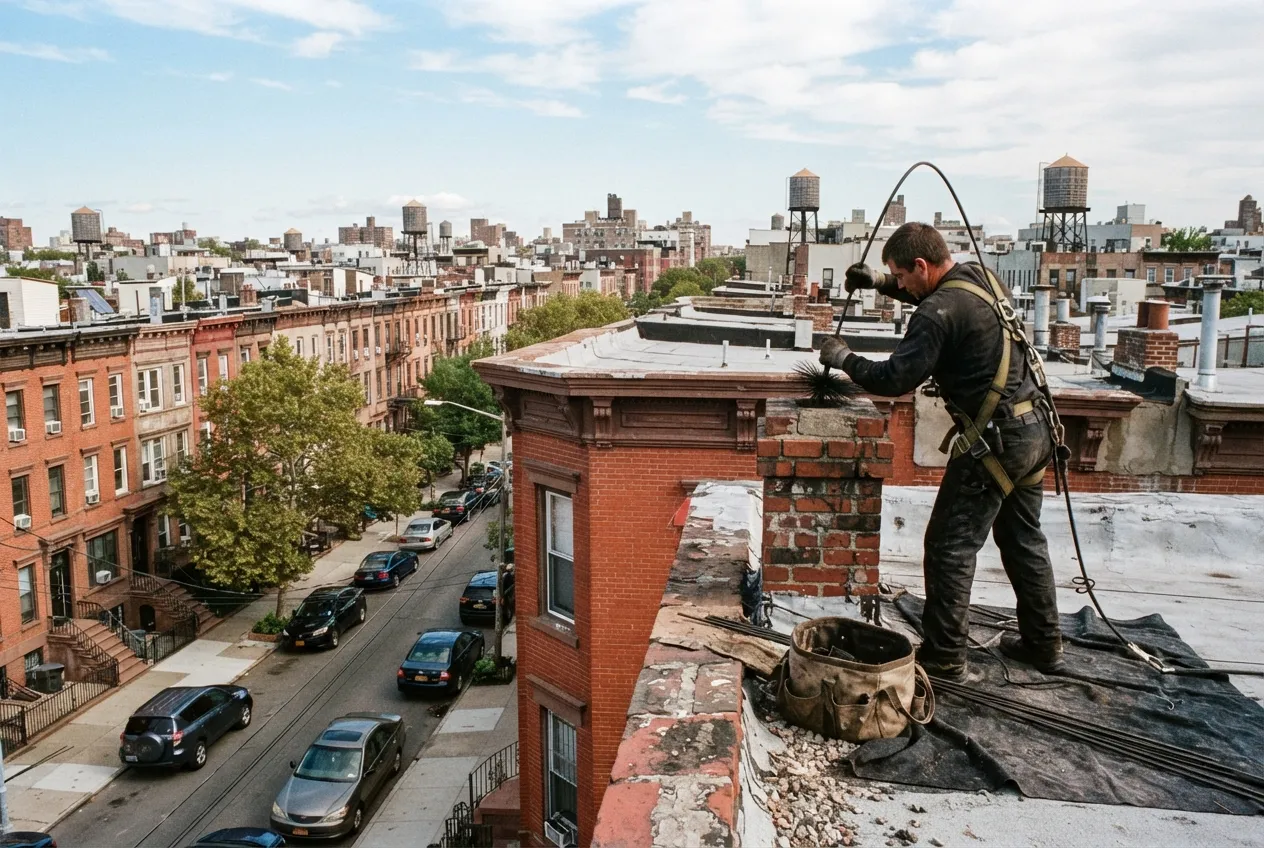
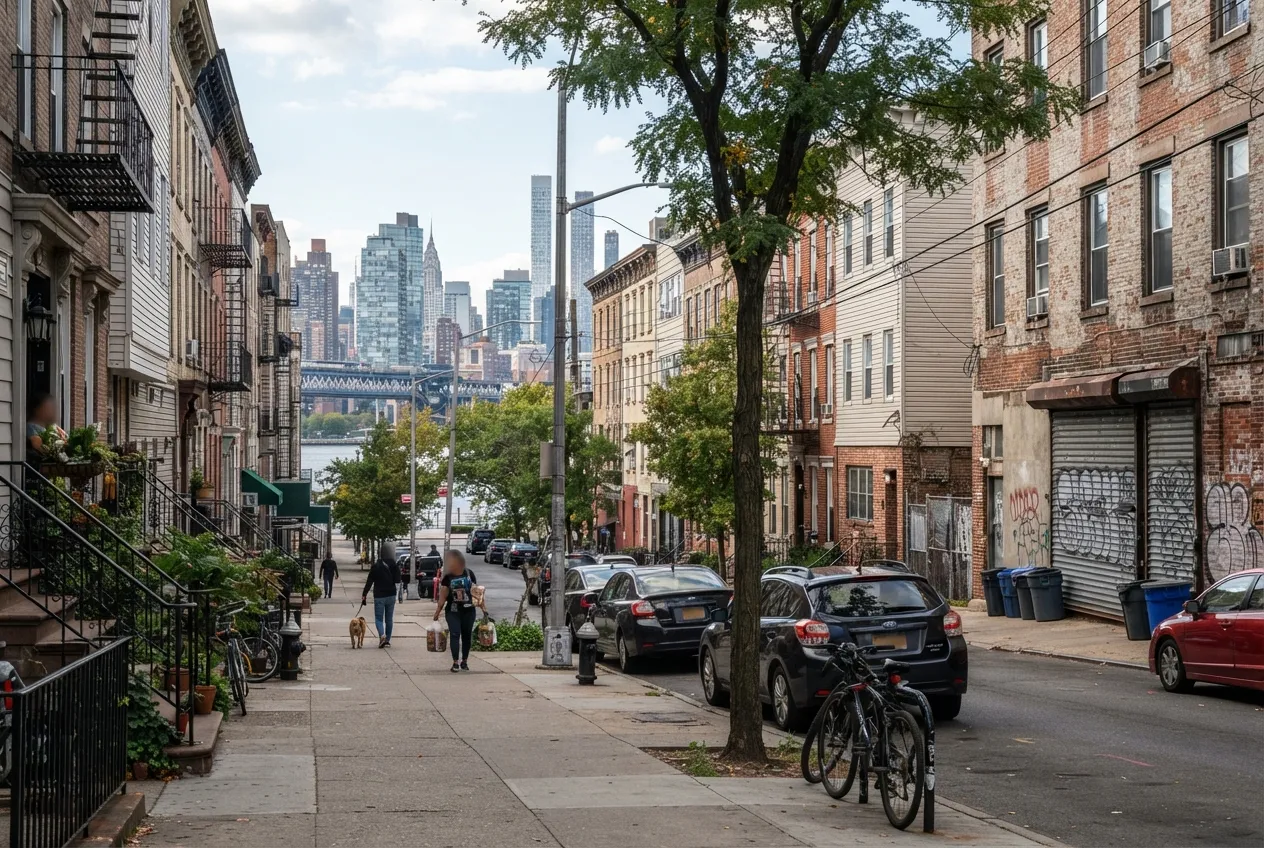
StrongHold Chimney Services sweeps chimneys across Williamsburg from our office at 82 S 6th St. Housing here includes older rowhouses and brownstones, pre-war apartment buildings, converted industrial spaces and newer construction. The chimneys inside them vary just as much: wood-burning fireplaces, old masonry flues that now vent a gas boiler, and shared stacks serving several units. A sweep is the routine cleaning that keeps those flues open and drawing properly. Below is what the work involves, when to schedule it, and what our certified technicians look for while they're on the roof and at the firebox.
What a Chimney Sweep Removes
Every fire leaves residue in the flue. Wood smoke condenses into creosote. It starts as light soot and can harden into a tar-like glaze that burns very hot if it ignites. Gas and oil appliances don't produce creosote the same way, but their flues still collect soot, flaking mortar and debris. In Brooklyn, nests, leaves and broken masonry often end up at the bottom of the flue or lodged on the smoke shelf.
A sweep clears that material from the top of the chimney down to the firebox or appliance connection, so exhaust leaves the house instead of spilling back into it.
- Creosote and soot on the flue walls
- Animal nests and leaves blocking the flue
- Loose mortar and flue tile fragments on the smoke shelf or at the base
- Debris around the damper
How We Sweep Williamsburg Chimneys
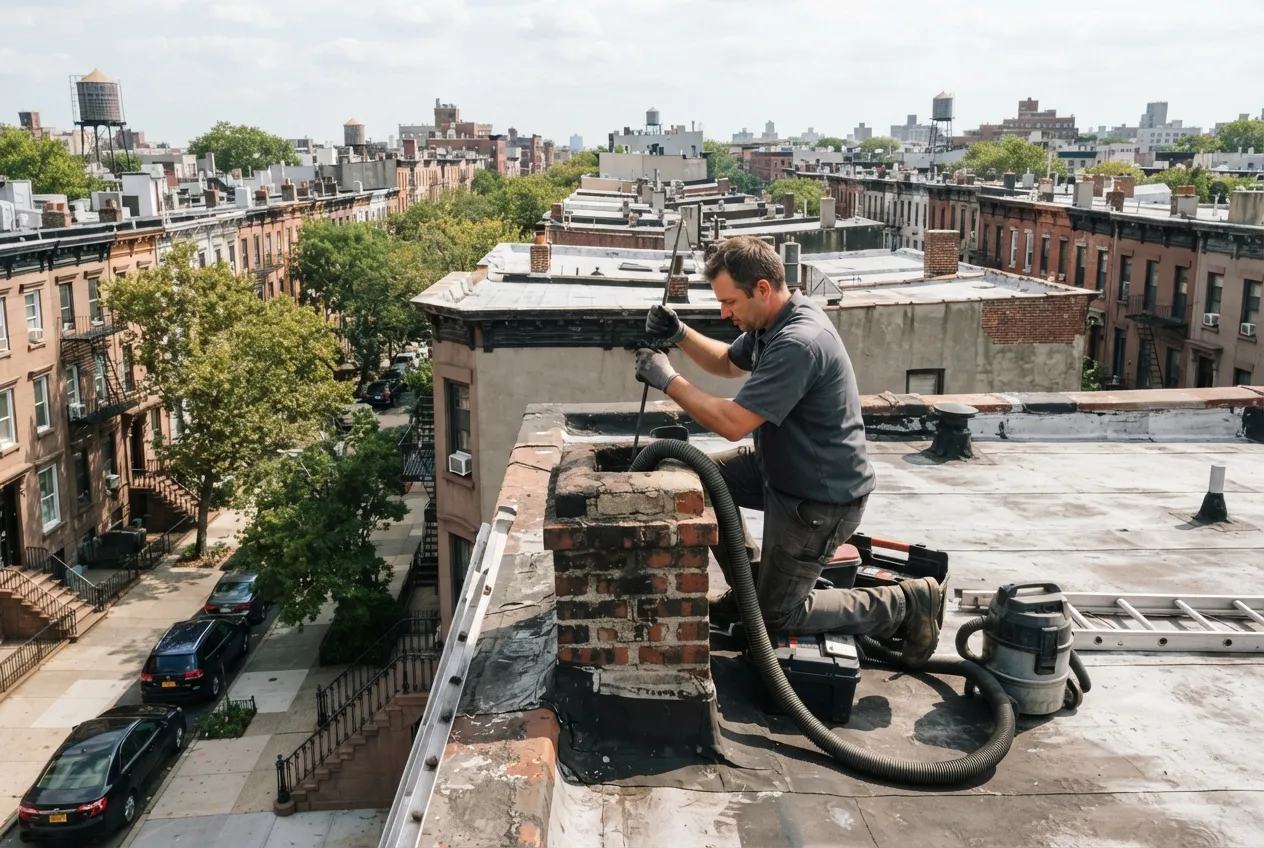
Older rowhouses and brownstones often have several flues in one stack. Some were sealed off long ago and some are still in use. Before we start, we identify which flue serves your fireplace or appliance so we clean the right one. We lay drop cloths, seal the fireplace opening, and run a filtered vacuum while brushing so soot stays out of the room.
Depending on roof access and the shape of the flue, we brush from the top, from the bottom, or both, using rods and brushes sized to the flue. In apartment buildings, we coordinate roof and basement access with the building owner or super ahead of time. After cleaning, we check the damper, firebox and visible flue sections and tell you what we saw, with photos when they help.
When to Schedule a Sweep
The NFPA 211 standard calls for chimneys, fireplaces and vents to be inspected once a year, and a sweep is often done during the same visit. Whether your chimney needs sweeping depends on how much it's used and what has built up inside it.
Timing matters in New York City. Heat season runs from October 1 through May 31, and during that time building owners must keep apartments heated to the city's minimum temperatures. A blocked boiler flue in January is hard to fix quickly, so many owners book cleaning and inspection in late summer or early fall, before the heat comes on. Williamsburg fireplace owners often do the same, so the first cold weekend isn't spent in a smoky living room.
- Smoke drifts into the room when you light a fire
- A strong odor comes from the fireplace, especially in humid weather
- Black flakes or crumbs collect in the firebox
- You hear or see animals in the chimney
- More than a year has passed since anyone looked at the chimney
Time for your annual chimney check?
Inspection Levels and Oil-to-Gas Conversions
Chimney professionals use three inspection levels. A Level 1 inspection fits when nothing about the system has changed. A Level 2 inspection applies when the system changes, such as a new appliance or a switch in fuel, or when the home is sold. A Level 3 inspection is for hidden hazards that can only be reached by opening part of the chimney or building.
Many Brooklyn buildings have converted their boilers from oil to gas. When a New York City building makes that change, the chimney has to be evaluated as part of the work. A new liner is often needed because gas exhaust produces acidic condensate that can corrode a masonry flue. If your building has converted or plans to, a sweep is a good time to check the flue's condition.
Serving Williamsburg and Nearby Neighborhoods
Our office is on S 6th St, so Williamsburg jobs are close to home for our crew. We also sweep chimneys in South Williamsburg, Greenpoint and East Williamsburg, and across the river in the Lower East Side and East Village. Rowhouses, walk-ups and pre-war apartment buildings there raise many of the same questions about shared flues and roof access.
When you contact us, tell us what kind of building you live in, what the chimney serves and when it was last cleaned. That helps us plan access and bring the right equipment.
More services in Williamsburg
- Chimney Inspection in Williamsburg
- Chimney Repair in Williamsburg
- Air Duct Cleaning in Williamsburg
- Chimney Liner Installation in Williamsburg