The short answer
Under the NFPA 211 standard, East Williamsburg chimneys should be inspected once a year, and they should be swept when that inspection finds buildup or debris. This applies most to older masonry flues that serve fireplaces or boilers. StrongHold Chimney Services sends certified technicians from our nearby Williamsburg office to sweep and inspect homes in 11206 and 11211.
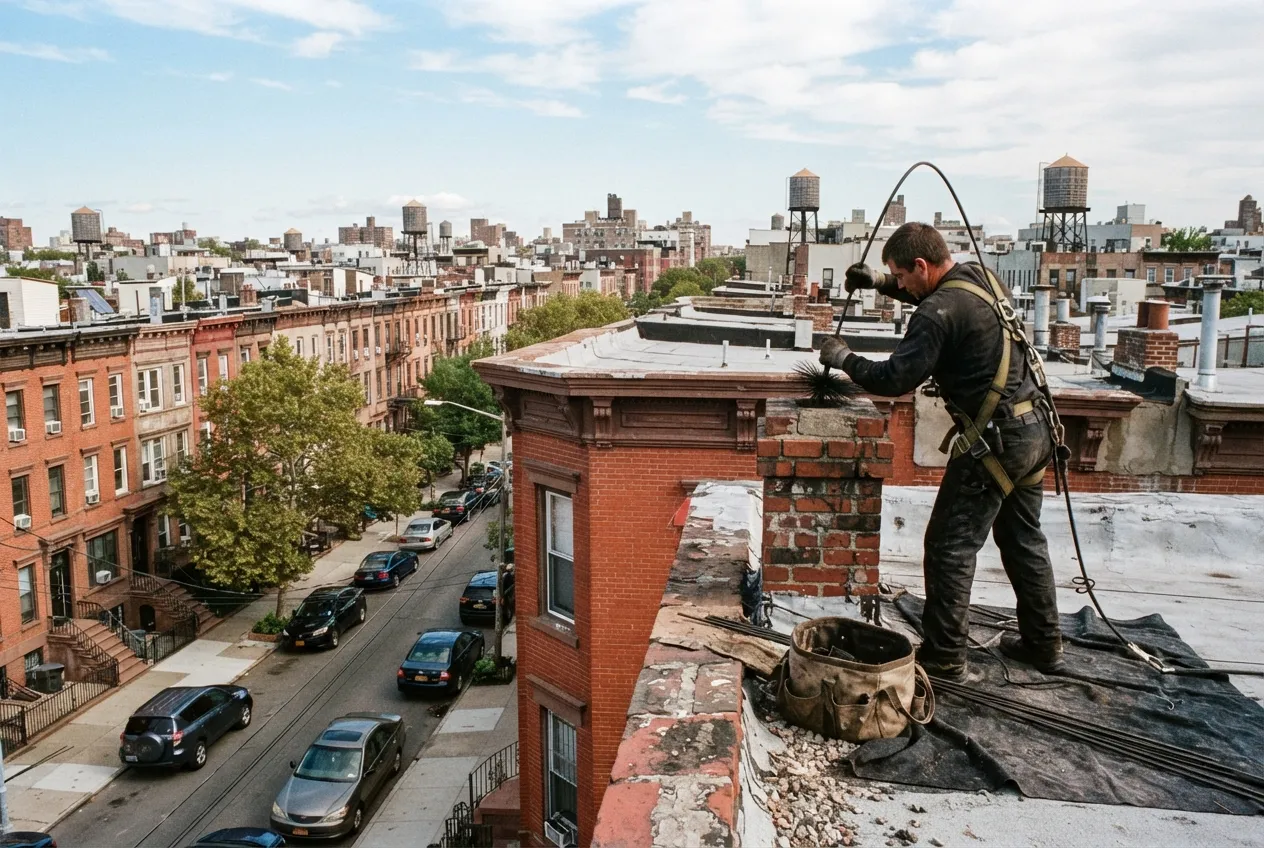
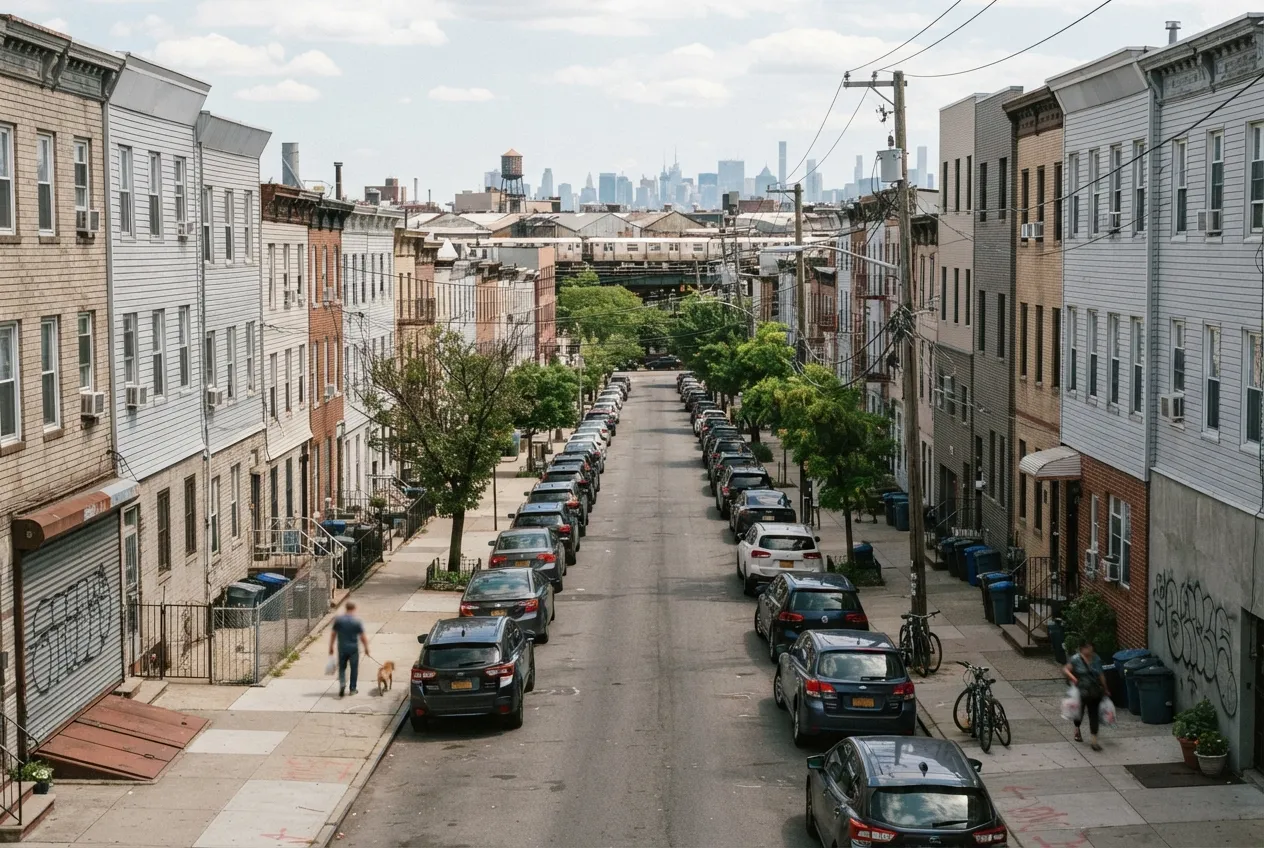
East Williamsburg homes come in many forms: brick rowhouses, frame houses with siding, pre-war apartment buildings, and mixed-use buildings with apartments over storefronts. Many still have working chimneys that serve wood-burning fireplaces, gas fireplaces, or boilers and water heaters in the basement. Our crew travels about 2 miles east from our Williamsburg office to sweep and inspect chimneys in ZIP codes 11206 and 11211. This page covers what a sweep involves here, when to schedule one, and what we look for in the older flues common to the neighborhood.
What a Chimney Sweep Includes
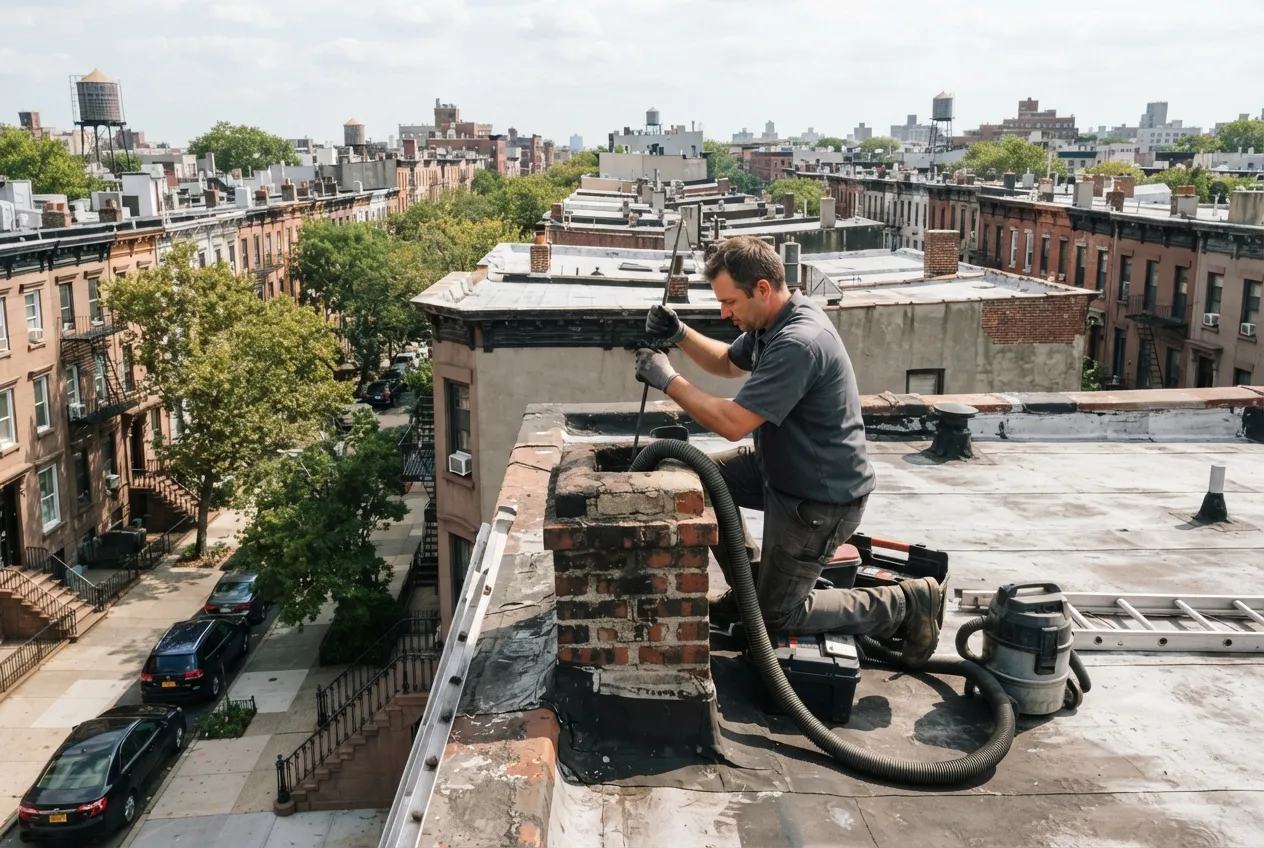
A sweep removes soot, creosote, and debris from the flue, smoke chamber, and firebox so smoke and exhaust can leave the house freely. We cover the floor and furniture near the opening with drop cloths. We also run a HEPA-filtered vacuum while we brush, so the soot stays in the chimney and out of your living space.
- Brushing the flue from the firebox or the roof, depending on access and the chimney's height
- Removing creosote buildup and noting whether it is flaky, sticky, or glazed
- Clearing nests, leaves, and fallen mortar from the smoke shelf and base of the flue
- Checking the damper, firebox, and flue for cracks, gaps, or loose material
- A written summary of what we found, with photos when something needs attention
Chimneys in Older East Williamsburg Buildings
Much of the neighborhood's housing is older. Many of its chimneys were built as unlined masonry flues or with clay tile liners. Over the years, mortar joints wear down, tiles crack, and water gets in through a worn crown. In rowhouses, flues often run close to a shared wall. That makes a gap in the lining a safety issue, not just a cosmetic one.
Many buildings here have also changed fuels over time. When a New York City building converts its boiler from oil to gas, the chimney has to be evaluated as part of that work. A new liner is often needed, because gas exhaust produces acidic condensate that can corrode a masonry flue. If your building has converted or plans to, a sweep and inspection of the boiler flue is a sensible first step.
How Often to Schedule a Sweep
The NFPA 211 standard calls for chimneys, fireplaces, and vents to be inspected once a year. The inspection tells you whether a sweep is needed. How often you actually need cleaning depends on how much you use the chimney and what fuel you burn.
- Wood-burning fireplaces used regularly: plan on at least one sweep per season
- Gas fireplaces and gas appliance flues: inspect yearly, and clean when debris, nests, or deterioration turn up
- Fireplaces that have sat unused for years: inspect and sweep before the first fire
Time for your annual chimney check?
Planning Around Heat Season
For boiler and water heater flues, timing matters. New York City's heat season runs from October 1 through May 31. During that time, building owners must keep apartments heated to the city's minimum temperatures. If you schedule the sweep in late summer or early fall, any repair the inspection turns up can be handled before the heat has to stay on.
Inspection Levels and What We Tell You
Chimney professionals use three inspection levels. Level 1 is for a system where nothing has changed. Level 2 applies when the system changes, such as a new appliance or a switch of fuel, or when the home is being sold. Level 3 is used only when a hidden hazard has to be reached by opening part of the chimney or building.
Our certified technicians explain what they saw in plain terms. If the flue only needs cleaning, that is all we do. If we find cracked tiles, a failing crown, or a liner problem, we show you what we found and go over your options before any other work is scheduled.
Signs You Need a Sweep Now
Don't wait for the yearly visit if you notice any of the following. We also serve nearby Williamsburg, South Williamsburg, Greenpoint, Clinton Hill, and the Lower East Side.
- A smoky or musty smell near the fireplace, especially on humid days
- Smoke spilling into the room instead of drawing up the flue
- Black flakes or pieces of crumbled tile in the firebox
- Animal sounds or nesting material near the damper
- Water stains on the ceiling or wall beside the chimney
More services in East Williamsburg
- Chimney Inspection in East Williamsburg
- Chimney Repair in East Williamsburg
- Air Duct Cleaning in East Williamsburg
- Chimney Liner Installation in East Williamsburg