The short answer
A chimney sweep removes soot, creosote and debris so smoke and exhaust can leave your building safely. In Chinatown's older walk-ups, rowhouses and mixed-use buildings, that applies to fireplace chimneys and to the flues serving boilers and water heaters. The NFPA 211 standard calls for a yearly inspection, which shows whether a sweep is needed.
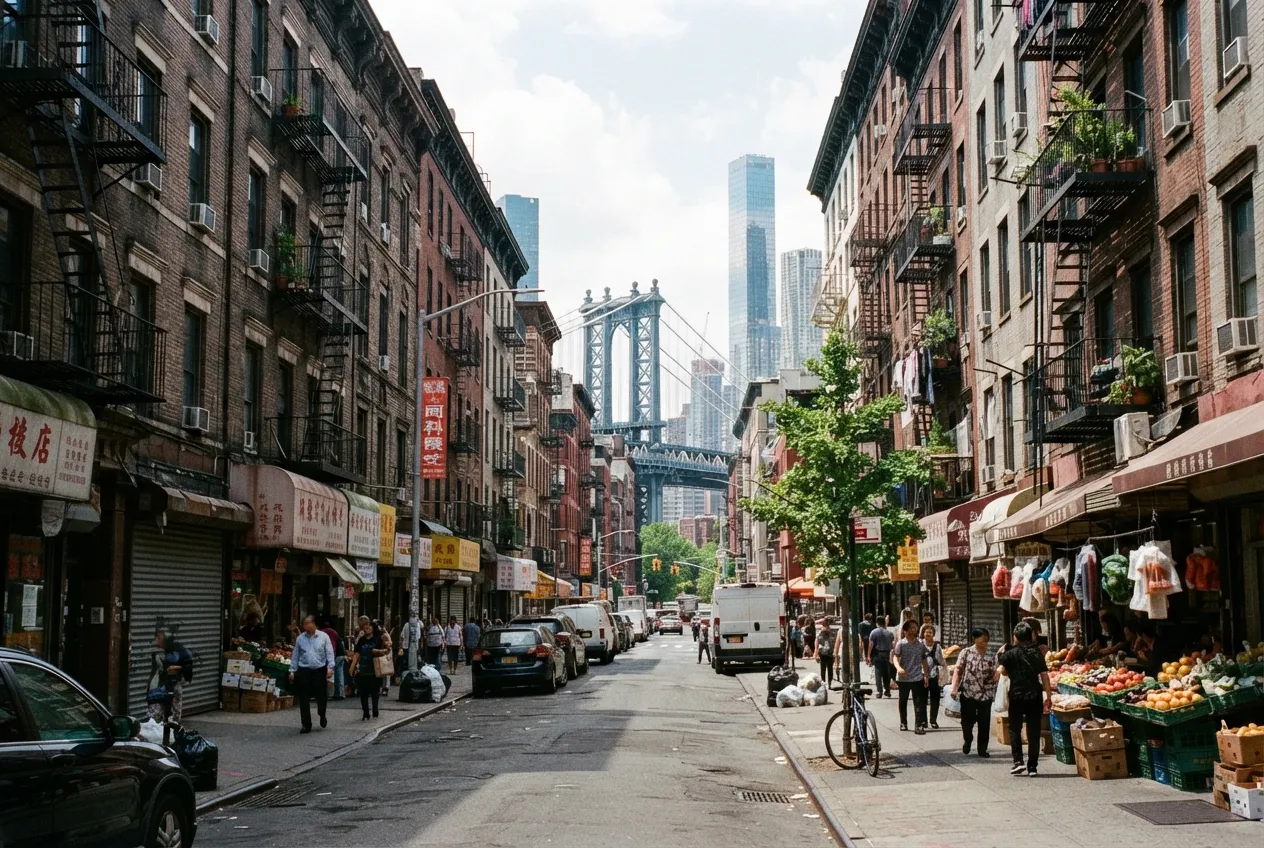
Many buildings in Chinatown still rely on a chimney, even if nobody has looked up the flue in years. Pre-war walk-ups, older rowhouses and mixed-use buildings with apartments over storefronts often have masonry chimneys that vent a boiler, a water heater or an old fireplace. StrongHold Chimney Services sends certified technicians from our office in Williamsburg, Brooklyn, about 2 miles east, to sweep and inspect those flues. We work cleanly inside occupied homes, explain what we find in plain terms, and tell you what needs attention now and what can wait.
What a chimney sweep involves in a Chinatown building
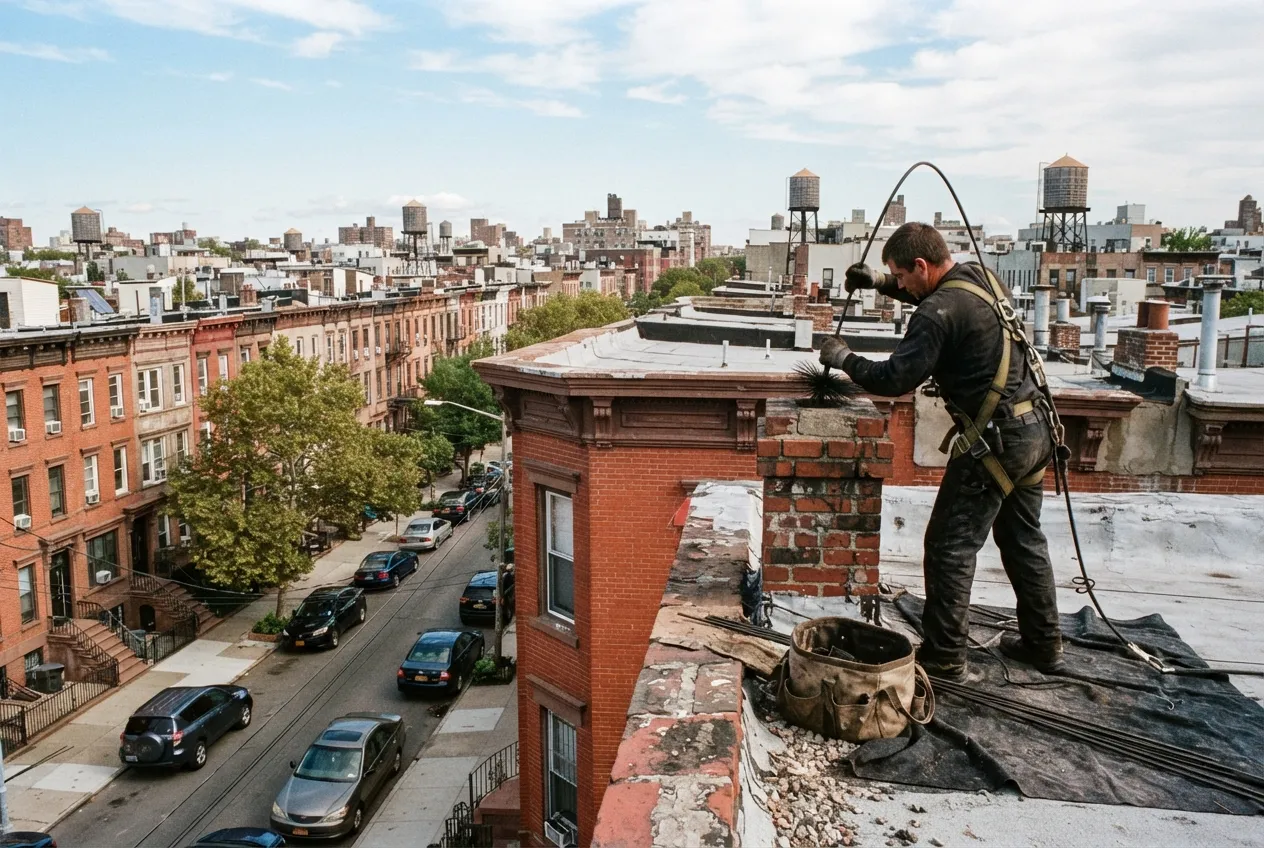
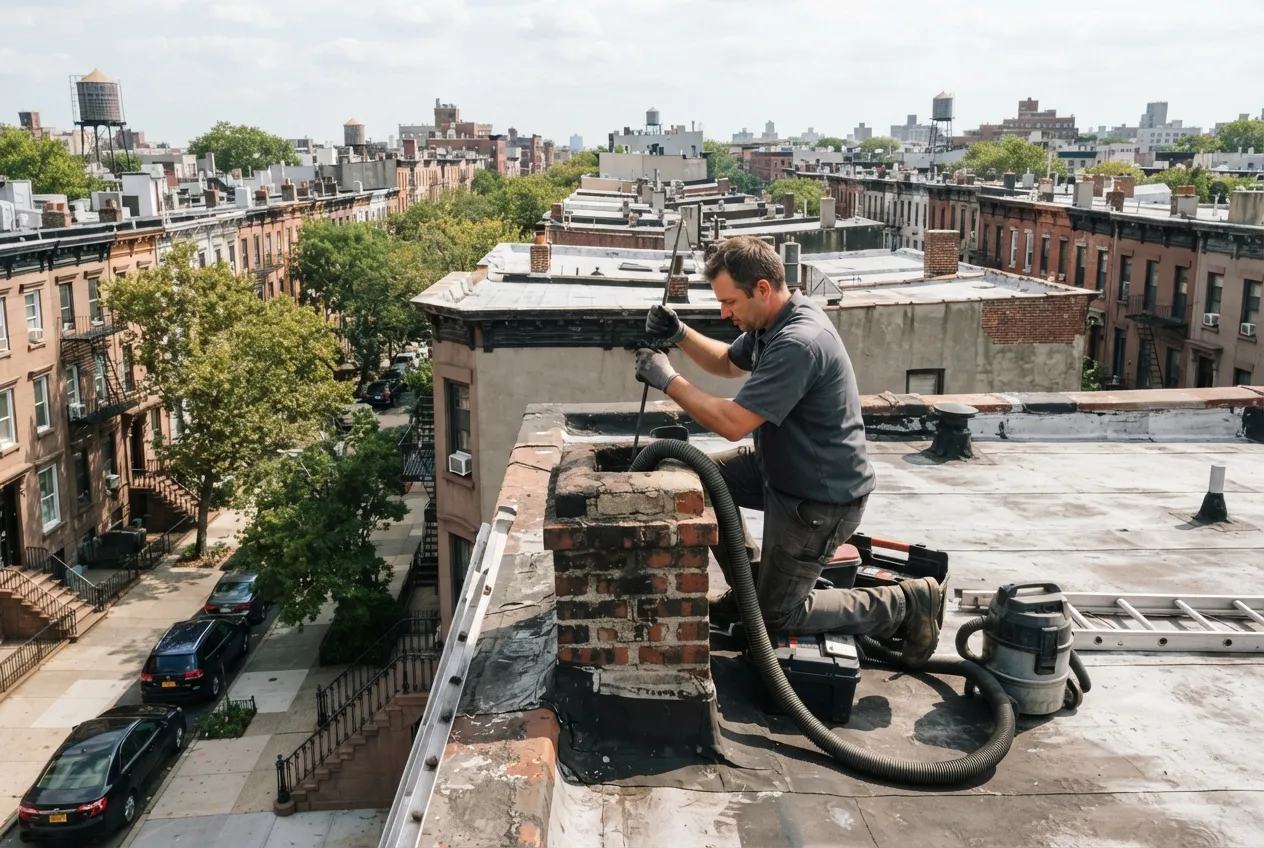
A sweep removes soot, creosote, loose mortar, nests and other debris from the flue so exhaust can leave the building freely. In a fireplace chimney, the main concern is creosote, a tar-like byproduct of burning wood that can ignite. In a chimney serving a boiler or water heater, the concern is more often blockage and deterioration that can push exhaust back into living space.
Before we start, we put down drop cloths and seal the opening. Then we brush the flue from the bottom, the top or both, depending on roof access and how the building is laid out. Shared hallways and narrow stairwells are common in this neighborhood, so we plan how to bring equipment in before we start.
- Fireplace chimneys in apartments and rowhouses
- Boiler and water heater flues in walk-up and mixed-use buildings
- Smoke chambers, dampers and fireboxes
- Clearing nests, leaves and fallen masonry from the flue
Why older Manhattan chimneys need regular attention
Many chimneys here were built long before modern heating equipment. Mortar joints wear out, clay flue tiles crack, and some flues were never lined at all. Debris that falls inside a chimney can narrow the opening without anyone noticing from the street.
The NFPA 211 standard calls for chimneys, fireplaces and vents to be inspected once a year. That inspection tells you whether a sweep is needed and whether anything else is wrong. A Level 1 inspection fits when nothing has changed. A Level 2 inspection applies when the system changes, such as a new appliance or a switch of fuel, or when the home is sold. A Level 3 inspection is used when a hidden hazard can only be reached by opening part of the chimney or building.
Timing your sweep around heat season
New York City's heat season runs from October 1 through May 31. During that time, building owners must keep apartments heated to the city's minimum temperatures. If a boiler flue becomes blocked or fails in the middle of winter, it can quickly become a problem for every tenant in the building.
For that reason, late summer and early fall are good times to schedule a sweep and inspection for boiler chimneys. Fireplace owners often book at the same time so the flue is ready before the first fire of the season. If you missed that window, a sweep during the season is still worthwhile, especially if you notice smoke, odors or poor draft.
Time for your annual chimney check?
Oil-to-gas conversions and flue liners
Some Chinatown buildings have already switched from oil heat to gas, and others are planning to. When a New York City building converts its boiler from oil to gas, the chimney has to be evaluated as part of the work. A new liner is often needed because gas exhaust produces acidic condensate that can corrode a masonry flue.
If your building has been converted or is about to be, a sweep and inspection is a sensible first step. Removing years of oil soot lets us see the condition of the flue and tell you whether a liner should be part of the project.
Signs your chimney needs a sweep
If you notice any of these, stop using the fireplace until the chimney has been checked.
- A smoky smell in the apartment, especially on humid days
- Smoke spilling into the room when you use the fireplace
- Black flakes or debris collecting in the firebox or at the boiler connection
- Birds, animals or nesting material heard or seen in the chimney
- Water stains or crumbling brick near the chimney
- More than a year since the last inspection
Serving Chinatown and nearby neighborhoods
Along with Chinatown, we sweep chimneys in Two Bridges, the Lower East Side, the East Village, Downtown Brooklyn and DUMBO. Whether you own a single rowhouse or manage a walk-up building, we can schedule a visit that works around tenants and building access.
More services in Chinatown
- Chimney Inspection in Chinatown
- Chimney Repair in Chinatown
- Air Duct Cleaning in Chinatown
- Chimney Liner Installation in Chinatown